
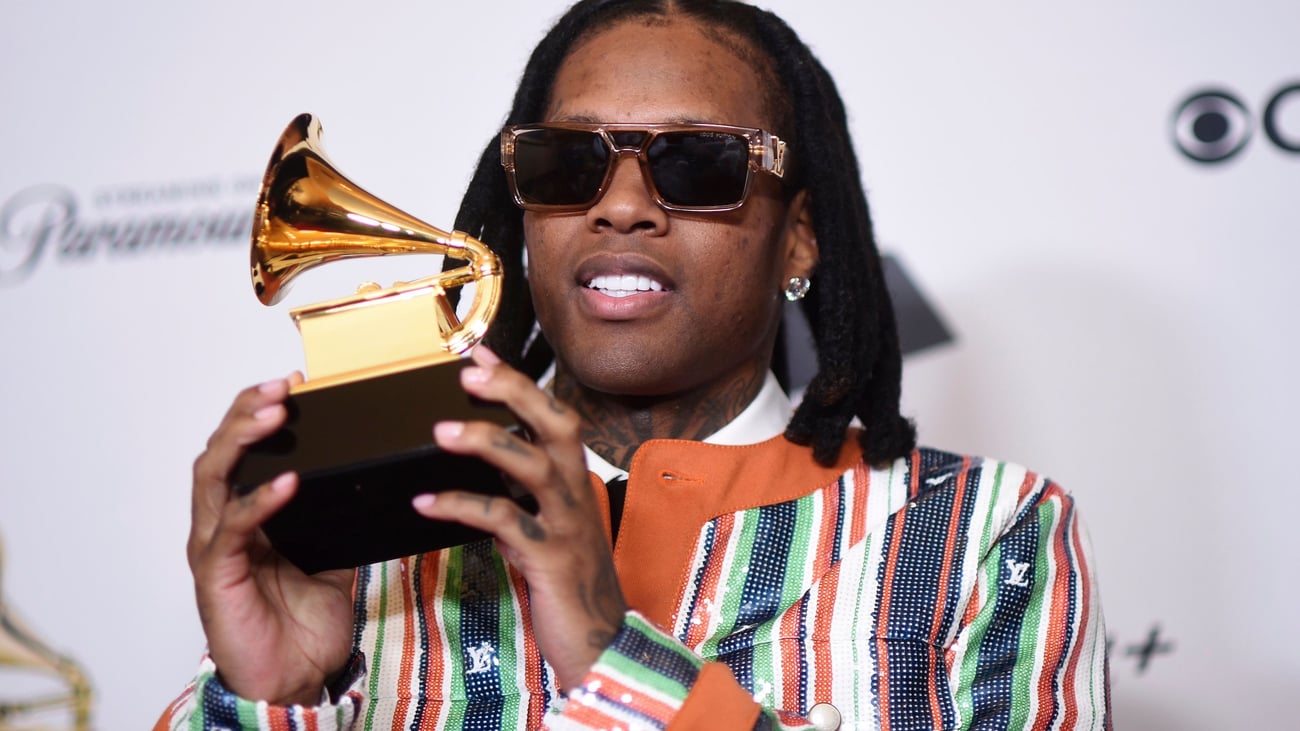
Kavon Grant Testifies: Lil Durk Implicated In Murder-for-Hire Trial
Summary
- Kavon Grant, Lil Durk's former assistant, testified that Durk Banks instructed him and co-defendants to kill rapper Quando Rondo.
- Another cooperating witness, Keith Jones, claimed he was offered a "million" by "bro," understood to be Durk, to shoot Rondo.
- The 2022 shooting at a West Hollywood gas station missed Quando Rondo but killed his 24-year-old cousin, Saviay’a Robinson.
- Prosecutors allege the murder-for-hire plot was retribution for the 2020 killing of rapper King Von, an associate of Durk Banks.
- Durk Banks' defense attorney asserts that Kavon Grant masterminded the shooting, making Grant's credibility central to the federal trial.
Key Witnesses Detail Alleged Murder-for-Hire Plot
The prosecution's case hinges significantly on the credibility of these cooperating witnesses, particularly as they provide direct testimony linking Durk Banks to the alleged plot.
A federal murder-for-hire trial involving Grammy-winning rapper Durk Banks, known as Lil Durk, recently featured critical testimony from two cooperating witnesses. Kavon Grant, Banks' former personal assistant, took the stand, admitting his significant involvement in a scheme to kill rival rapper Quando Rondo. When questioned about others implicated in the 2022 shooting, Grant identified Banks and his two co-defendants, David Lindsey and Deondre Wilson, all facing charges including murder-for-hire and stalking. Grant explicitly stated that Banks instructed them to carry out the attack on Rondo.
Another key witness, 35-year-old Keith Jones, also provided extensive testimony. Jones, identified as one of the three masked shooters involved in the incident, recounted receiving a phone call asking him to travel to Los Angeles for the shooting. He testified that he was told, "Bro got a million for us," and understood "bro" to be Banks, reasoning that Banks was the only person with such financial means. Jones emphasized that he would not have risked his freedom by traveling to Los Angeles without the promise of payment.
Despite his involvement, Jones claimed he never received the promised money, despite multiple attempts to collect. He described approaching Banks after a concert, asking if he would still be compensated for the Los Angeles shooting. According to Jones, Banks replied, "I got you, but you shoulda got up close on him," while smiling and forming a gun shape with his fingers. On another occasion, Jones stated that Banks told him he preferred not to be seen handing over a large sum of money and indicated that an OTF associate, Bonnie Mo, would handle the payment.
Retribution and Gang Allegations Form Case Core
The prosecution posits that the alleged murder-for-hire plot against Quando Rondo was an act of retribution for the 2020 killing of rapper King Von. Von, an emerging artist signed to Banks's OTF record label and a close friend to both Banks and Grant, was shot by Rondo's cousin, Timothy Leeks, after Von attacked Rondo in Atlanta. Following Von's death, numerous hip-hop fans publicly urged Banks to "slide for Von," a phrase implying revenge. Banks himself recorded a song containing lyrics such as, "We gettin’ it done … Fuck tweetin’, we slidin’," which prosecutors cite as evidence of his intent.
Prosecutors further allege that Banks effectively offered a bounty for Rondo's death, growing frustrated when members of his circle did not act on it. They contend that while OTF is Banks's record label, it also functions as a criminal street gang centered around him. This dual identity of OTF is a significant element of the prosecution's narrative, aiming to establish a hierarchical structure through which Banks could issue commands for violent acts.
The 2022 shooting at a West Hollywood gas station saw three masked individuals spray bullets at Rondo's vehicle. While Rondo escaped unharmed, his 24-year-old cousin, Saviay’a Robinson, was tragically killed in the attack. Banks, David Lindsey, and Deondre Wilson are all charged with murder-for-hire and stalking, among other related offenses, stemming from this incident.
Witness Credibility Central to Federal Prosecution
The federal murder-for-hire case against Durk Banks underscores the critical role of cooperating witness testimony in establishing conspiracy and intent. Assistant U.S. Attorney Ian Yanniello directly questioned Kavon Grant about the motive, eliciting the response, "Durk told us to." Similarly, Assistant U.S. Attorney Daniel Weiner probed Keith Jones about his motivation, to which Jones replied he would not risk his freedom for free, implying the promised payment from Banks was the incentive. The prosecution's case hinges significantly on the credibility of these cooperating witnesses, particularly as they provide direct testimony linking Durk Banks to the alleged plot.
Banks's defense attorney, however, presented a counter-narrative during opening statements, asserting that Kavon Grant was the true mastermind and organizer of the shooting. This defense strategy places Grant's reliability squarely at the center of the trial, suggesting that the jury's verdict will largely depend on whether they believe Grant's account or the defense's portrayal of him as the primary orchestrator. Grant himself denied that OTF members would travel to California to commit murder solely because he instructed them to, a point raised by the prosecution to clarify the chain of command.
The brief duration of Grant's testimony, lasting only 30 minutes, contrasted with the more extensive testimony from Jones, yet both witnesses offered crucial details. The legal proceedings highlight how federal prosecutors build cases involving alleged criminal street gangs and high-profile individuals, often relying on insider accounts to connect defendants to complex criminal enterprises and demonstrate their direct involvement or command in serious offenses like murder-for-hire.
Practical Implications
Criminal defense attorneys can observe the prosecution's strategy in federal murder-for-hire cases, particularly the critical role and potential impact of cooperating witness testimony on establishing conspiracy and intent.
Source
How does this affect you?
Get an AI analysis of this article grounded in your jurisdictions, practice areas, and any policy documents you've uploaded to Wansom.
Finish Reading the Full Story and the Expert Analysis.
Wansom is AI and can make mistakes.