
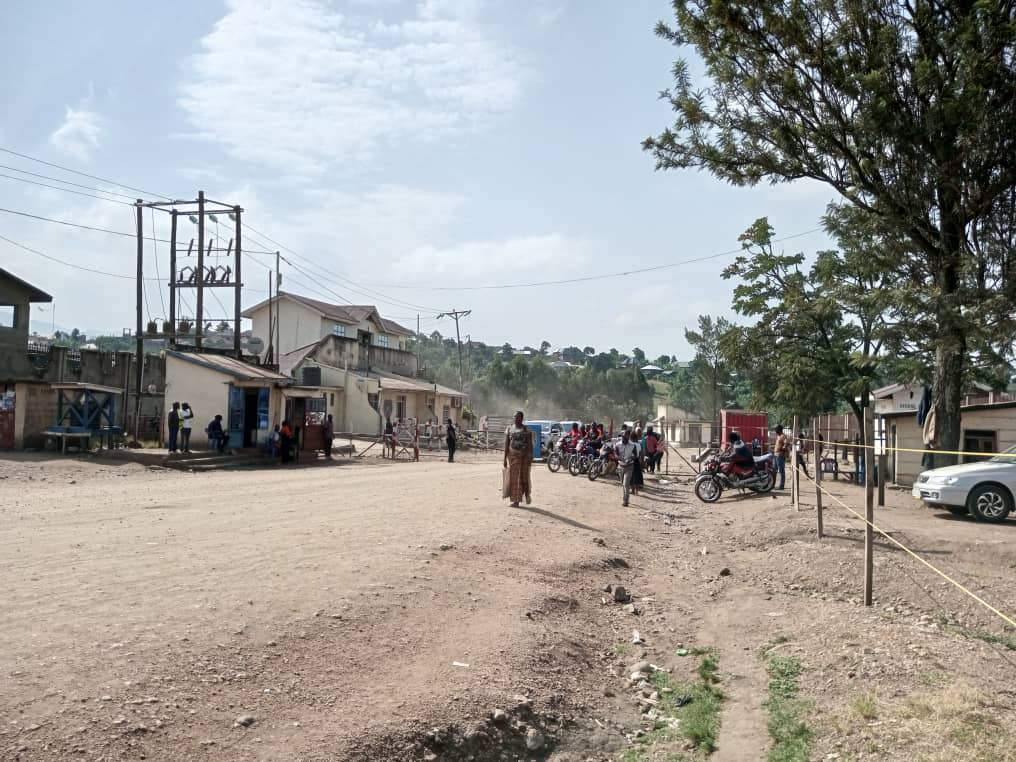
DRC: Kasindi Border Ebola Trade Disruption Fuels Price Hikes
Summary
- Uganda's Ebola response led to the closure of the Kasindi border crossing with Beni, DRC, disrupting cross-border trade.
- The border closure has caused significant price increases for common consumer goods in Beni and severe delays in merchandise delivery.
- Traders from Beni can no longer travel to Uganda for supplies, impacting their income and local market stability.
- Households in Nord-Kivu are experiencing economic hardship due to reduced purchasing power and higher costs for essential items.
- Residents believe the full reopening of supply chains and a return to normal trade depend on the end of the Ebola epidemic.
Cross-Border Trade Halted at Kasindi
The current trade disruptions at the Kasindi border are a direct consequence of public health measures enacted to contain the Ebola virus.
The crucial Kasindi border crossing, linking Beni in the Democratic Republic of Congo's Nord-Kivu province with Uganda, has experienced significant disruption, leading to a sharp increase in prices for essential consumer goods. This measure, initially implemented by Kampala as part of its comprehensive Ebola response strategy and continued due to the ongoing Ebola epidemic in the Democratic Republic of Congo, has fundamentally altered established supply chains and trade practices for merchants who rely heavily on DRC Uganda cross-border trade. The resulting economic instability is profoundly affecting local markets and exacerbating the already challenging living conditions for numerous households.
Traders based in Beni now find it impossible to travel to Uganda to procure various commodities, a situation that severely impedes their business operations and diminishes their income. One affected trader recounted the dramatic shift: previously, obtaining a visa and purchasing goods in Uganda was a straightforward process, with merchandise arriving in Beni without issue. However, the current Ebola-related restrictions necessitate money transfers, driving up acquisition costs. Furthermore, the Nord-Kivu supply chain disruption has led to substantial delays, with goods that once arrived within a week now taking up to three months to reach their destination, highlighting the severe Kasindi border closure trade impact.
Soaring Prices and Household Strain
For consumers, the escalating prices of basic necessities have become increasingly difficult to manage. Many households report struggling to meet their daily needs amidst the economic fallout. A resident from Kisindi lamented the situation, citing a specific example where the price of a carton of mayonnaise, previously $68, has now surged to $73, underscoring the destabilizing effect on household budgets.
Beyond the immediate commercial sphere, this situation directly impacts family welfare. Parents describe immense economic pressure on households, characterized by a significant reduction in purchasing power and a corresponding rise in expenditures. This Ebola response economic impact Beni is creating a crisis for many, with residents expressing a strong desire for the epidemic's eradication, believing it will lead to the border's reopening and a return to normal economic activities.
Public Health Emergency Reshapes Regional Commerce
The current trade disruptions at the Kasindi border are a direct consequence of public health measures enacted to contain the Ebola virus. This scenario illustrates how a public health emergency can profoundly reshape regional commerce and supply dynamics, creating complex challenges that extend far beyond immediate health concerns. The reliance of local economies on cross-border movements means that restrictions, while necessary for disease control, can trigger widespread economic instability.
For many inhabitants, the restoration of normal trade flows and price stability is intrinsically linked to the complete cessation of the Ebola epidemic and the full resumption of supply chain operations. This perspective underscores the critical interplay between public health policy and economic resilience, highlighting the broader implications for trade law and regional development when a public health emergency necessitates stringent border controls.
Practical Implications
Lawyers advising clients involved in cross-border trade between DRC and Uganda should assess potential force majeure clauses in contracts, review supply chain resilience, and advise on compliance with evolving public health measures impacting trade flows at the Kasindi border.
Source
How does this affect you?
Get an AI analysis of this article grounded in your jurisdictions, practice areas, and any policy documents you've uploaded to Wansom.
Finish Reading the Full Story and the Expert Analysis.
Get the latest legal & regulatory intelligence in DR Congo
Wansom is AI and can make mistakes.