
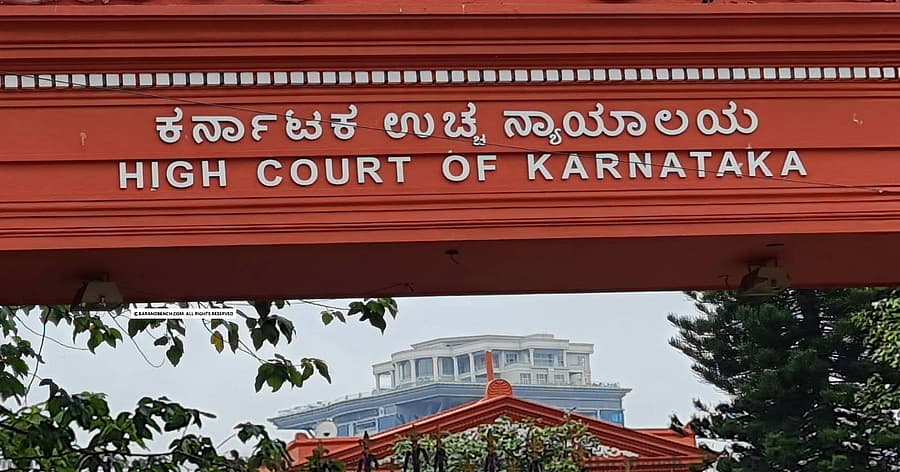
Karnataka High Court: SLAO Personal Liability for ₹1 Lakh to Senior Citizen
Summary
- The Karnataka High Court ordered a Special Land Acquisition Officer to pay ₹1 lakh in compensation.
- The payment is for failing to refer a 102-year-old man's land compensation dispute to court.
- The officer's inaction, dating back to 2005, was deemed "apparent negligence" and harassment.
- The land was acquired in 2004 for an airport road project in Bengaluru Rural district.
- The compensation must be paid within a month or deducted from the officer's salary.
What Happened
The Karnataka High Court's ruling sets a powerful precedent for government officer compensation order India, particularly concerning the personal accountability of officials.
The Karnataka High Court recently issued a significant ruling, compelling a Special Land Acquisition Officer (SLAO) to personally pay ₹1 lakh in compensation to a 102-year-old man. This directive, stemming from the case of B Ramaiah v State of Karnataka, addresses the officer's failure to process the senior citizen's request for a court referral regarding inadequate land compensation. The court found that the SLAO, who held the position in 2022 when the petitioner submitted his representation, demonstrated apparent negligence by not fulfilling a statutory duty.
The dispute originated from the State's acquisition of 29 guntas of land belonging to the petitioner in 2004. This land, located in the Bengaluru Rural district, was acquired for the development of an alternative road connecting Bettakote Village to the international airport at Devanahalli. Believing the compensation offered by the State was insufficient, the petitioner sought to have his claim referred to a civil court, a right afforded under Section 18 of the Land Acquisition Act, 1894. He made two formal representations to the SLAO for this purpose.
Legal Context and Statutory Duty
Under Section 18 of the Land Acquisition Act, 1894, a landowner dissatisfied with the compensation awarded for their acquired property has the right to request that the Special Land Acquisition Officer refer the matter to a civil court for judicial determination. This provision establishes a clear statutory duty for the SLAO to act upon such requests. In this particular instance, Justice R Nataraj of the Karnataka High Court observed that the respondent SLAO had taken no steps to refer the dispute, despite the petitioner's persistent efforts dating back to 2005.
The court specifically noted that this inaction constituted "apparent negligence" on the part of the SLAO, highlighting a clear non-compliance with the statutory obligations outlined in the Land Acquisition Act. Furthermore, the High Court's decision referenced a prior order from the Additional Senior Civil Judge and JMFC, Devanahalli, which also appears to have been disregarded by the officer. This prolonged failure to facilitate the legal recourse available to the landowner was deemed a significant dereliction of duty.
Implications for Government Accountability
The Karnataka High Court's ruling sets a powerful precedent for government officer compensation order India, particularly concerning the personal accountability of officials. Justice R Nataraj explicitly stated that the SLAO's conduct amounted to harassment of the senior citizen, B Ramaiah, by denying him the opportunity to challenge the inadequate land compensation in a judicial forum. The court mandated that the ₹1 lakh compensation be paid by the SLAO within one month, with a clear instruction that if not paid, the amount would be deducted directly from the officer's salary by the drawing officer.
This decision underscores the critical importance of government officials adhering strictly to their statutory duties, especially those designed to protect citizens' rights in processes like land acquisition. The finding of Special Land Acquisition Officer negligence and the imposition of personal liability serve as a stern reminder that inaction or deliberate obstruction of legal processes can lead to direct financial penalties for individual officers. It reinforces the principle that public servants are not immune from the consequences of failing to perform their prescribed functions, particularly when such failures result in senior citizen land dispute harassment and denial of justice.
Practical Implications
This ruling establishes a precedent for holding individual government officers personally liable for failing to perform their statutory duties, specifically under the Land Acquisition Act, leading to harassment. Lawyers should leverage this decision to pursue personal accountability against negligent officers in land acquisition disputes, particularly for vulnerable clients, while compliance officers in government land departments must ensure strict adherence to statutory timelines and procedures to avoid personal penalties.
Source
How does this affect you?
Get an AI analysis of this article grounded in your jurisdictions, practice areas, and any policy documents you've uploaded to Wansom.
Finish Reading the Full Story and the Expert Analysis.
Get the latest legal & regulatory intelligence in India
Wansom is AI and can make mistakes.