
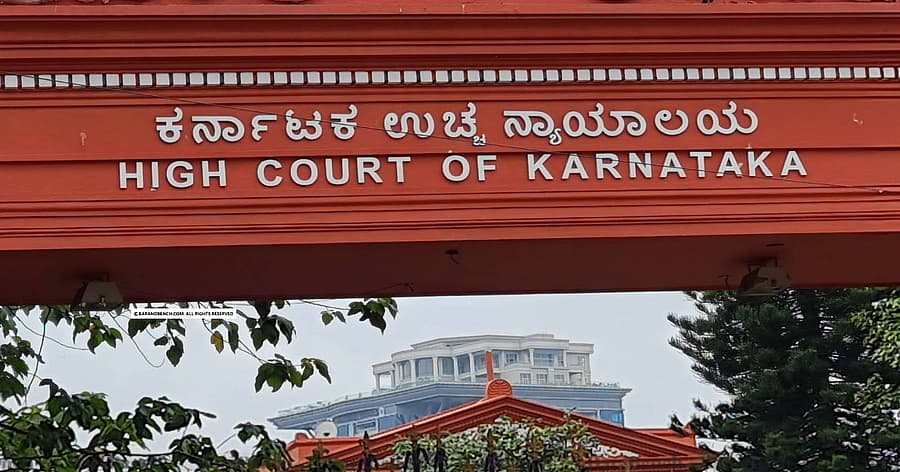
Karnataka High Court: Quashes Le Meridien Hoarding Case, Citing Procedural Flaw
Summary
- The Karnataka High Court quashed criminal proceedings against Le Meridien hotel and its executives over an unauthorized hoarding on its premises.
- Justice H.P. Sandesh ruled that the case was unsustainable due to the failure to arraign the hotel's owner, M/s. Mac Charles, as an accused.
- The proceedings were initiated under the Karnataka Open Places (Prevention of Disfigurement) Act, 1981, following an FIR filed in October 2018.
- The court utilized its powers under Section 482 Cr.P.C., citing Section 6 of the KOPD Act, which mandates the company's arraignment.
- This decision in M S Reddy v State of Karnataka emphasizes the critical importance of correctly identifying and prosecuting the responsible corporate entity in such cases.
What Happened
The court explicitly stated that the continued prosecution was unsustainable because M/s. Mac Charles, identified as the owner of the hotel, had not been included as an accused party in the case.
The Karnataka High Court recently intervened in a criminal case involving Bengaluru's prominent Le Meridien hotel, along with its Vice President (Finance) and Company Secretary, M.S. Reddy. The court, presided over by Justice H.P. Sandesh, issued an order on September 19, effectively halting criminal proceedings that had been initiated against these parties. The core of the accusation stemmed from the alleged unauthorized display of a hoarding on the hotel's premises. This decision by the Karnataka High Court quashes the Le Meridien hoarding case, marking a significant development for the hotel and its executives.
The proceedings had been launched under the Karnataka Open Places (Prevention of Disfigurement) Act of 1981, following a First Information Report (FIR) filed by the High Grounds Police in October 2018. The FIR specifically alleged a violation of Section 3 of this Act, which pertains to the prevention of disfigurement in public places. Despite the hoarding being situated on private property, the court acknowledged that such displays, if visible from public thoroughfares, generally fall under regulatory scrutiny and require proper licensing.
Legal Context and Reasoning
The pivotal reason behind Justice H.P. Sandesh's decision to quash the proceedings was a fundamental procedural flaw: the failure to properly identify and arraign the actual owner of the hotel. The court explicitly stated that the continued prosecution was unsustainable because M/s. Mac Charles, identified as the owner of the hotel, had not been included as an accused party in the case. This omission was deemed critical, particularly in light of Section 6 of the Karnataka Open Places (Prevention of Disfigurement) Act.
Section 6 of the KOPD Act specifically outlines provisions for cases involving companies, indicating that the company itself ought to be arraigned as an accused. The court underscored that the absence of the corporate owner as a named accused constituted an abuse of process. Consequently, the court exercised its inherent powers under Section 482 of the Code of Criminal Procedure (Cr.P.C.) to intervene and set aside the criminal proceedings, emphasizing the necessity for correct party identification in such prosecutions. The case, M S Reddy v State of Karnataka, thus highlights a crucial aspect of company prosecution under the KOPD Act.
Significance of the Ruling
This ruling by the Karnataka High Court carries significant implications for how companies are prosecuted under the Karnataka Open Places (Prevention of Disfigurement) Act and similar statutes. By quashing the case due to the failure to arraign the owner, M/s. Mac Charles, the court has reinforced the principle that the correct legal entity responsible for an offense must be brought before the court. This decision clarifies the procedural requirement for prosecuting companies, particularly emphasizing that the actual owner, rather than just individual employees or officers, must be formally accused.
The judgment serves as a vital precedent, underscoring that simply naming individuals like a Vice President or Company Secretary may not suffice when the law contemplates the company itself as the primary accused. This specific failure to arraign the owner in the hoarding case was central to the court's determination that the proceedings amounted to an abuse of process. The ruling by Justice H.P. Sandesh on the Le Meridien case provides important guidance for law enforcement and legal practitioners regarding the proper application of corporate liability provisions in environmental and public order legislation.
Practical Implications
This ruling clarifies the procedural requirement for prosecuting companies under the Karnataka Open Places (Prevention of Disfigurement) Act, emphasizing that the actual owner must be arraigned. Lawyers should scrutinize charge sheets in similar cases to ensure proper parties are accused, and compliance officers should review their company's legal structure regarding liability for premises-related offenses.
Source
How does this affect you?
Get an AI analysis of this article grounded in your jurisdictions, practice areas, and any policy documents you've uploaded to Wansom.
Finish Reading the Full Story and the Expert Analysis.
Get the latest legal & regulatory intelligence in India
Wansom is AI and can make mistakes.