
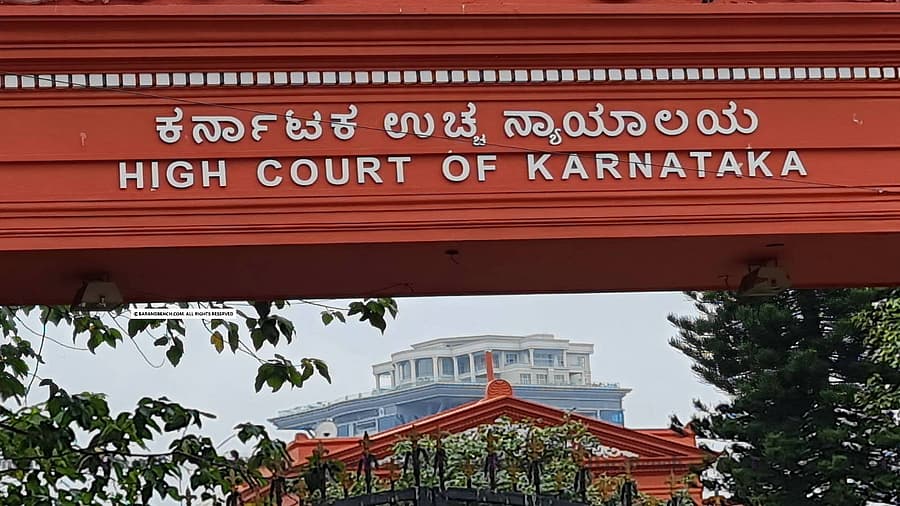
Karnataka High Court: Quashes Dowry Case Against Hosapete Politician
Summary
- The Karnataka High Court quashed a dowry harassment case against a Hosapete politician.
- Justice M Nagaprasanna ruled that the allegations of cruelty and intimidation lacked a specific factual foundation, despite a charge sheet being filed.
- The court clarified that a complainant's matrimonial history, including multiple marriages, does not automatically discredit their claims of criminal wrongdoing.
- The ruling emphasizes the necessity of independently examining complaints to determine if the essential ingredients of alleged offenses are present.
- The politician's wife had reportedly married nine times, and the couple's marriage began on January 13, 2022.
What Happened
The court explicitly stated that "the filing of a charge sheet cannot breathe life into an accusation which, even upon acceptance at its face value, fails to disclose the essential ingredients of a criminal offence."
The Karnataka High Court recently intervened in a significant matrimonial dispute, quashing a dowry harassment case that had been initiated against a politician from Hosapete. Justice M Nagaprasanna presided over the ruling, which found that the criminal allegations leveled against the politician by his wife lacked the necessary specific factual foundation to proceed. The court's decision effectively halted the criminal prosecution dowry allegations, emphasizing the requirement for concrete evidence even after a charge sheet has been filed.
The politician faced accusations of cruelty, assault, intentional insult, and criminal intimidation. However, the High Court determined that these claims, despite the police having investigated and filed a charge sheet, did not meet the essential ingredients of a criminal offense. This ruling by the Karnataka High Court quashes dowry case politician, highlighting a critical aspect of legal scrutiny in such matters.
Legal Context
In its detailed examination, the court, led by Justice M Nagaprasanna, articulated a crucial legal principle: the mere filing of a charge sheet does not automatically validate an accusation. The court explicitly stated that "the filing of a charge sheet cannot breathe life into an accusation which, even upon acceptance at its face value, fails to disclose the essential ingredients of a criminal offence." This underscores that judicial review extends beyond procedural steps to the substantive merits of the allegations. The case involved allegations typically falling under Section 498A IPC, which deals with dowry harassment.
Furthermore, the High Court provided an important clarification regarding the complainant's personal history. It affirmed that a woman’s matrimonial history, irrespective of the number of marriages she may have contracted, cannot, by itself, serve as a basis to discredit her allegations of criminal wrongdoing. The court mandated that each complaint must undergo an independent examination to ascertain whether the constituent elements of the alleged offenses are genuinely present, ensuring that the focus remains on the specific facts of the current case rather than past relationships. This nuanced approach addresses concerns about dowry harassment India matrimonial history.
Case Background
The matrimonial dispute at the heart of this case began following the marriage of the politician and the complainant on January 13, 2022. Over time, their relationship deteriorated, culminating in significant matrimonial discord and the initiation of criminal proceedings by the wife against her husband and other members of his family. Following the complaint, law enforcement conducted an investigation, which ultimately led to the filing of a charge sheet specifically against the husband. The police, however, decided to drop the other family members from the scope of the case.
During the proceedings, the husband presented a defense asserting that his wife had previously entered into nine marriages. He further contended that the criminal proceedings brought against him were not isolated but rather part of a recurring pattern, allegedly designed to secure monetary benefits. This context formed a significant part of the arguments presented before the court, though the court clarified that such history does not automatically invalidate claims.
Why It Matters
This decision by the Karnataka High Court carries significant implications for the adjudication of dowry-related cases and the broader landscape of criminal prosecution dowry allegations. It reinforces the judiciary's role in meticulously scrutinizing the factual basis of complaints, even when police investigations have concluded with a charge sheet. The ruling serves as a reminder that while the legal framework aims to protect individuals from harassment, it also demands specific and concrete allegations to sustain a criminal prosecution.
The court's clear distinction between a complainant's matrimonial history and the independent merits of her allegations is also noteworthy. It ensures that genuine victims are not unfairly prejudiced by their past, while simultaneously preventing the misuse of legal provisions by requiring a robust factual foundation for every claim. This ruling, particularly concerning the Hosapete politician dowry case, underscores the judiciary's commitment to upholding justice based on specific evidence rather than mere accusations or personal history.
Practical Implications
This ruling clarifies that while a complainant's matrimonial history does not automatically discredit dowry harassment allegations, courts will scrutinize the specific factual foundation of such claims, even after a charge sheet is filed. Lawyers should advise clients on the critical need for concrete, specific allegations to sustain a criminal prosecution under Section 498A IPC, and conversely, how to challenge cases that lack these essential ingredients.
Source
How does this affect you?
Get an AI analysis of this article grounded in your jurisdictions, practice areas, and any policy documents you've uploaded to Wansom.
Finish Reading the Full Story and the Expert Analysis.
Get the latest legal & regulatory intelligence in India
Wansom is AI and can make mistakes.