
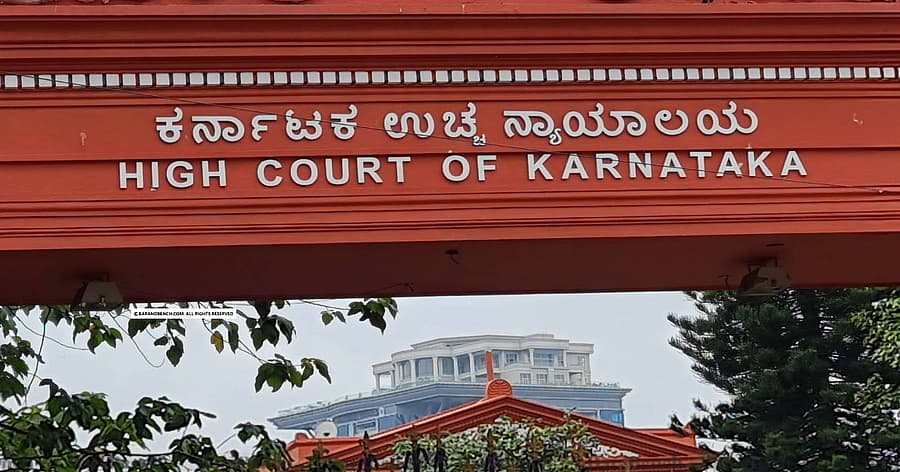
Karnataka High Court Mohsin Sharieff Land Ownership: Claim Rejected
Summary
- The Karnataka High Court ruled in favor of the Defence Ministry regarding land ownership at Bengaluru's Sonnappanahalli.
- A Division Bench overturned a single-judge ruling that had favored private claimant Mohsin Sharieff.
- The disputed land serves as an aircraft taxi track for the Indian Air Force's Yelahanka Air Force Station.
- The court criticized the claimant's actions as "trickery of the highest order" in attempting to usurp the Defence Department's title.
- The judgment emphasized the strategic importance of the Indian Air Force and national air defense for a secure nation.
What Happened
The court's firm stance against what it termed Indian Air Force land encroachment sends a clear message regarding the judiciary's commitment to preserving public land, especially that allocated for strategic national assets.
The Karnataka High Court recently delivered a significant judgment concerning land ownership near Bengaluru, ruling decisively in favor of the Defence Ministry in a long-standing dispute. On September 28, a Division Bench, comprising Justice D K Singh and Justice H Shanthi Bhushan, issued a ruling that overturned an earlier single-judge decision. That previous judgment had sided with a private claimant, Mohsin Sharieff, who asserted ownership over the contested property. This pivotal ruling by the Karnataka High Court Mohsin Sharieff land ownership case reaffirms the government's title to land vital for national defense operations.
The contested property, specifically located in Sonnappanahalli, Bengaluru, serves a critical function as an aircraft taxi track for the Indian Air Force's (IAF) Yelahanka Air Force Station. The core of the dispute centered on Mohsin Sharieff's assertion of private ownership over this land, a claim that the Division Bench ultimately rejected. By doing so, the court secured this strategic asset for the Union of India, underscoring the judiciary's commitment to protecting government land, particularly when it pertains to military infrastructure and its operational integrity.
Judicial Scrutiny and Legal Context
In its detailed judgment, the Division Bench did not mince words, strongly criticizing what it perceived as an elaborate attempt by the private claimant to usurp the Defence Department's legitimate title. The court characterized the claimant's actions regarding the IAF's taxi track as "trickery of the highest order," noting that an effort had been made to establish a private title over the land after several decades of its use by the military. This attempt to assert rights against defense authorities, however, did not withstand judicial scrutiny, with the court explicitly stating that such efforts would not escape its attention.
The case, formally known as Union of India v. Mohsin Sharieff, highlights the rigorous examination applied by the Karnataka High Court property law in disputes involving government entities. The court emphasized that such efforts to create private ownership over strategically important land, especially after a prolonged period, would be met with severe judicial disapproval. This ruling sets a precedent for how claims against established government land titles, particularly those involving defense assets like the IAF Yelahanka land dispute site, will be evaluated and protected.
Why It Matters
Beyond the immediate resolution of the Sonnappanahalli land dispute, this judgment carries profound implications for national security and the protection of critical defense infrastructure across India. The Karnataka High Court underscored the indispensable role of strategic air defense for a secure nation, recognizing the Indian Air Force as a vital component of the country's defense framework. Its mandate includes safeguarding national airspace and protecting strategic interests, making the integrity and unencumbered use of its operational assets paramount for national security.
The court's firm stance against what it termed Indian Air Force land encroachment sends a clear message regarding the judiciary's commitment to preserving public land, especially that allocated for strategic national assets. This decision reinforces the principle that attempts to fraudulently claim ownership of such properties will be met with robust legal challenge and condemnation, ensuring that vital military facilities remain secure and unencumbered for their intended purpose. The ruling serves as a crucial affirmation of the government's right to its defense properties and the judiciary's role in upholding national strategic interests.
Practical Implications
This ruling reinforces the judiciary's strict stance against fraudulent claims on strategically important government land, particularly defence property. Lawyers advising on property disputes involving government entities should note the high scrutiny and judicial criticism of attempts to usurp public land titles, especially those involving strategic national assets.
Source
How does this affect you?
Get an AI analysis of this article grounded in your jurisdictions, practice areas, and any policy documents you've uploaded to Wansom.
Finish Reading the Full Story and the Expert Analysis.
Get the latest legal & regulatory intelligence in India
Wansom is AI and can make mistakes.