
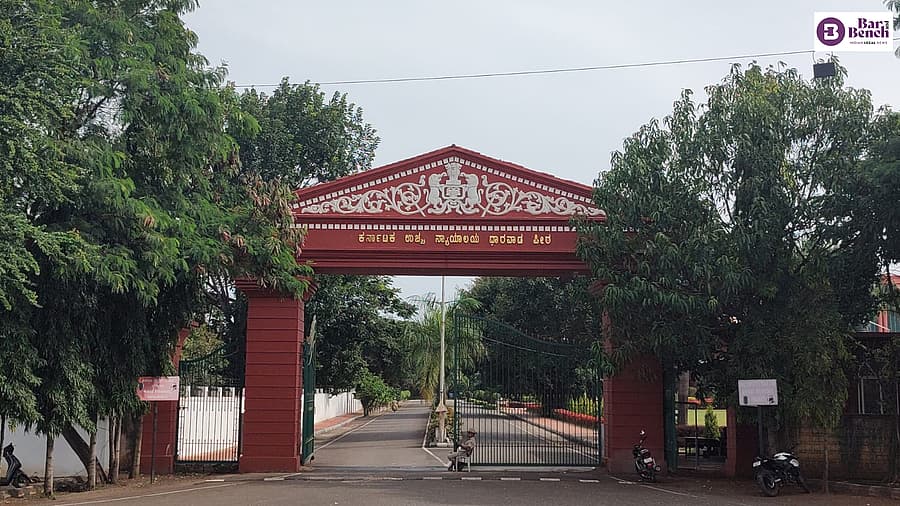
Karnataka High Court: Dismisses Appeals Citing Model Litigant Appeal Delay
Summary
- The Karnataka High Court dismissed appeals from the State and KSLU due to extreme delays in filing.
- Delays in the service cases concerning KSLU employees ranged from 466 to 1,099 days.
- The court rejected explanations citing administrative procedures and file movement as inadequate for such extraordinary delays.
- The ruling emphasized that the State must act as a model litigant and cannot claim preferential treatment under the law of limitation.
- This decision makes it harder for government bodies to obtain condonation for inordinate appeal delays based on administrative reasons.
High Court Rejects State's Delayed Appeals
Lawyers representing clients against the State in Karnataka should be aware that the High Court expects government bodies to act as model litigants, making it significantly harder for the State to obtain condonation for inordinate delays in filing appeals.
The Karnataka High Court recently dismissed a series of appeals filed by the State of Karnataka and the Karnataka State Law University (KSLU), citing extraordinary delays in their submission. The ruling, delivered on October 16 by a Division Bench comprising Justice M Nagaprasanna and Justice Hema Kulkarni, underscored the judiciary's expectation for government entities to adhere to the principles of a model litigant, rather than acting as privileged procrastinators.
The appeals originated from service-related cases involving KSLU employees who had sought the regularisation of their service and associated benefits. The State and KSLU were challenging lower court orders that had granted relief to these employees. However, the High Court's decision focused squarely on the significant lapse of time between the original orders and the filing of the appeals.
Unacceptable Explanations for Protracted Delays
The court meticulously reviewed four specific appeals, noting delays that spanned from 466 days to an astonishing 1,099 days. These included delays of 626 days, 1,099 days, 466 days, and 548 days respectively. The explanations provided by the State and KSLU for these protracted delays were deemed "
Upholding the Model Litigant Principle
In its stern pronouncement, the Karnataka High Court reiterated the fundamental principle that the State is expected to function as a model litigant. This means that government bodies, despite their administrative complexities, cannot claim special dispensation or preferential treatment under the law of limitation. The bench explicitly stated that the State and its instrumentalities should not be considered privileged procrastinators, implying a higher standard of diligence is required from them in legal proceedings.
This ruling is particularly significant for condonation of delay government appeals in India, as it firmly establishes that routine administrative procedures and internal bureaucratic hurdles are not sufficient cause to excuse extraordinary delays. The court's stance reinforces the idea that the State, like any other litigant, must demonstrate genuine and compelling reasons for failing to adhere to statutory timelines, especially when challenging orders that grant relief to its employees.
Implications for Future Government Litigation
The decision by Justice M Nagaprasanna and Justice Hema Kulkarni sets a robust precedent regarding the Karnataka High Court model litigant appeal delay. It signals to all government departments and public sector undertakings that the judiciary will not tolerate inordinate delays based on administrative convenience or internal file movements. This ruling makes it considerably more challenging for the State to secure condonation for significant delays in filing appeals, particularly when the explanations offered are vague or rely on standard bureaucratic processes.
Lawyers representing clients against the State in Karnataka should be aware that the High Court expects government bodies to act as model litigants, making it significantly harder for the State to obtain condonation for inordinate delays in filing appeals. This ruling provides strong precedent to challenge delay applications from government entities, emphasizing that administrative procedures are not sufficient cause for extraordinary delays. The court's clear message is that the limitation period for government bodies must be respected, and any deviation requires a truly exceptional justification, not merely an account of internal administrative steps.
Practical Implications
Lawyers representing clients against the State in Karnataka should be aware that the High Court expects government bodies to act as model litigants, making it significantly harder for the State to obtain condonation for inordinate delays in filing appeals. This ruling provides strong precedent to challenge delay applications from government entities, emphasizing that administrative procedures are not sufficient cause for extraordinary delays.
Source
How does this affect you?
Get an AI analysis of this article grounded in your jurisdictions, practice areas, and any policy documents you've uploaded to Wansom.
Finish Reading the Full Story and the Expert Analysis.
Wansom is AI and can make mistakes.