
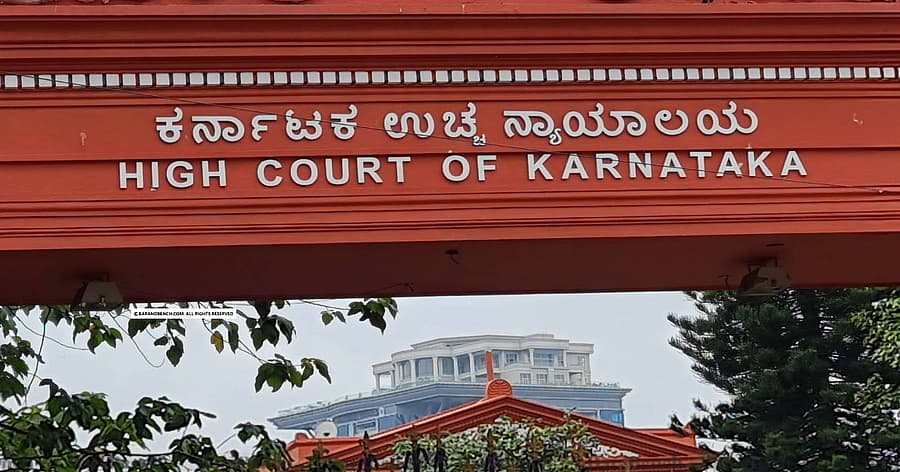
Karnataka High Court: Grants Aishwarya Anticipatory Bail to MLA Daughter
Summary
- The Karnataka High Court granted anticipatory bail to Aishwarya, daughter of BJP MLA B Suresh Gowda, on September 22.
- Justice S Vishwajith Shetty issued the order in a case concerning an alleged assault on a woman police sub-inspector in Mandya on August 12.
- The court considered Aishwarya's lack of criminal history, her public apology, and the two-year maximum punishment for the alleged offenses.
- Aishwarya is required to appear before the investigating officer within 15 days and post a personal bond of ₹1 lakh with two sureties.
- The ruling highlights factors like family circumstances and cooperation with authorities as influential in pre-arrest bail decisions in India.
What Happened
This ruling from the Karnataka High Court illustrates the factors considered when granting anticipatory bail, particularly in cases where the accused has no prior criminal record and the alleged offense carries a relatively minor maximum punishment.
The Karnataka High Court has granted anticipatory bail to Aishwarya, the daughter of BJP Tumakuru Rural MLA B Suresh Gowda, in connection with an alleged assault on a woman police sub-inspector. The order, issued by Justice S Vishwajith Shetty on September 22, addresses a case filed against Aishwarya following an incident that occurred on August 12 at the Marramma Temple in Arathi Ukkada, within the jurisdiction of the Kyathanahalli Police Station in Mandya district.
The complaint was lodged by Savitha B Police Patil, a sub-inspector assigned to the Women Police Station in Mandya, who was on duty at the temple at the time of the alleged incident. The court's decision in the case, formally known as Aishwarya v. State of Karnataka, allows Aishwarya to avoid pre-trial detention, a significant relief for the daughter of the prominent political figure.
In its deliberations, the court acknowledged Aishwarya's familial connections, noting her status as the daughter of an MLA and the wife of a serving Deputy Superintendent of Police. It also took into consideration her personal circumstances as a married woman with minor children, factors that often weigh into bail considerations in India.
Legal Context
Justice S Vishwajith Shetty's order for Aishwarya's anticipatory bail was underpinned by several key considerations. The court observed that the maximum punishment for the alleged offenses carries an imprisonment term of two years, which is a relatively minor penalty in the Indian legal framework. This aspect often influences decisions regarding pre-arrest bail, as the severity of potential punishment is a crucial factor.
Furthermore, the court highlighted Aishwarya's clean record, noting that she had no prior criminal antecedents. This absence of a criminal history, coupled with her undertaking to fully cooperate with the ongoing police investigation, presented a strong case for granting pre-arrest protection. The court also recorded that Aishwarya and her father had publicly issued an unconditional apology regarding the incident, indicating a willingness to acknowledge and address the situation.
As part of the bail conditions, Aishwarya has been directed to appear before the investigating officer within 15 days of the order. She is also required to execute a personal bond of ₹1 lakh, along with providing two sureties for the same amount. These conditions are standard practice to ensure the accused's presence during the investigation and trial process.
Why It Matters
This ruling from the Karnataka High Court illustrates the factors considered when granting anticipatory bail, particularly in cases where the accused has no prior criminal record and the alleged offense carries a relatively minor maximum punishment. The decision in Aishwarya's case provides a valuable precedent for lawyers arguing for pre-arrest bail in similar situations across India, showcasing how a combination of personal circumstances, public conduct, and the nature of the alleged crime can influence judicial outcomes.
The court's emphasis on Aishwarya's lack of criminal antecedents, her public apology, and her family situation, including having minor children, underscores a holistic approach to evaluating bail pleas. This case reinforces the principle that pre-arrest bail is a crucial safeguard against arbitrary arrest and detention, especially when the accused demonstrates a commitment to cooperate with law enforcement and the potential for flight or obstruction is low.
The Justice S Vishwajith Shetty order serves as a reference point for understanding the nuances of anticipatory bail in India, particularly for individuals with social standing or specific family responsibilities. It highlights that while the alleged act is serious, the court balances the need for investigation with the individual's right to liberty, provided certain conditions are met and mitigating factors are present.
Practical Implications
This ruling from the Karnataka High Court illustrates the factors considered when granting anticipatory bail, including the accused's lack of criminal antecedents, public apology, and family circumstances, especially when the maximum punishment for the alleged offense is relatively minor. Lawyers can cite this case as a precedent when arguing for pre-arrest bail in similar situations.
Source
How does this affect you?
Get an AI analysis of this article grounded in your jurisdictions, practice areas, and any policy documents you've uploaded to Wansom.
Finish Reading the Full Story and the Expert Analysis.
Get the latest legal & regulatory intelligence in India
Wansom is AI and can make mistakes.