
Kinshasa: Kabund, Sesanga Dénoncent Double Standard Police UDPS
Summary
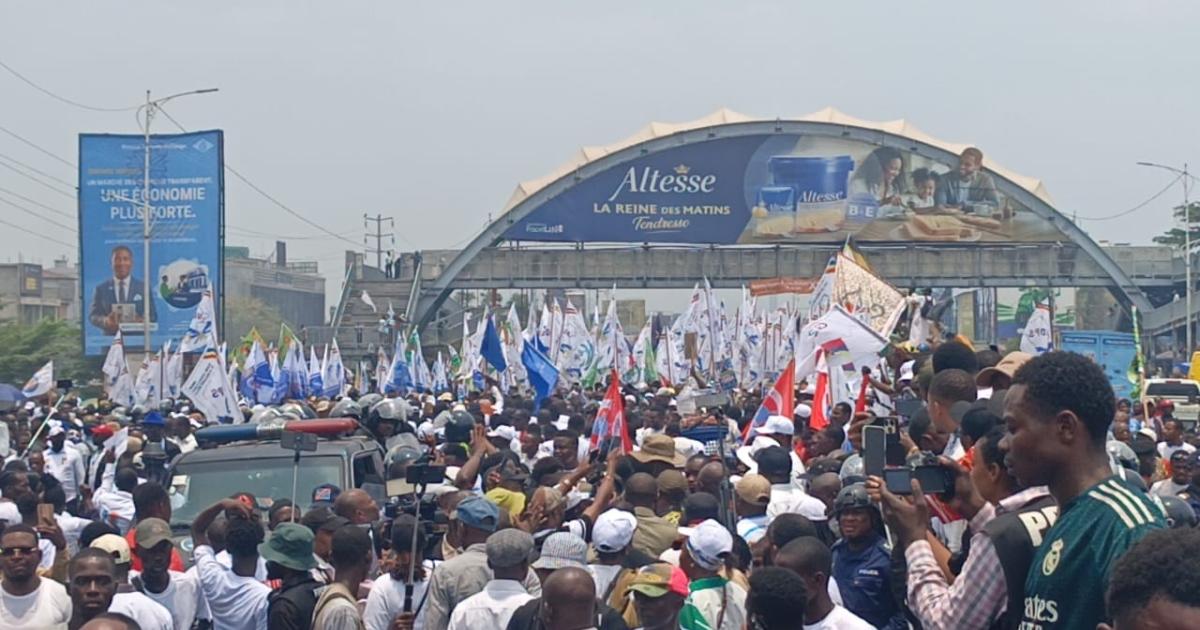
- A peaceful march by the UDPS and its allies took place in Kinshasa on Tuesday, September 22, under police supervision.
- Opposition figures, including Jean-Marc Kabund and Martin Sesanga, denounced this police conduct as a "two weights, two measures" policy.
- The denunciation of this alleged double standard occurred on Wednesday, September 23, 2026.
- Critics argue that the police exhibit preferential treatment towards the ruling party's demonstrations compared to those organized by the opposition.
Opposition Alleges Double Standard in Kinshasa Protest Supervision
The concept of "two weights, two measures" directly challenges the notion that all political actors, regardless of their affiliation, are treated equally under the law concerning their right to public expression.
Following a peaceful demonstration held in Kinshasa on Tuesday, September 22, by the Union for Democracy and Social Progress (UDPS) and its allied political factions, prominent opposition figures have voiced strong criticism regarding the conduct of law enforcement. The march, which proceeded under the supervision of the police, has ignited accusations of preferential treatment by authorities.
Jean-Marc Kabund and Martin Sesanga, among other opposition leaders, publicly denounced what they termed a policy of "two weights, two measures" on Wednesday, September 23, 2026. Their statements highlight a perceived inconsistency in how public assemblies are managed by the police, suggesting that the ruling party and its allies receive more favorable treatment compared to opposition groups. This accusation points to a deeper concern about equitable application of laws governing public demonstrations in the Democratic Republic of Congo's capital.
Legal and Regulatory Framework for Public Assembly
The allegations by Kabund and Sesanga bring into sharp focus the principles of freedom of assembly and non-discrimination in the context of public order management in the DRC. The right to peaceful protest is a fundamental aspect of democratic societies, and its exercise is typically subject to regulations concerning public safety and order. However, the consistent and impartial application of these regulations by law enforcement is paramount to upholding democratic values.
When police supervision, or 'encadrement,' of a political march is perceived as a form of facilitation for one political camp while similar events by the opposition face stricter controls or outright suppression, it raises questions about the impartiality of state institutions. The concept of "two weights, two measures" directly challenges the notion that all political actors, regardless of their affiliation, are treated equally under the law concerning their right to public expression. This situation underscores the importance of transparent and consistent guidelines for police engagement with all public demonstrations in Kinshasa, ensuring that the `Liberté de manifestation RDC` is genuinely accessible to all.
Implications for Democratic Governance
The denunciation by `Jean-Marc Kabund` and `Martin Sesanga` regarding the police's supervision of the `UDPS allies march controversy` carries significant implications for the political landscape in Kinshasa. Such accusations of a double standard can erode public trust in state institutions, particularly the police, and fuel perceptions of political bias. For the opposition, the ability to organize and conduct peaceful demonstrations without undue hindrance or discriminatory treatment is crucial for exercising their `Droits de l'opposition Kinshasa` and holding the government accountable.
This incident contributes to ongoing political tensions in the capital, highlighting the challenges associated with ensuring fair play in the political arena. The perceived unequal treatment of political parties by law enforcement regarding protest supervision can lead to increased polarization and potentially destabilize the political environment. Addressing these concerns is vital for fostering a truly democratic space where all voices can be heard and all political actors can operate on a level playing field, free from the shadow of perceived favoritism.
Practical Implications
This report highlights ongoing political tensions in Kinshasa regarding freedom of assembly and police conduct, which could inform legal advice for clients involved in public demonstrations or political activities in the DRC, particularly concerning potential claims of unequal treatment by authorities.
Source
Source: Original reporting via PMaki
How does this affect you?
Get an AI analysis of this article grounded in your jurisdictions, practice areas, and any policy documents you've uploaded to Wansom.
Finish Reading the Full Story and the Expert Analysis.
Get the latest legal & regulatory intelligence in DR Congo
Wansom is AI and can make mistakes.