
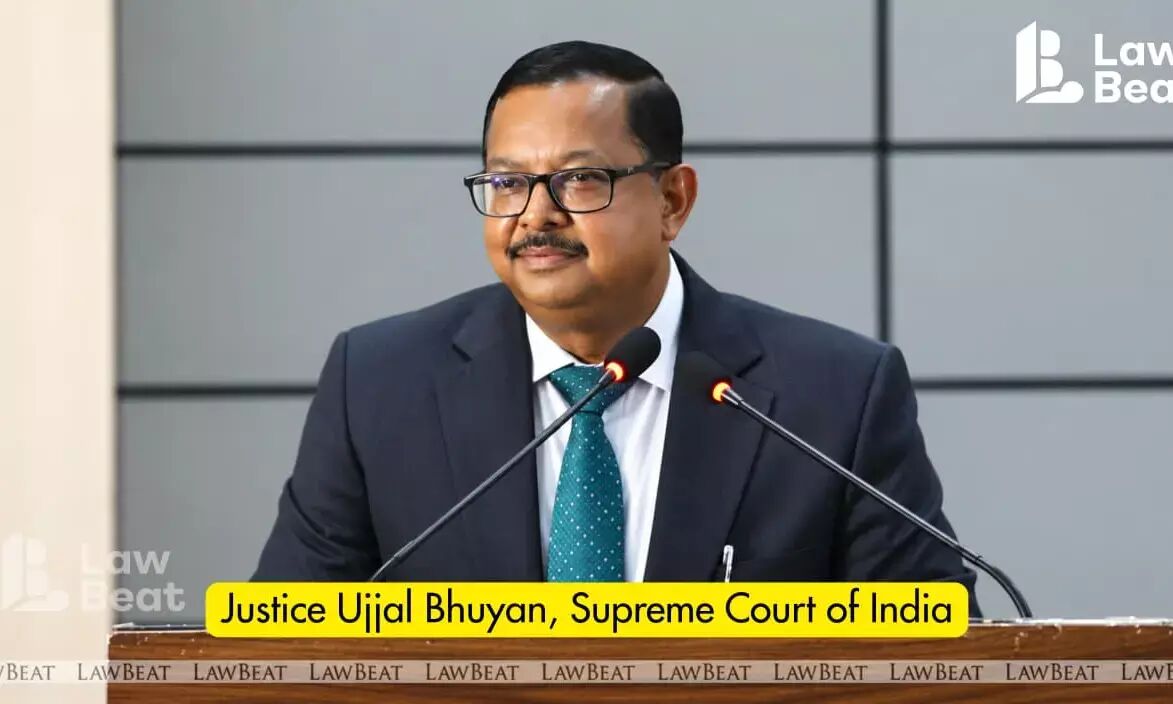
Justice Ujjal Bhuyan: Police Assaulting Protestors "Very Distressing"
Summary
- Supreme Court Justice Ujjal Bhuyan expressed deep distress over police officers assaulting protestors at Jantar Mantar in July, citing a disappearing professional detachment.
- He emphasized that police must uphold credibility by strictly adhering to the Constitution and referenced the D.K. Basu judgment, which mandates guidelines for arrest and compensation for human rights violations.
- Justice Bhuyan also affirmed the constitutional importance of student dissent and the right to question authority, stating that punitive action against students for expressing different views is unconstitutional.
- He stressed that universities are vital spaces for critical thought and reasoned disagreement, essential for a democratic society.
- The Supreme Court recently quashed FIRs against NEET Paper Leak protestors following a central government assurance, aligning with the protection of protest rights.
Judicial Concern Over Police Conduct
He emphasized that police must uphold credibility by strictly adhering to the Constitution and referenced the D.K. Basu judgment, which mandates guidelines for arrest and compensation for human rights violations.
Supreme Court Justice Ujjal Bhuyan recently voiced profound concern regarding instances of police officers physically assaulting protestors. Speaking at the launch of "Policing the Republic," a book authored by former secretary (security) Yashovardhan Azad, Justice Bhuyan characterized the sight of law enforcement personnel personally engaging in assaults on demonstrators, particularly those at Jantar Mantar in July, as "very, very distressing" and a "matter of grave concern." He noted a troubling trend where the expected professional detachment from police officers in the execution of their duties appears to be diminishing.
Justice Bhuyan articulated a widespread dismay among observers when young police officers are seen directly assaulting individuals participating in protests. This erosion of impartiality and professional distance, in his view, represents a significant issue for the integrity of law enforcement. His remarks underscore a critical perspective from the judiciary on the conduct of police forces during public demonstrations, highlighting a perceived deviation from established norms of policing in India.
Upholding Constitutional Policing and Accountability
In his address, Justice Bhuyan underscored the foundational role of the police as representatives of state authority, wielding power and influence over the common populace. He stressed that the credibility of the police force is paramount and can only be sustained through strict adherence to constitutional principles. This involves operating as a truly professional entity, demonstrating impartiality, courage, and conviction, while upholding integrity and secular values to ensure the rule of law.
Justice Bhuyan also drew attention to the landmark D.K. Basu vs. State of West Bengal judgment, a pivotal ruling by the Supreme Court of India that established comprehensive guidelines for police procedures concerning arrest and interrogation. He further emphasized that the D.K. Basu precedent extends beyond procedural directives, affirming the necessity of compensating victims whose human rights have been violated by law enforcement actions. This reference reinforces the judiciary's stance on police accountability and the constitutional policing India must strive for.
Protecting Student Dissent and Academic Freedom
Beyond police conduct, Justice Bhuyan recently highlighted the constitutional significance of student dissent and the fundamental right to question authority. During the 13th convocation ceremony for LLM students at National Law University, Delhi, he unequivocally stated that students expressing alternative viewpoints or posing critical questions should not face threats of punitive action. Such measures, he cautioned, are unconstitutional and constitute an abuse of power and office.
He further elaborated that universities, particularly institutions like law schools, are crucial environments where individuals encounter diverse ideas, where established positions can be critically examined and challenged, and where disagreements are resolved through reason rather than hostility. Justice Bhuyan asserted that fostering a democratic society that values liberty and difference necessitates cultivating this culture within academic settings. These observations gain added relevance amidst decided legal matters, such as the NALSAR/NLSIU–Bar Council of India dispute, which involves questions of institutional autonomy, student expression, and regulatory authority, underscoring the protected nature of student dissent rights India.
Broader Implications for Rights and Rule of Law
The Supreme Court Justice's statements collectively reinforce the judiciary's commitment to safeguarding fundamental rights and ensuring state institutions operate within constitutional bounds. His critique of police actions against protestors and his defense of student expression both point to a broader imperative for governmental bodies to respect individual liberties and maintain public trust. The emphasis on police adhering to constitutional principles and the protection of the right to question authority are cornerstones of a functioning democracy.
In a related development that echoes these principles, the Supreme Court recently quashed First Information Reports (FIRs) filed against individuals involved in the NEET Paper Leak Protests. This decision followed an assurance from the central government, conveyed to a bench led by Chief Justice of India Surya Kant by Solicitor General Tushar Mehta, indicating the government's commitment to three assurances made after a meeting. This action reflects a judicial and governmental acknowledgment of the right to protest and the need for appropriate state responses.
Practical Implications
Lawyers advising clients on protest rights or challenging police actions should note the Supreme Court's strong stance on police accountability and adherence to constitutional principles, reinforcing the importance of citing precedents like D.K. Basu. This also highlights the protected nature of student dissent and the right to question authority, which is crucial for legal professionals representing students or educational institutions.
Source
Source: Original reporting via Live Law
How does this affect you?
Get an AI analysis of this article grounded in your jurisdictions, practice areas, and any policy documents you've uploaded to Wansom.
Finish Reading the Full Story and the Expert Analysis.
Wansom is AI and can make mistakes.