
Justice Tejas Karia: Emergency Arbitration Statutory Status Advocated
Summary
- Delhi High Court Justice Tejas Karia advocated for statutory recognition of emergency arbitration and a dedicated Gujarat High Court bench at GIFT City.
- These reforms aim to streamline Indian dispute resolution and address procedural bottlenecks in the Arbitration Act.
- Justice Karia proposed integrating emergency arbitration via Section 9A, enabling interim relief in under 14 days for institutional arbitrations.
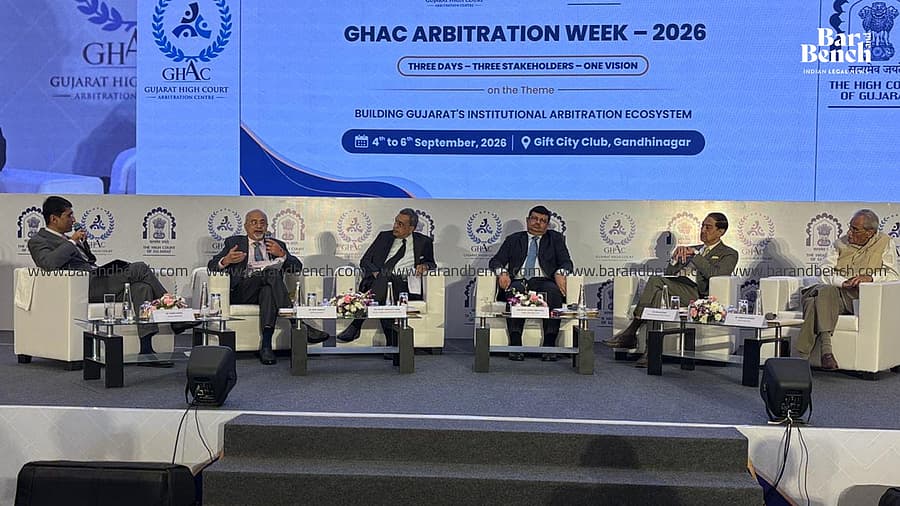
- The proposals were made at a panel discussion organized by the Gujarat High Court Arbitration Centre during its Arbitration Week 2026 event.
- The discussion also covered the impact of 2015 amendments and the 2024 IBA Guidelines on arbitration practices.
Calls for Arbitration Reform
A core component of Justice Karia's vision for Indian arbitration law reform is the formal integration of emergency arbitration into the statute.
Delhi High Court Justice Tejas Karia recently advocated for significant reforms to India's arbitration framework, emphasizing the need for statutory recognition of emergency arbitration and the establishment of a dedicated Gujarat High Court bench within GIFT City. These proposals, articulated during a panel discussion, aim to substantially streamline dispute resolution processes across the nation.
Justice Karia's remarks were delivered on Friday at an event hosted by the Gujarat High Court Arbitration Centre (GHAC) as part of its Arbitration Week 2026. The discussion took place in Gandhinagar's GIFT City, a burgeoning financial hub.
He highlighted that while India has seen considerable progress in arbitration since the 2015 amendments to the Arbitration Act, persistent procedural bottlenecks continue to burden the courts. Specifically, issues arising under Sections 9, 11, 34, and 37 of the Act contribute to judicial congestion, underscoring the urgency for further legislative and structural enhancements.
Enhancing Emergency Arbitration and Judicial Support
A core component of Justice Karia's vision for Indian arbitration law reform is the formal integration of emergency arbitration into the statute. He specifically championed a proposed Section 9A, which would provide the necessary legal backing for this mechanism. According to Justice Karia, the effective implementation of the emergency arbitration concept hinges on its institutional nature, meaning it must operate within established arbitration institutions.
This statutory framework, centered on Section 9A emergency arbitration India, is designed to empower parties to secure crucial interim relief swiftly, potentially within a timeframe of under 14 days. Such a provision would not only expedite dispute resolution but also significantly alleviate the burden on traditional court dockets, preventing them from becoming clogged with interim applications.
Furthermore, Justice Karia underscored GIFT City's considerable potential as a future arbitration hub. To fully capitalize on this, he suggested the establishment of a dedicated High Court bench within the special economic zone. This specialized judicial presence would provide localized and expert support for arbitration proceedings, further enhancing the efficiency and appeal of GIFT City as an international dispute resolution venue.
Expert Consensus on Future Directions
The panel discussion, which featured Justice Karia's insights, brought together a distinguished group of legal luminaries. Alongside Justice Karia, participants included former Supreme Court Justice MR Shah, Gujarat Advocate General Kamal Trivedi, and Senior Advocates Mihir Thakore and Janak Dwarkadas. The session was expertly moderated by Senior Advocate Shalin Mehta, fostering a comprehensive dialogue on the future of arbitration in India.
The discussion delved into two primary themes: an assessment of "The Post-2015 Amendment Era: Where have we progressed?" and an examination of "The New International Bar Association (IBA) Guidelines 2024: Conflicts, Disclosure & Arbitration Independence." These topics reflect the ongoing evolution of arbitration practices and the continuous effort to align Indian law with international best standards.
The consensus emerging from such high-level discussions, particularly regarding the Justice Tejas Karia emergency arbitration statutory status and the dedicated arbitration bench GIFT City, signals a strong push towards modernizing India's dispute resolution landscape. These proposed changes are critical for ensuring that India remains competitive as an arbitration destination, offering efficient and enforceable mechanisms for commercial disputes.
Practical Implications
Lawyers and compliance officers should monitor legislative developments regarding statutory recognition of emergency arbitration and the potential establishment of dedicated arbitration benches, as these changes could significantly impact the speed and enforceability of interim relief in Indian arbitration proceedings and streamline dispute resolution.
Source
How does this affect you?
Get an AI analysis of this article grounded in your jurisdictions, practice areas, and any policy documents you've uploaded to Wansom.
Finish Reading the Full Story and the Expert Analysis.
Wansom is AI and can make mistakes.