
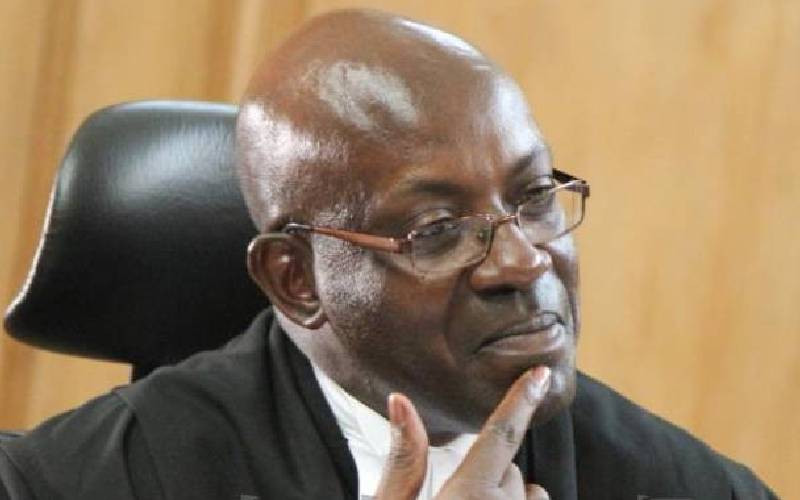
Kenya High Court: Justice Sankale Ole Kantai Awarded Sh2.5M DCI Damages
Summary
- The High Court found former DCI George Kinoti responsible for the unconstitutional arrest of Justice Sankale Ole Kantai.
- Justice Chacha Mwita, who has since been appointed to the Court of Appeal, ruled that the DCI violated the Constitution by arresting the judge, seizing his phone, and conducting a smear campaign.
- The DCI's actions against Justice Kantai occurred during the investigation into businessman Tob Cohen's death.
- Justice Sankale Ole Kantai was awarded Sh2.5 million in damages for the constitutional violations.
- This ruling reinforces constitutional limits on investigative powers and accountability for state agencies.
What Happened
As a direct consequence of these findings, Justice Sankale Ole Kantai was awarded damages amounting to Sh2.5 million, recognizing the harm inflicted by the DCI's unconstitutional actions.
The High Court of Kenya has recently scrutinized the actions of former Director of Criminal Investigation (DCI) George Kinoti, specifically concerning the arrest of Court of Appeal Judge Sankale Ole Kantai. This judicial review stems from events that unfolded during the investigation into the death of businessman Tob Cohen. The High Court's decision highlights significant procedural irregularities and constitutional breaches committed by the DCI under Kinoti's leadership.
In a pivotal judgment, Justice Chacha Mwita, who has since been appointed to the Court of Appeal, determined that the DCI's conduct, which included the apprehension of Justice Kantai, the seizure of his personal mobile phone, and a subsequent public smear campaign, constituted a violation of the nation's Constitution. As a direct consequence of these findings, Justice Sankale Ole Kantai was awarded damages amounting to Sh2.5 million, recognizing the harm inflicted by the DCI's unconstitutional actions. This ruling underscores the judiciary's role in safeguarding individual liberties against potential overreach by state investigative bodies.
Legal Context and Ruling
Justice Chacha Mwita's ruling meticulously detailed the constitutional infringements perpetrated by the DCI. The court found that the DCI's decision to arrest Justice Sankale Ole Kantai, a sitting Court of Appeal judge, without adhering to due process, was a direct contravention of fundamental rights. Furthermore, the arbitrary confiscation of Justice Kantai's mobile phone, a personal device, without proper legal justification, was identified as another significant breach. These actions, taken together, painted a picture of an investigative agency operating outside its constitutional mandate.
The judgment also specifically condemned the DCI's engagement in a "smear campaign" against Justice Kantai. Such a campaign, designed to tarnish an individual's reputation, particularly a judicial officer, was deemed an egregious abuse of power and a further violation of constitutional protections. The High Court's pronouncement serves as a critical reminder that even in the pursuit of justice, investigative bodies like the Kenya DCI must operate strictly within the confines of the law and respect the constitutional rights of all citizens, including those under investigation.
Why It Matters
This landmark decision by Justice Chacha Mwita carries substantial weight for the future conduct of law enforcement agencies in Kenya, particularly the DCI. By holding former DCI George Kinoti accountable for the unconstitutional actions against Justice Sankale Ole Kantai, the High Court has reinforced the principle that no individual or state institution is above the law. The award of Sh2.5 million in damages to Justice Kantai for his wrongful arrest and the subsequent violations sends a clear message about the financial consequences of such breaches.
The ruling serves as a crucial precedent, emphasizing the constitutional limits on investigative powers and the imperative for the DCI to adhere to due process. It highlights the judiciary's commitment to upholding the rule of law and protecting citizens from arbitrary state action. This judgment is particularly significant in the context of high-profile investigations, such as the Tob Cohen murder investigation, where the pressure to secure convictions must not overshadow the fundamental rights of suspects. It strengthens the legal framework for challenging instances of Kenya DCI constitutional violation and seeking redress for such infringements.
Practical Implications
This judgment reinforces the constitutional limits on investigative powers, particularly concerning the arrest and treatment of suspects. Lawyers can cite this precedent when challenging DCI actions that infringe on a client's rights, such as unlawful arrest or seizure of property, and when seeking damages for such violations.
Source
How does this affect you?
Get an AI analysis of this article grounded in your jurisdictions, practice areas, and any policy documents you've uploaded to Wansom.
Finish Reading the Full Story and the Expert Analysis.
Get the latest legal & regulatory intelligence in Kenya
Wansom is AI and can make mistakes.