
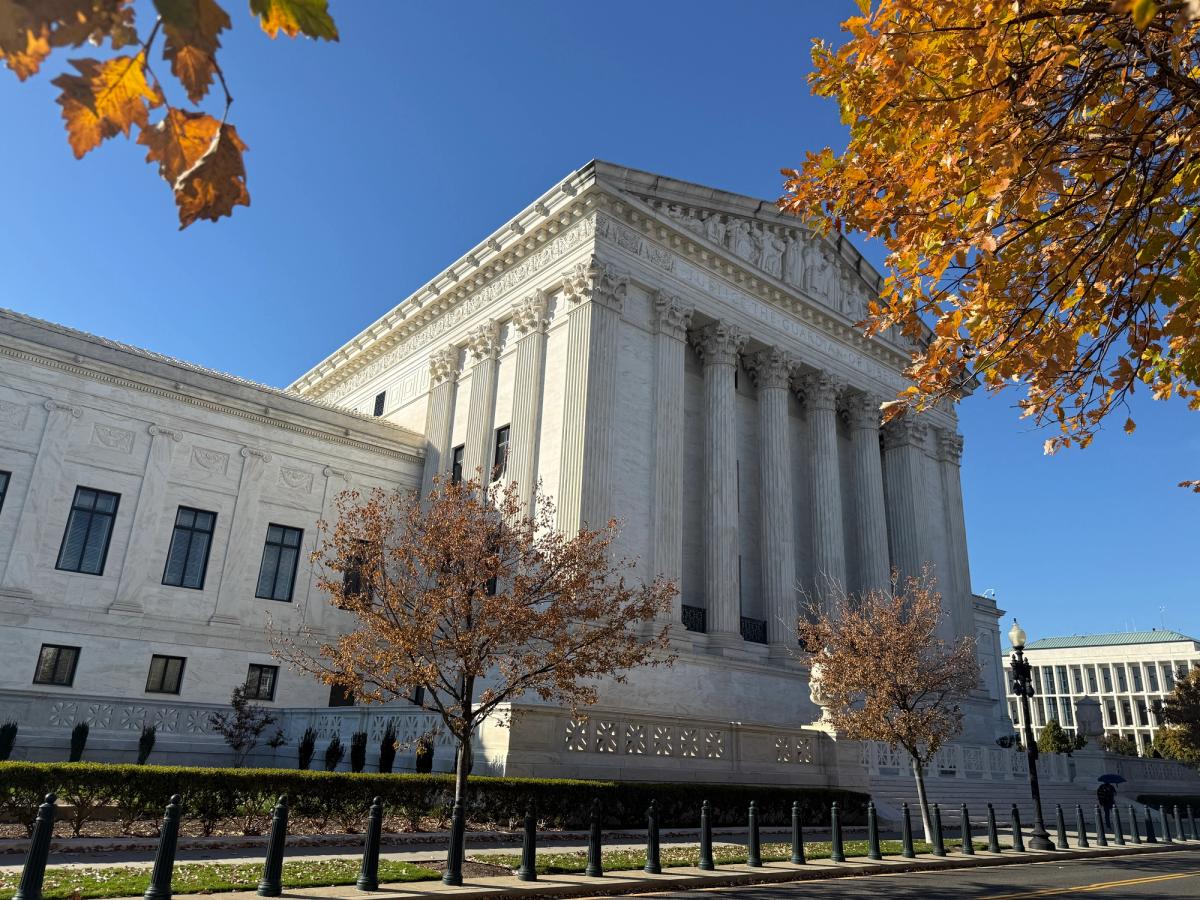
US Supreme Court: Justice O'Connor Grutter 25-Year Prediction Fulfilled
Summary
- In June 2023, the Supreme Court ruled that race-conscious admissions at Harvard and the University of North Carolina are unconstitutional.
- Chief Justice John Roberts and Justice Brett Kavanaugh cited Justice Sandra Day O’Connor’s 2003 prediction from *Grutter v. Bollinger* that racial preferences would be unnecessary in 25 years.
- Justice O’Connor had later expressed misgivings about her 25-year timeline, calling it a "misjudgment" in interviews after leaving the court.
- She had subsequently stated there was "no timetable" for when racial preferences would no longer be needed, which reflected her Sandra Day O'Connor affirmative action regrets.
The Supreme Court's Recent Ruling
When asked for a revised estimate, Justice O’Connor had candidly stated, "There’s no timetable. You just don’t know."
In a landmark decision issued in June 2023, the Supreme Court of the United States fundamentally reshaped the landscape of higher education admissions. The ruling in *Students for Fair Admissions, Inc. v. University of North Carolina* declared that the use of race-conscious admissions policies at both Harvard University and the University of North Carolina violated constitutional principles. This decision effectively ended a decades-long practice aimed at fostering diversity within academic institutions.
Chief Justice John Roberts, authoring the majority opinion, and Justice Brett Kavanaugh, in a concurring opinion, both referenced a significant prediction made two decades prior. They pointed to Justice Sandra Day O’Connor’s 2003 statement in *Grutter v. Bollinger*, which anticipated a future where racial preferences would no longer be necessary. This citation underscored the Court's view that the timeline for such policies had, in their estimation, expired, aligning with the original *Grutter v. Bollinger* 25-year timeline.
A Pivotal Prediction from Grutter v. Bollinger
The 2003 Supreme Court case of *Grutter v. Bollinger* affirmed the legality of race-conscious admissions, but Justice O'Connor's majority opinion included a notable forward-looking statement. She posited that "25 years from now, the use of racial preferences will no longer be necessary to further" the compelling interest in achieving student body diversity. This specific timeframe became a critical point of reference in subsequent legal and public discourse surrounding affirmative action.
Justice O'Connor's pronouncement established a perceived sunset clause for race-conscious policies, suggesting that societal progress would eventually render such measures obsolete. This judicial foresight, or the attempt to project future legal necessity, became a central theme in the recent *Students for Fair Admissions v UNC* decision, where the majority concluded that the envisioned 25-year period had run its course, thereby justifying the prohibition of race-conscious admissions Supreme Court policies.
Justice O'Connor's Evolving Perspective
According to Brooklyn Law School Ruth Bader Ginsburg Professor of Law Yuvraj Joshi, the justices in the 2023 case did not account for Justice O’Connor’s later misgivings regarding her own timeline. After her retirement from the Supreme Court, Justice Sandra Day O’Connor had engaged in interviews with her biographer, during which she had revisited her 25-year forecast. She had candidly acknowledged that the specific figure she had put forth "may have been a misjudgment." When pressed for a new estimate on when racial preferences might become unnecessary, Justice O’Connor had offered a more circumspect view, stating, "There’s no timetable. You just don’t know." This later perspective highlighted Justice O'Connor's affirmative action regrets regarding the certainty of her initial prediction.
The Challenge of Judicial Foresight
Justice O'Connor's evolving stance on her own *Grutter* prediction offers a compelling insight into the complexities of judicial foresight and the inherent difficulty in setting definitive timelines for constitutional principles. Her initial 25-year projection, while intended to guide the future of affirmative action, ultimately became a focal point for its dismantling, even as she herself had expressed doubts about its accuracy.
This episode underscores the dynamic nature of constitutional interpretation and the challenges faced by the Supreme Court in anticipating societal changes and their impact on legal frameworks. The contrast between her 2003 declaration and her later admission of a "misjudgment" serves as a powerful reminder that even the most esteemed legal minds grapple with the uncertainties of future policy and social evolution, particularly concerning sensitive issues like race-conscious admissions.
Practical Implications
This story primarily offers historical context on judicial foresight regarding affirmative action, rather than a direct actionable legal implication. It highlights the evolving nature of constitutional interpretation and the inherent uncertainty in predicting policy timelines, which may inform long-term strategic thinking for lawyers advising educational institutions on admissions policies.
Source
How does this affect you?
Get an AI analysis of this article grounded in your jurisdictions, practice areas, and any policy documents you've uploaded to Wansom.
Finish Reading the Full Story and the Expert Analysis.
Get the latest legal & regulatory intelligence in United States
Wansom is AI and can make mistakes.