
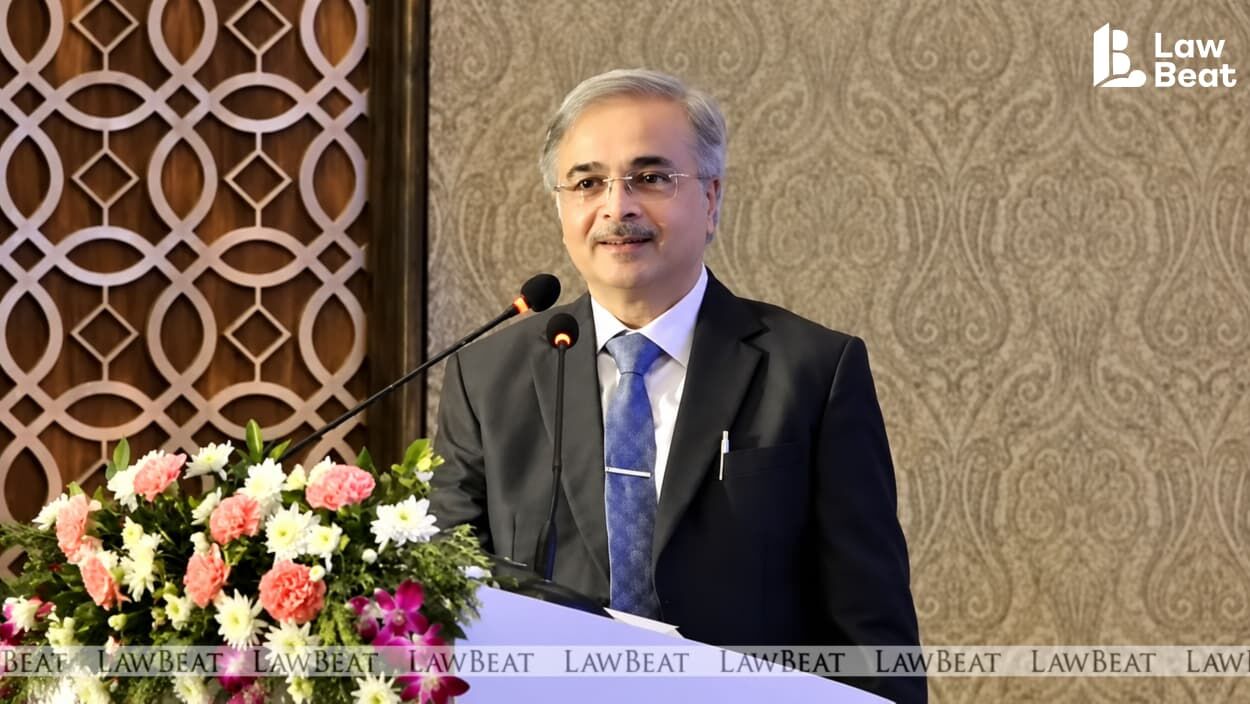
Justice NV Anjaria: Minimal Judicial Intervention Arbitration Essential
Summary
- Supreme Court Justice NV Anjaria advocated for minimal judicial intervention in arbitration at the GHAC Arbitration Week 2026.
- He identified five key areas for arbitration's revitalization, including cost-effectiveness, party-centricity, and accessibility.
- Anjaria highlighted Section 30 of the Arbitration and Conciliation Act, 1996, as crucial for encouraging settlements within arbitration.
- The Justice noted that despite its growth, arbitration has developed 'drawbacks and pitfalls,' misdirecting itself from its original purpose.
- The GHAC Arbitration Week 2026 aims to bolster Gujarat's institutional arbitration ecosystem and promote the state as a leading destination for efficient arbitration.
A Call for Minimal Judicial Intervention
Supreme Court Justice NV Anjaria underscored the imperative for minimal judicial intervention in arbitration, asserting that such restraint is essential to restore the fundamental 'spirit of arbitration' in India.
Supreme Court Justice NV Anjaria underscored the imperative for minimal judicial intervention in arbitration, asserting that such restraint is essential to restore the fundamental 'spirit of arbitration' in India. Speaking at the inaugural ceremony of the GHAC Arbitration Week 2026, Justice Anjaria highlighted that while arbitration has significantly expanded as a mechanism for justice delivery, it has simultaneously developed various drawbacks and inherent flaws that compromise its integrity.
Organized by the Gujarat High Court Arbitration Centre (Domestic & International) (GHAC) in collaboration with the Gujarat High Court, the event served as a platform for Justice Anjaria to articulate his vision for revitalizing the arbitration process. He emphasized that the current state of arbitration often deviates from its original purpose, suggesting a disconnect between its growth in age and the wisdom of its stakeholders.
Justice Anjaria noted that the Supreme Court has recently issued multiple judgments—specifically three to four—that reinforce the principle of limiting court intervention in arbitration proceedings and arbitrators' decisions to only the most compelling circumstances. This judicial stance signals a reinforced commitment to upholding the autonomy of arbitral processes, making robust arbitral proceedings critical for legal practitioners.
Pillars for Revitalizing Arbitration
To address the identified shortcomings and rejuvenate the arbitration landscape, Justice Anjaria outlined five crucial areas requiring immediate attention. Foremost among these is the principle of minimal judicial intervention, which he views as foundational to the process's integrity. He also stressed the importance of ensuring Indian arbitration is cost-effective, avoiding excessive expenses in terms of money, time, and procedural complexity.
Furthermore, Justice Anjaria advocated for maintaining arbitration as a party-centric process, cautioning against its degeneration into an arbitrator-centric system. He also called for arbitration to remain accessible as a 'common men's forum,' rather than becoming an 'elitist club' exclusively for wealthy litigants. This focus on accessibility aims to ensure that arbitration serves its intended purpose as a readily available dispute resolution method for all.
Crucially, Justice Anjaria identified Section 30 of the Arbitration and Conciliation Act, 1996, as embodying the very essence of arbitration. This section, which deals with settlement, actively encourages the use of mediation, conciliation, or similar procedures during arbitration. He noted that such settlement mechanisms are not incompatible with arbitration agreements and, if properly utilized, can yield 'miraculous results,' promoting efficient and amicable dispute resolution.
Balancing Autonomy with Oversight
Justice Anjaria's critique extended to the observation that contemporary arbitration has 'misdirected itself' from its foundational objectives. He lamented that while the mechanism has grown significantly and assumed global dimensions, becoming an institution in itself, the stakeholders involved have not matured in wisdom or in upholding the true spirit of arbitration.
The opening ceremony also featured insights from other distinguished legal figures. Justice Vipul M Pancholi acknowledged the indispensable role courts play in the field of arbitration, yet he concurrently stressed the necessity for disciplined judicial supervision. Complementing this perspective, Justice KV Vishwanathan highlighted the delicate balance required between ensuring party autonomy in arbitration and the judiciary’s fundamental responsibility to uphold fairness, impartiality, and adherence to the rule of law.
Strengthening India's Arbitration Landscape
The GHAC Arbitration Week 2026 is a three-day initiative designed to bolster Gujarat’s institutional arbitration ecosystem. The event's broader objective is to position the State as a premier destination for efficient, credible, and institutional arbitration, aligning with the vision of a robust and self-sufficient dispute resolution framework.
The discussions at the event, particularly Justice Anjaria's emphasis on Justice NV Anjaria minimal judicial intervention arbitration, underscore a significant push within the Indian legal system towards fostering a more independent and effective arbitration environment. This approach aims to enhance the overall credibility and cost-effectiveness of arbitration in India, making it a more attractive and reliable option for dispute resolution.
Practical Implications
This signals a reinforced judicial stance in India towards limited court interference in arbitration, making it critical for lawyers to ensure robust arbitral proceedings and advise clients on the reduced scope for challenging awards. It also highlights the importance of leveraging settlement mechanisms within arbitration, as per Section 30 of the Act.
Source
Source: Original reporting via Live Law
How does this affect you?
Get an AI analysis of this article grounded in your jurisdictions, practice areas, and any policy documents you've uploaded to Wansom.
Finish Reading the Full Story and the Expert Analysis.
Wansom is AI and can make mistakes.