
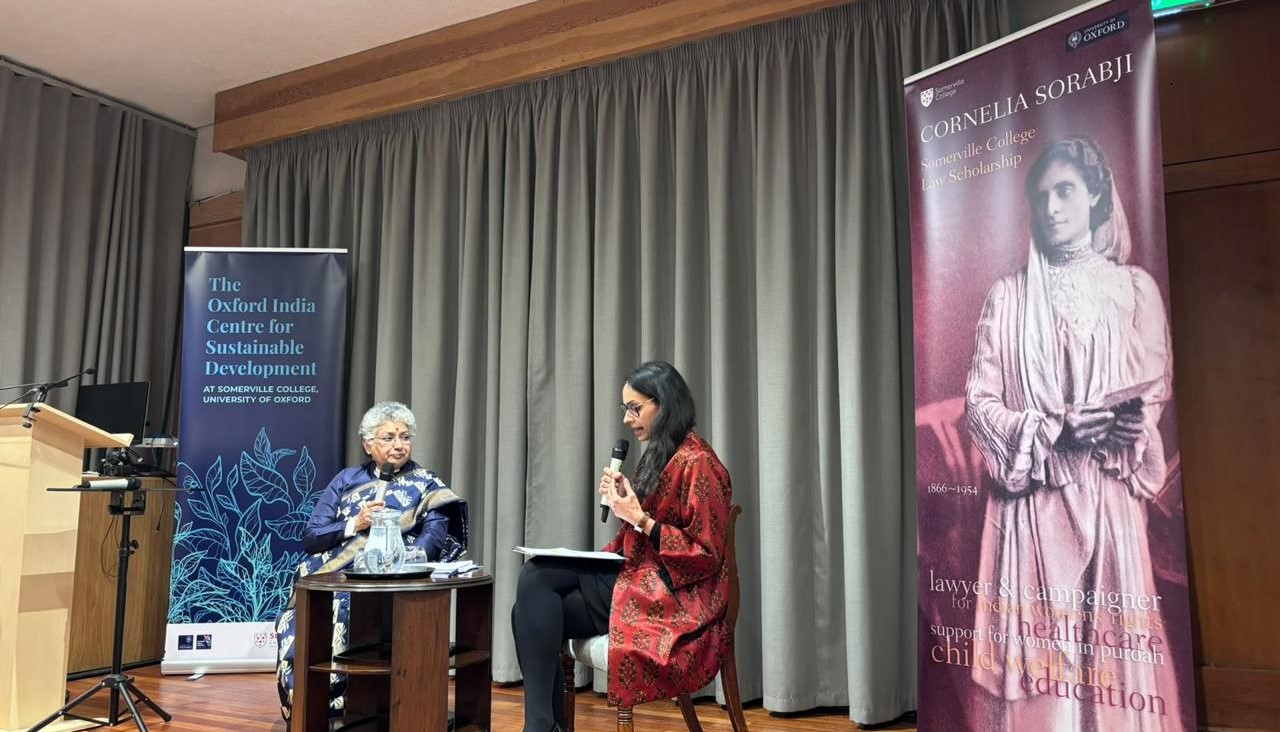
Justice Nagarathna: Women's Rights in India Need Substantive Equality
Summary
- Justice B.V. Nagarathna delivered the inaugural Cornelia Sorabji Memorial Lecture at Oxford.
- Her lecture explored landmark judgments, substantive equality, and women's representation in India.
- She emphasized that the presence of women in high public office does not signify universal societal equality.
- Justice Nagarathna highlighted the ongoing, unfinished pursuit of gender justice in India.
What Happened
A powerful statement from Justice Nagarathna underscored a critical distinction: the mere existence of women in high public office does not establish that equality has been achieved throughout society.
Justice B.V. Nagarathna recently delivered the inaugural Cornelia Sorabji Memorial Lecture at Oxford, an event that provided a platform for profound reflection on the trajectory of women's rights in India. This distinguished lecture series is named in honor of Cornelia Sorabji, a trailblazing figure recognized as the first woman to pursue legal studies at Oxford and the first female barrister in India, setting a precedent for women in the legal profession.
During her address, Justice Nagarathna meticulously explored various critical facets pertaining to the advancement of women's rights within the Indian legal framework. Her comprehensive discourse offered a detailed overview, encompassing both historical legal milestones and the contemporary challenges that continue to shape the landscape of gender justice. The prestigious setting at Oxford underscored the global significance of India's ongoing journey towards achieving gender parity.
Key Insights from the Lecture
Justice Nagarathna's lecture delved into several pivotal themes, including an in-depth examination of landmark judgments that have profoundly shaped the landscape of women's rights in India. She meticulously traced the evolution of legal interpretations and judicial activism, all aimed at securing greater equity for women. This historical perspective is crucial for understanding the current state of gender justice India legal, highlighting the progress made and the persistent gaps.
A central focus of her discussion was the intricate concept of substantive equality India law, which she carefully distinguished from mere formal equality. Justice Nagarathna underscored that true equality extends beyond simply treating individuals equally under the law; it necessitates addressing systemic disadvantages and ensuring equitable outcomes for all. This nuanced approach is fundamental for achieving genuine gender justice, moving beyond superficial parity to address root causes of inequality.
Furthermore, Justice Nagarathna critically addressed the issue of women's representation, particularly within the Indian judiciary and other high public offices. She highlighted that while the increasing presence of women in such prominent roles is an undeniably positive development, it does not automatically signify that equality has been universally achieved across all strata of society. This point powerfully illustrates the ongoing, unfinished pursuit of gender justice, emphasizing that visible representation is only one component of a much larger struggle.
The Unfinished Pursuit of Equality
A powerful statement from Justice Nagarathna underscored a critical distinction: the mere existence of women in high public office does not establish that equality has been achieved throughout society. This observation serves as a potent reminder that while visible representation is important for inspiring future generations and breaking barriers, it does not negate the pervasive challenges and systemic inequalities many women still face in their daily lives. It calls for a deeper, more critical examination of societal structures, cultural norms, and economic disparities.
Her remarks highlight that the journey towards comprehensive gender justice in India remains incomplete, despite significant legal reforms and increased women's representation in certain sectors. Systemic inequalities persist, affecting women in various aspects of life, from economic opportunities to safety and access to resources. This perspective is essential for policymakers and legal practitioners alike, as it points to areas where further legislative, social, and cultural interventions are required to ensure that the benefits of progress truly reach all women across the nation.
Why It Matters
The insights offered by Justice Nagarathna regarding women's rights India are particularly pertinent for legal professionals and compliance officers operating within the country. Her emphasis on substantive equality and the ongoing pursuit of gender justice provides a critical framework for interpreting existing laws, advocating for necessary reforms, and understanding the spirit behind legislative intent. Understanding this perspective is key for advising clients on a wide array of issues, ranging from workplace discrimination and equal pay to social justice initiatives and corporate governance.
Her lecture serves as a compelling call to action, urging continued vigilance and proactive measures to dismantle persistent barriers to full equality. For those involved in the Indian legal system, her discourse offers invaluable context for understanding the evolving nature of gender justice and the imperative to move beyond superficial indicators of progress. It encourages a deeper engagement with the challenges women face, fostering a commitment to shaping future legal strategies and ensuring equitable outcomes that reflect the true spirit of substantive equality.
Practical Implications
Lawyers and compliance officers in India should note Justice Nagarathna's insights into the ongoing pursuit of gender justice and substantive equality. This discourse provides critical context for interpreting existing laws, advocating for policy changes, and advising clients on matters related to women's rights and gender-based discrimination, particularly in areas of employment, public office, and social justice.
Source
Source: Original reporting via SCC Times
How does this affect you?
Get an AI analysis of this article grounded in your jurisdictions, practice areas, and any policy documents you've uploaded to Wansom.
Finish Reading the Full Story and the Expert Analysis.
Get the latest legal & regulatory intelligence in India
Wansom is AI and can make mistakes.