
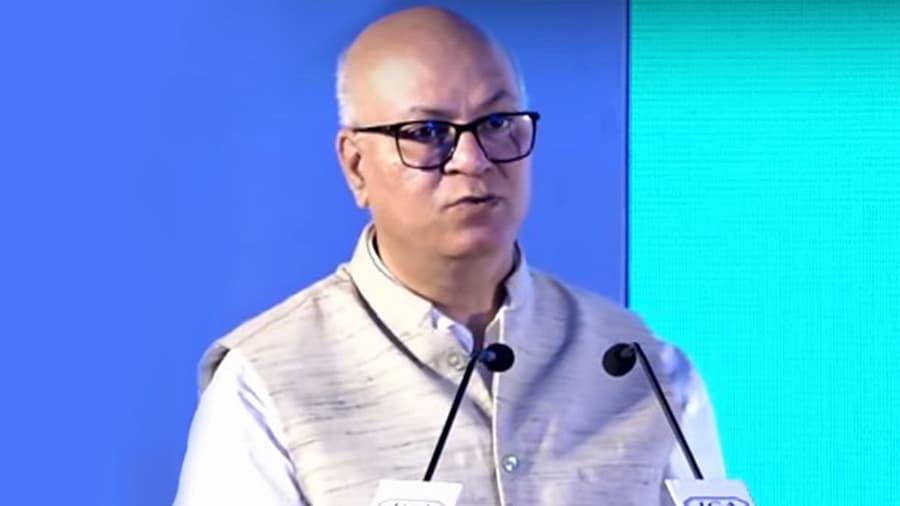
Justice MS Sonak Farewell Speech Jharkhand: Judges Don't Deserve Praise For Duty
Summary
- Mahesh Sharadchandra Sonak, then Chief Justice of the Jharkhand High Court, stated that judges should not be praised for merely performing their duties.
- Justice Sonak emphasized the importance of judges being open to criticism during his farewell address.
- He highlighted the inherent fallibility of judges, noting that human imperfection is present in every verdict.
- His judicial career included nearly 13 years as an Additional Judge at the Bombay High Court, starting in June 2013.
- Justice Sonak assumed the role of Chief Justice of the Jharkhand High Court in January 2026 before his recent retirement.
A Farewell Address on Judicial Accountability
His insistence that judges should not expect praise for merely performing their duties, coupled with his call for embracing criticism, offers a profound commentary on judicial accountability in India.
On a recent Friday, Mahesh Sharadchandra Sonak, who was then Chief Justice of the Jharkhand High Court, delivered a notable address during an event commemorating his retirement from judicial service. During his farewell remarks, Justice Sonak articulated a distinct perspective on the role and perception of judges, asserting that they do not merit commendation simply for fulfilling their prescribed duties. He further emphasized the critical importance of the judiciary's openness to scrutiny and willingness to embrace criticism.
Justice Sonak conveyed a personal unease with the prevailing custom of lauding judges for their routine judicial performance. He posited that individuals should not be applauded for merely executing responsibilities that are inherently expected of them. This stance underscores a call for a more realistic and less ceremonial view of judicial service, focusing instead on the substantive execution of justice.
The Imperfect Nature of Justice
Elaborating on his philosophy, Justice Sonak underscored the fundamental fallibility of those who preside over legal proceedings. He candidly stated that behind every judicial determination lies a judge grappling with inherent imperfections. This acknowledgment highlights the human element central to the administration of justice, reminding observers that judges, despite their esteemed positions, remain susceptible to human error.
To illustrate his point, Justice Sonak invoked the wisdom of legal luminaries. He quoted Oliver Wendell Holmes, who once lamented that many would prefer "to be ruined by praise than be saved by criticism," thereby reinforcing his argument for the necessity of accepting constructive feedback. Furthermore, he cited Benjamin Cardozo, noting that "great tides and currents which engulf the rest of the men do not turn aside in their course and pass the judges by," signifying that judges are not immune to the societal forces and pressures that affect everyone else. He also acknowledged the significant pressures under which courts operate, further complicating the judicial task.
A Distinguished Judicial Career
Justice Sonak's insights are informed by a lengthy and distinguished career on the bench. His journey in the judiciary began with his elevation as an Additional Judge to the Bombay High Court in June 2013. He dedicated nearly thirteen years of service to the Bombay High Court, gaining extensive experience and shaping his judicial outlook during this significant tenure.
Following his impactful service in Bombay, Justice Sonak assumed the pivotal role of Chief Justice of the Jharkhand High Court in January 2026. His farewell speech, delivered upon his retirement, thus represents the culmination of decades of judicial experience, offering a seasoned perspective on the ethical and practical dimensions of a judge's responsibilities.
Implications for Judicial Accountability
The remarks made by Justice Mahesh Sharadchandra Sonak carry considerable weight, particularly coming from a retiring Chief Justice. His insistence that judges should not expect praise for merely performing their duties, coupled with his call for embracing criticism, offers a profound commentary on judicial accountability in India. This perspective encourages a culture where self-reflection and external scrutiny are seen as integral to maintaining the integrity and effectiveness of the judicial system.
By openly discussing the human fallibility of judges and the complex pressures they face, Justice Sonak provides a valuable insight into the internal workings and challenges of the judiciary. His statements, including the observation that some judicial decisions can engage in "dialogues with generations," underscore the long-term impact and profound responsibility inherent in judicial pronouncements, advocating for a judiciary that is both humble and resilient.
Practical Implications
This article offers insight into the judicial philosophy and ethical perspective of a retiring Chief Justice, particularly regarding judicial accountability and the acceptance of criticism. While not directly actionable, understanding such perspectives can inform how lawyers approach judicial interactions and advocacy, especially in jurisdictions where Justice Sonak presided or where similar judicial philosophies are prevalent. It highlights a judge's view on the inherent fallibility of the judiciary.
Source
How does this affect you?
Get an AI analysis of this article grounded in your jurisdictions, practice areas, and any policy documents you've uploaded to Wansom.
Finish Reading the Full Story and the Expert Analysis.
Get the latest legal & regulatory intelligence in India
Wansom is AI and can make mistakes.