
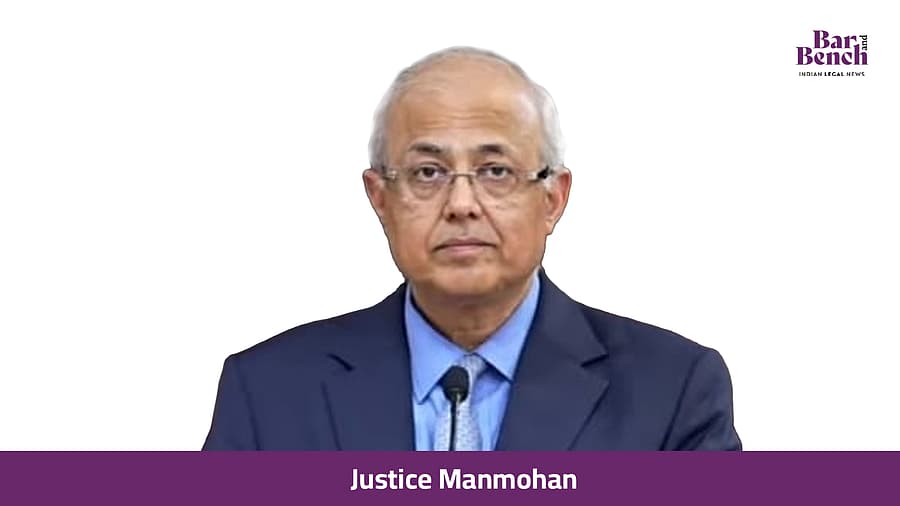
Justice Manmohan: Confronting Women's Unequal Treatment in India
Summary
- Supreme Court Justice Manmohan stated that a society failing to treat women equally cannot be considered healthy.
- He delivered these remarks at the 31st Justice Sunanda Bhandare Memorial Lecture, urging a challenge to normalized unequal treatment of women.
- Justice Manmohan questioned who is typically the last to eat, rest, or see a doctor in a family, identifying it as the woman.
- He emphasized that health extends beyond the absence of disease, encompassing societal inequalities affecting women's well-being.
- The Justice called for introspection on women's independent decision-making regarding education, marriage, and childbirth, despite acknowledging progress in maternal mortality and institutional deliveries.
What Happened
He firmly asserted that a healthy society is unattainable without first achieving a just one.
Supreme Court Justice Manmohan recently delivered remarks emphasizing the critical link between societal health and the equitable treatment of women. Speaking on Friday at the 31st Justice Sunanda Bhandare Memorial Lecture, Justice Manmohan addressed the theme 'A Just Society is a Healthy Society: Gender, Health and Human Development'. His address underscored the necessity of confronting and dismantling the ingrained societal acceptance of women's unequal treatment.
During his speech, Justice Manmohan challenged conventional perceptions by posing a series of fundamental questions. He inquired about the individual within a family typically last to consume food, find rest, or seek medical attention, identifying this role as usually falling to "the lady in the house." He articulated that while such scenarios have become normalized, the moment has arrived to question these established norms if the goal is to cultivate a truly just society. He firmly asserted that a healthy society is unattainable without first achieving a just one.
Judicial Perspective on Inequality
Justice Manmohan elaborated on his perspective, stating that the concept of health extends far beyond merely the absence of illness. He highlighted that broader societal disparities significantly impact the physical and mental well-being of women. This judicial view on gender equality suggests a deeper understanding of systemic issues.
He further questioned the capacity of medical institutions to address these pervasive societal ailments. While a hospital can effectively treat an individual patient's specific disease, Justice Manmohan pondered whether it possesses the means to remedy a society that fails to adequately treat or grant full rights to half of its population. He identified this as a paramount challenge facing contemporary society, underscoring the profound implications of Justice Manmohan's comments on women's unequal treatment.
Call for Societal Introspection
The Supreme Court Justice also prompted a deeper societal introspection concerning women's autonomy. He specifically raised questions about women's ability to make independent choices regarding their education, marriage, and decisions about having children. These areas, he suggested, demand serious consideration and re-evaluation from society at large.
His remarks serve as a powerful call for a re-examination of deeply embedded social structures and expectations that often limit women's agency. Justice Manmohan's perspective highlights that true progress requires not just legal frameworks but also a fundamental shift in societal attitudes towards gender roles and individual freedoms, reflecting a significant India women's rights judicial view.
Progress and Persistent Challenges
Despite these significant challenges, Justice Manmohan acknowledged certain areas of progress within India. He specifically noted the country's achievements in reducing maternal mortality rates, indicating improvements in healthcare access and outcomes for expectant mothers. Furthermore, he pointed to an increase in institutional deliveries, suggesting a positive trend towards safer childbirth practices.
However, these advancements, while commendable, do not negate the broader issues of gender inequality that persist. Justice Manmohan's address ultimately served as a reminder that while some indicators show improvement, the fundamental societal structures that perpetuate women's unequal treatment still require urgent attention and systemic change to foster a truly healthy and just society.
Practical Implications
This article reflects a Supreme Court Justice's perspective on societal gender inequality, highlighting a judicial philosophy that may influence future legal interpretations or policy discussions concerning women's rights and social justice in India. It does not present an immediate actionable item for lawyers or compliance officers, but rather provides insight into the evolving judicial thought on these issues.
Source
How does this affect you?
Get an AI analysis of this article grounded in your jurisdictions, practice areas, and any policy documents you've uploaded to Wansom.
Finish Reading the Full Story and the Expert Analysis.
Get the latest legal & regulatory intelligence in India
Wansom is AI and can make mistakes.