
Justice Indira Banerjee: Women Arbitrators Appointments Linked to Judiciary Diversity
Summary
- Justice Indira Banerjee attributed the low number of women arbitrators to their limited representation in the higher judiciary.
- A study by the Milon K. Banerji Arbitration Centre found that men constitute 70% of court-appointed arbitrators, while women make up only 30%.
- The "Arbitrator Appointments in Numbers" report was prepared by the MKBAC at NALSAR University of Law, Hyderabad.
- The study highlights a significant gender disparity in Indian arbitration appointments, prompting discussion among legal experts.
Understanding the Gender Disparity
Justice Banerjee specifically linked the lower number of women appointed as arbitrators to the historically limited presence of women within the higher judiciary, particularly at the Supreme Court level.
A recent study has shed light on a significant gender disparity in the appointment of arbitrators in India, with former Supreme Court Justice Indira Banerjee offering insights into the underlying causes. Justice Banerjee specifically linked the lower number of women appointed as arbitrators to the historically limited presence of women within the higher judiciary, particularly at the Supreme Court level. This observation provides a crucial context for understanding the broader challenges faced by women in legal leadership roles.
The empirical study, titled "Arbitrator Appointments in Numbers," revealed a stark imbalance: men constituted approximately 70 percent of court-appointed arbitrators, while women accounted for only 30 percent. These findings underscore a systemic issue within the dispute resolution landscape, suggesting that the pipeline for female arbitrators may be impacted by their representation in other senior legal positions.
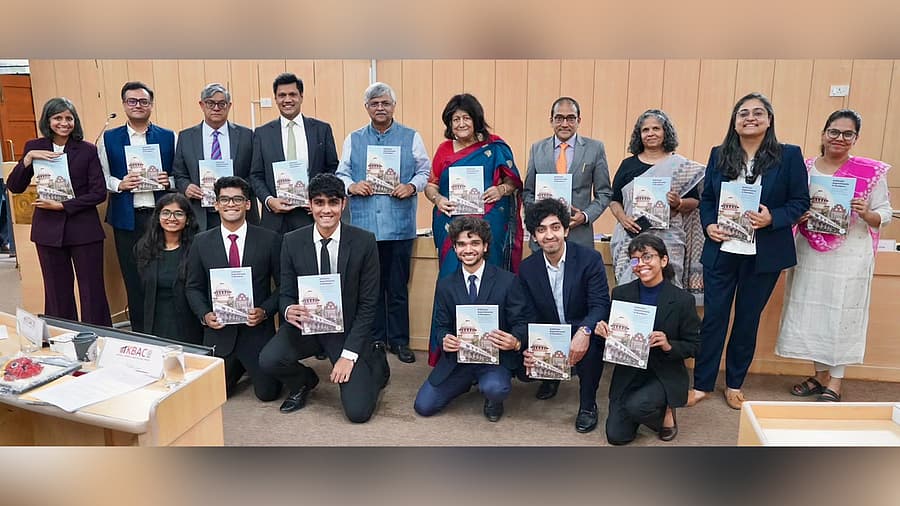
Justice Banerjee's remarks were made during the launch event for this comprehensive report, which meticulously analyzed arbitrator appointments. Her perspective, drawing from her own experience and extensive legal career, frames the issue not merely as a matter of individual appointments but as a reflection of broader historical trends in judicial diversity.
The MKBAC Study and Its Context
The "Arbitrator Appointments in Numbers" study was meticulously prepared by the Milon K. Banerji Arbitration Centre (MKBAC), an institution based at NALSAR University of Law in Hyderabad. This research initiative provides a data-driven foundation for discussions surrounding gender representation in arbitration, offering concrete figures that illustrate the current landscape.
The MKBAC boasts a distinguished leadership, with former Supreme Court Justice Rohinton Fali Nariman serving as its Chair. Senior Advocate Ritin Rai holds the position of Co-Chair, while Advocate Dr. Amit George directs the research efforts. Senior Advocate Gourab Banerji supports the Centre as its Donor and Patron, and Advocates Shreya Parikh and Chand Chopra contribute as Associate Directors (Research).
Numerous individuals contributed to the report's development. The research team comprised Adishree Krishnan, Aditi Bhojnagarwala, Arnav Mathur, Hamza Khan, Mahika Roy, Manav Pamnani, and Zorawar Almeida. The technical editing of the report was handled by Hruthika Addlagatta and Sukaina Naqvi, with Eluckiaa Asaithambi serving as the Faculty Coordinator, ensuring the academic rigor and quality of the publication.
Expert Perspectives and Implications
The launch event for the MKBAC study brought together a distinguished panel of legal experts to discuss its findings and implications. Alongside Justice Indira Banerjee and the MKBAC researchers, the discussion featured Delhi High Court judge Justice Prateek Jalan and Bombay High Court judge Justice Somasekhar Sundaresan, adding judicial perspectives to the conversation. Senior Advocates Gourab Banerji and Ritin Rai also participated, contributing their extensive experience from the bar.
The collective insights from these prominent legal figures underscored the importance of the study's findings in addressing gender disparity in Indian arbitration. The report not only quantifies the imbalance but also initiates a vital dialogue on how to foster more equitable selection processes. This focus on gender disparity in Indian arbitration is crucial for promoting fairness and inclusivity within the legal profession and dispute resolution mechanisms.
The findings of the "Arbitrator Appointments in Numbers" report, coupled with Justice Banerjee's commentary, highlight a critical area for reform and discussion within the legal community. The documented imbalance in arbitrator appointments reflects broader challenges related to the representation of women in higher judicial roles, emphasizing the interconnectedness of diversity efforts across different facets of the legal system in India.
Practical Implications
Lawyers and arbitration practitioners should be aware of the documented gender disparity in arbitrator appointments, as highlighted by Justice Banerjee and the MKBAC study. This insight can inform strategies for proposing diverse arbitrator panels, advocating for equitable selection processes, and contributing to broader discussions on diversity within the legal profession and dispute resolution.
Source
How does this affect you?
Get an AI analysis of this article grounded in your jurisdictions, practice areas, and any policy documents you've uploaded to Wansom.
Finish Reading the Full Story and the Expert Analysis.
Get the latest legal & regulatory intelligence in India
Wansom is AI and can make mistakes.