
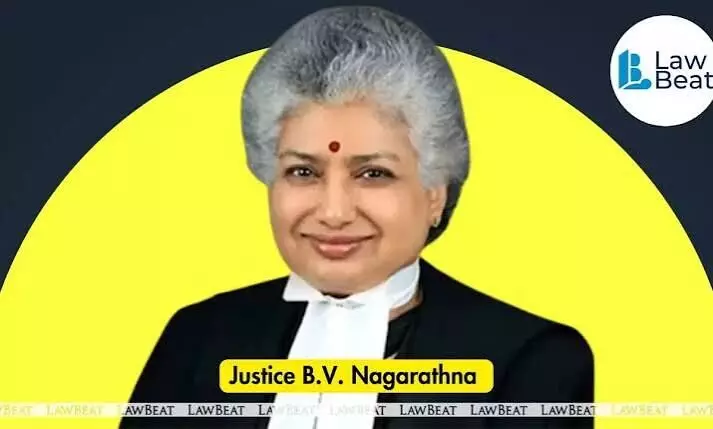
Justice BV Nagarathna: 1/3 Women Lawyers Reservation on Government Panels
Summary
- Justice B.V. Nagarathna delivered the inaugural Cornelia Sorabji Memorial Lecture at Somerville College.
- She stated that women in high office do not signify that equality has been achieved.
- Justice Nagarathna warned that more laws alone cannot secure access to justice.
- She pressed for a one-third reservation for women lawyers on government panels.
- She also emphasized that women's empowerment is incomplete without the rights to be born, inherit, and be safe.
A Call for Systemic Change
Justice B.V. Nagarathna specifically pressed for a one-third reservation for women lawyers on government panels, signaling a concrete step towards equitable representation in the legal sphere.
During the inaugural Cornelia Sorabji Memorial Lecture, held at Somerville College, Justice B.V. Nagarathna delivered a significant address challenging prevailing notions of gender equality. She articulated that the mere presence of women in high-ranking positions does not inherently signify that true equality has been achieved within society. Her remarks underscored a deeper, more pervasive issue that requires fundamental re-evaluation.
Justice Nagarathna further cautioned against the overreliance on legislative measures alone to address systemic injustices. She emphasized that simply enacting additional laws would not, by itself, guarantee comprehensive access to justice for all. Instead, she advocated for more direct and structural interventions, particularly in the legal profession. A key proposal from her address was the implementation of a one-third reservation for women lawyers on government panels, a measure aimed at actively fostering greater representation and inclusion.
Redefining Women's Empowerment
Expanding on her vision, Justice Nagarathna presented a broader definition of women's empowerment in India, asserting that it remains fundamentally incomplete without the assurance of basic human rights. She highlighted that genuine empowerment cannot exist unless women are guaranteed the right to be born, the right to inherit property, and the right to live safely, free from harm. These foundational rights, she argued, are prerequisites for any meaningful progress towards gender parity.
Her discourse also included a pointed call for introspection from male society, suggesting that a critical self-assessment is necessary to dismantle entrenched biases and societal structures that impede women's advancement. This perspective frames women's empowerment not just as a legal or political issue, but as a societal imperative requiring a shift in collective consciousness and behavior to ensure equitable access to justice for women across India.
Advancing Legal Representation
The specific proposal for a one-third reservation for women lawyers on government panels represents a tangible step within Justice Nagarathna's broader call for legal reforms. This initiative directly addresses the underrepresentation of women in influential legal roles and aims to ensure that diverse perspectives are included in governmental legal decision-making processes. Such a reservation could significantly impact the landscape for women lawyers, creating new avenues for professional growth and influence.
This proposed measure, if adopted, would move beyond symbolic gestures by mandating active inclusion, thereby enhancing access to justice for women in India by ensuring their voices are heard and represented at critical levels. It underscores the belief that structural changes, like the Justice BV Nagarathna women lawyers reservation, are essential to complement legislative efforts and truly advance the cause of gender equality within the legal system.
Practical Implications
Lawyers, particularly those in India, should monitor any legislative or policy developments stemming from Justice Nagarathna's call for a one-third reservation for women on government legal panels, as this could significantly impact appointment processes and create new opportunities or considerations for legal firms and individual practitioners.
Source
How does this affect you?
Get an AI analysis of this article grounded in your jurisdictions, practice areas, and any policy documents you've uploaded to Wansom.
Finish Reading the Full Story and the Expert Analysis.
Get the latest legal & regulatory intelligence in India
Wansom is AI and can make mistakes.