
Judge Cooper: Questions Kennedy Center Trump Name Plan Legality
Summary
- Judge Christopher Cooper expressed concern that the Kennedy Center Board's new plan to acknowledge former President Trump could violate his prior injunction.
- The board's proposal includes an inscription 'Endowed by the Trump Kennedy Center Fund' and renaming the surrounding complex the 'President Donald J. Trump Plaza'.
- This follows Judge Cooper's May 29 order to remove Trump's name from the building's facade, citing the board's overreach of its statutory authority under a 1964 congressional act.
- Justice Department attorneys argued the new inscription is an acknowledgment of fundraising, not a memorial, and that the naming statute only applies to the main building.
- Representative Joyce Beatty filed an emergency motion to block the board's resolution, with her attorney accusing the government of 'direct defiance' of the court's order.
Ongoing Naming Dispute at Kennedy Center
This case serves as a critical reminder for lawyers advising government agencies or cultural institutions on naming rights and statutory interpretation, underscoring the judiciary's strict enforcement of legislative mandates and prior injunctions, even against creative attempts to acknowledge donors or circumvent court orders.
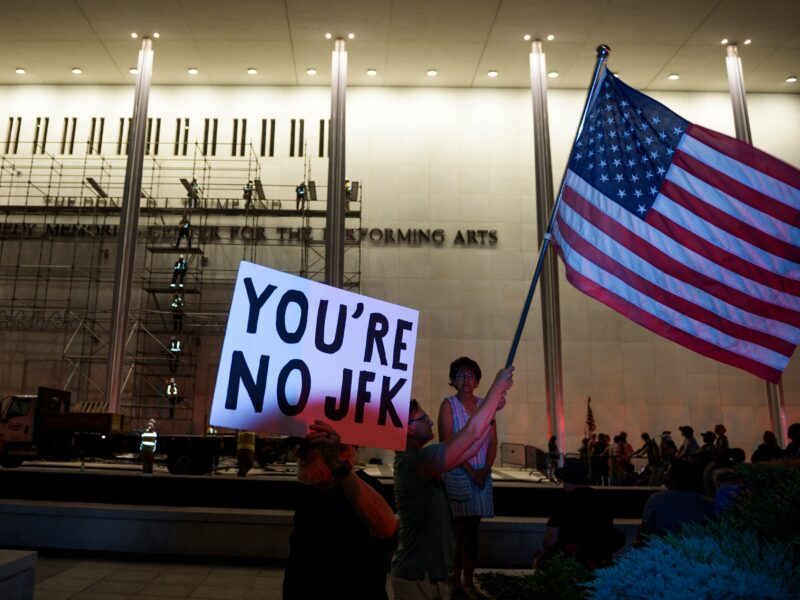
A federal judge recently voiced significant apprehension regarding the Kennedy Center Board of Trustees' renewed efforts to incorporate former President Donald Trump's name into the cultural institution's complex. U.S. District Judge Christopher Cooper convened a hearing after Ohio Democratic Representative Joyce Beatty initiated an emergency motion to halt a resolution approved by the board on August 13. This resolution outlined plans to commence work on September 8 for a new inscription and renaming scheme.
The proposed changes involve placing the phrase "Endowed by the Trump Kennedy Center Fund" directly beneath President John F. Kennedy’s name on the building. Furthermore, the entire surrounding complex would be designated the "President Donald J. Trump Plaza." Judge Cooper's concern stems from the potential for these actions to violate a prior injunction he issued on May 29, which had mandated the removal of Trump's name from the building's facade and blocked a planned two-year shutdown of the center scheduled to begin on July 6.
Legal Arguments and Judicial Scrutiny
Judge Cooper's earlier May 29 ruling found that the Kennedy Center Board of Trustees had exceeded its statutory authority by unilaterally renaming the institution. This decision was grounded in the 1964 congressional bill that originally rechristened the building from the "National Cultural Center," with Cooper emphasizing that only Congress holds the power to alter the center's name.
During the recent hearing, Justice Department attorney Brantley Mayers contended that the new inscription was intended merely as an acknowledgment of the former president's ongoing fundraising and restoration contributions, rather than a formal memorial. Mayers further argued that congressional restrictions on additional memorials, particularly a 1983 bar, applied solely to the main building itself, not to the surrounding complex or other structures. He suggested that other portions of the Kennedy Center complex could be named after additional presidents or generous donors, asserting that the foundational statute only protected the primary building. Judge Cooper, however, expressed skepticism, noting that the only other named entities within the center—the Eisenhower Theater and the Sousa Concert Hall stage—were designated before Congress specifically prohibited additional memorials. He pointedly questioned whether this interpretation meant the entire complex was essentially "up for sale," allowing any parcel to recognize a president or donor, a position Mayers affirmed.
Allegations of Defiance and Jurisdictional Questions
Nathaniel Zelinsky of the Washington Litigation Group, representing Representative Beatty, accused the government of being in "direct defiance" of Judge Cooper's permanent injunction against unilaterally adding the former president's name. Zelinsky sharply criticized the government's warning in its reply brief that it might demolish the Kennedy Center and replace it with an outdoor amphitheater if further blocked from closing it for renovations, likening the statement to a veiled threat from a cartoonish figure. He urged Judge Cooper to "put an end to this charade."
A significant portion of the hearing was dedicated to determining whether Judge Cooper retained jurisdiction to issue further relief, given that his May 29 decision was currently pending before the D.C. Circuit Court of Appeals. This case serves as a critical reminder for lawyers advising government agencies or cultural institutions on naming rights and statutory interpretation, underscoring the judiciary's strict enforcement of legislative mandates and prior injunctions, even against creative attempts to acknowledge donors or circumvent court orders.
Practical Implications
This case serves as a critical reminder for lawyers advising government agencies or cultural institutions on naming rights and statutory interpretation. It underscores the judiciary's strict enforcement of legislative mandates and prior injunctions, even against creative attempts to acknowledge donors or circumvent court orders, highlighting potential compliance risks for boards exceeding their statutory authority.
Source
How does this affect you?
Get an AI analysis of this article grounded in your jurisdictions, practice areas, and any policy documents you've uploaded to Wansom.
Finish this article free. Just your email for instant unlock.
Wansom is AI and can make mistakes.