
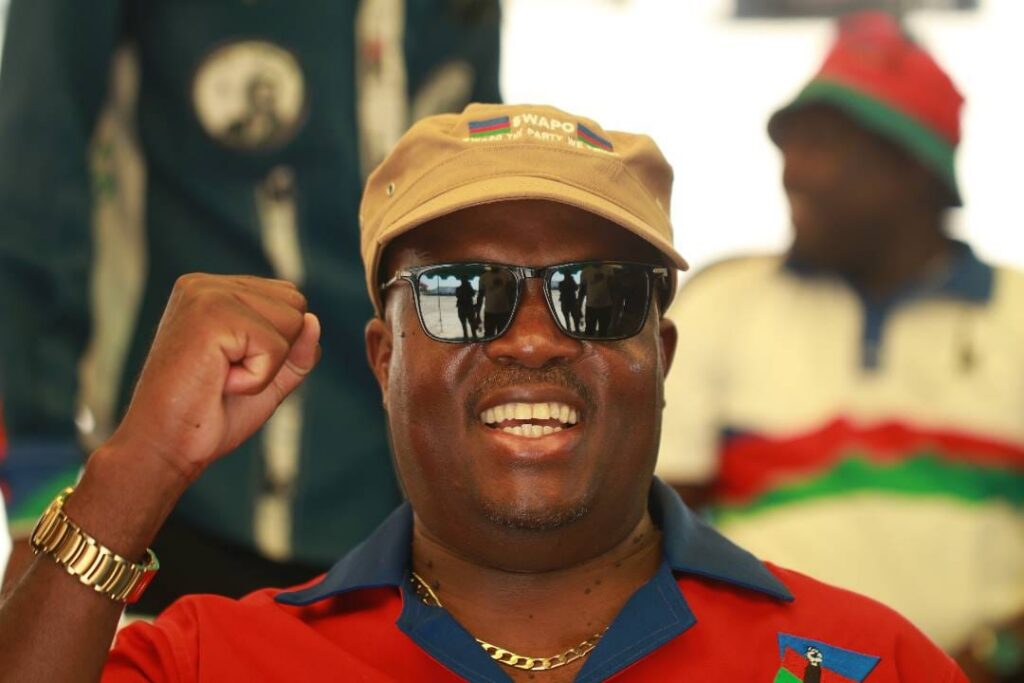
Joshua Haimbodi Oshakati Guest House Tender: Businessman Defends Lowest Bid
Summary
- Businessman Joshua Haimbodi defended his company, Emirates Trading CC, for winning a tender for alterations to the Oshakati presidential guest house.
- Emirates Trading CC submitted the lowest bid at N$3 million for the project.
- The highest quotation received for the same work was N$5.7 million.
- Haimbodi's company was previously reported as being 'Swapo-linked,' drawing public attention to the tender award.
Tender Award Sparks Discussion
Joshua Haimbodi's defense of the tender award centers squarely on the financial competitiveness of Emirates Trading CC's bid.
A recent public procurement decision concerning the Oshakati presidential guest house has drawn attention, with businessman Joshua Haimbodi defending the tender awarded to his company, Emirates Trading CC. The contract involves alterations and additions to the guest house, a project that has become a focal point for discussions around public sector contracting in Namibia. Haimbodi's firm secured the tender with a bid of N$3 million, which he asserts was the lowest offer received for the work.
According to Haimbodi, his company's N$3 million proposal significantly undercut other contenders, with the highest quotation for the same project reaching N$5.7 million. This substantial difference between the lowest and highest bids has been highlighted as a key factor in the award decision. The businessman's defense comes in the wake of earlier reports by The Namibian, which brought the tender award to public light and noted Haimbodi's reported affiliation with the Swapo political party.
Context of Public Procurement Scrutiny
This particular tender for the Oshakati presidential guest house procurement unfolds against a backdrop of heightened public and media scrutiny over government contracting processes in Namibia. The involvement of individuals described as 'Swapo-linked' in public tenders often triggers closer examination, regardless of the merits of the bid itself. Such affiliations can lead to questions about fairness and transparency, even when a company presents the most competitive financial offer.
Public procurement in Namibia is frequently under the microscope, with stakeholders demanding greater accountability and clear justification for contract awards. The fact that Emirates Trading CC, a company associated with Joshua Haimbodi, secured the tender as the lowest bidder, provides a specific instance for the ongoing debate about how political connections might intersect with competitive bidding. This scenario underscores the challenges faced by public bodies in balancing cost-effectiveness with perceptions of impartiality.
Haimbodi's Defense and Transparency
Joshua Haimbodi's defense of the tender award centers squarely on the financial competitiveness of Emirates Trading CC's bid. His assertion that N$3 million was the lowest bid, significantly below the N$5.7 million highest quotation, forms the core of his argument against any implied impropriety. This stance, often referred to as the 'Joshua Haimbodi tender defense,' emphasizes adherence to the principle of awarding contracts to the most economically advantageous offer.
However, the broader context of Namibia public procurement scrutiny means that even a demonstrably low bid can attract questions when political affiliations are perceived to be present. For legal practitioners advising clients on public tenders, this situation highlights the critical importance of meticulous documentation and transparent processes, not just in the bidding phase but throughout the entire procurement lifecycle, to withstand potential challenges and maintain public trust.
Implications for Public Trust
The controversy surrounding the Oshakati presidential guest house tender, despite the businessman's defense of submitting the lowest bid, reflects a persistent concern within Namibia regarding the integrity of public contracting. Incidents like this contribute to the ongoing public discourse about whether procurement processes are truly free from undue influence, irrespective of the actual outcomes. The perception of fairness is often as crucial as the reality, especially when significant public funds are involved.
This development underscores the continuous need for robust oversight mechanisms and clear, unambiguous guidelines for all parties involved in government tenders. Ensuring that all bids are evaluated solely on their merits, and that the process is transparently communicated, is vital for fostering public confidence in state institutions and their financial dealings. The scrutiny applied to the Emirates Trading CC tender Namibia serves as a reminder of the constant vigilance required in public administration.
Practical Implications
This development highlights ongoing public and media scrutiny of government procurement processes in Namibia, particularly concerning bid transparency and potential political affiliations. Lawyers advising clients on public tenders should be aware of the heightened need for clear documentation and defensible bidding practices.
Source
How does this affect you?
Get an AI analysis of this article grounded in your jurisdictions, practice areas, and any policy documents you've uploaded to Wansom.
Finish Reading the Full Story and the Expert Analysis.
Get the latest legal & regulatory intelligence in Namibia
Wansom is AI and can make mistakes.