
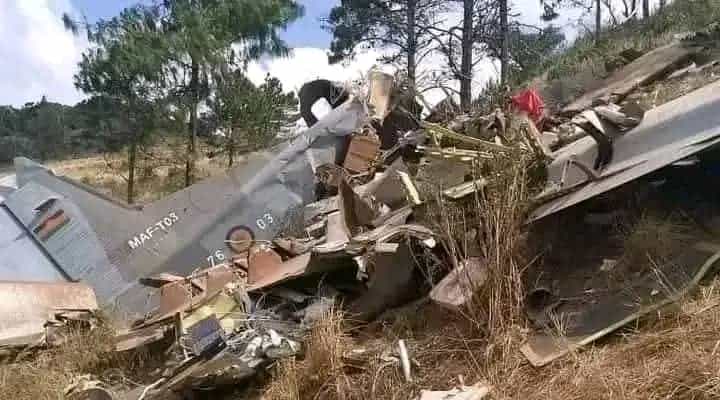
Malawi Probe: Joseph Moyo Uncertified Chilima Plane Warning Revealed
Summary
- Joseph Moyo, who provided a weather warning to the pilots of the Chilima plane, did not possess a meteorological certificate.
- The Chilima plane subsequently crashed, making the certification status of the warning provider a critical focus.
- This incident raises serious concerns about aviation safety compliance and personnel qualification verification in Malawi.
- The lack of certification for a safety-critical role could lead to significant legal ramifications, including potential negligence claims.
Key Revelation in Chilima Plane Incident
The revelation concerning Joseph Moyo's lack of certification could significantly impact the ongoing Malawi Chilima plane crash investigation, particularly regarding potential grounds for negligence claims.
A critical detail has emerged regarding the circumstances surrounding the tragic crash of the Chilima plane, pointing to a significant lapse in standard operating procedures. Joseph Moyo, an individual who provided a weather warning to the pilots of the ill-fated aircraft, has been identified as lacking the necessary meteorological certification for such a crucial role. This revelation about the Joseph Moyo uncertified Chilima plane warning introduces a new dimension to the ongoing investigation into the incident.
The provision of vital flight information, particularly concerning weather conditions, is universally understood to require specialized training and official accreditation to ensure accuracy and reliability. The fact that an uncertified individual issued a weather advisory to the crew of the Chilima plane before its crash raises serious questions about the integrity of the information provided and the oversight mechanisms in place. This specific detail is poised to become a central focus as authorities continue to piece together the sequence of events leading to the disaster.
The incident involving the Chilima plane, which subsequently crashed, underscores the absolute necessity of qualified personnel in all aspects of aviation operations. The disclosure that Joseph Moyo, who communicated a weather warning to the pilots, did not possess a meteorological certificate, highlights a potentially critical vulnerability in the safety chain. This finding is expected to prompt a thorough re-evaluation of personnel qualifications and the protocols surrounding the dissemination of flight-critical data within Malawi's aviation sector.
Implications for Aviation Safety and Compliance
The discovery of an uncertified meteorological officer in Malawi providing a critical Chilima crash weather warning carries profound implications for aviation safety compliance. International aviation standards mandate that all personnel involved in providing services directly impacting flight safety, such as meteorological forecasting and reporting, must hold appropriate certifications. These certifications ensure that individuals possess the requisite knowledge, skills, and adherence to established protocols to deliver accurate and timely information.
The involvement of Joseph Moyo, an individual without a Met certificate, in issuing a weather advisory to the Chilima plane pilots before the crash, suggests a potential breach of these fundamental safety tenets. This situation could lead to an intense review of how meteorological services are managed and delivered to aircraft operating within Malawi's airspace. Regulators and oversight bodies will likely scrutinize the processes for verifying staff qualifications and ensuring that only certified professionals are entrusted with such high-stakes responsibilities. The incident highlights a potential systemic vulnerability that demands immediate attention to prevent future occurrences.
Potential Legal Ramifications and Accountability
The revelation concerning Joseph Moyo's lack of certification could significantly impact the ongoing Malawi Chilima plane crash investigation, particularly regarding potential grounds for negligence claims. When critical safety information, such as a weather warning, is provided by an individual who is not officially certified, it introduces a clear line of inquiry into whether due diligence was exercised in ensuring the competence of personnel. This scenario could lead to questions about the liability of individuals and organizations responsible for overseeing aviation support services.
Lawyers examining the incident will likely focus on the heightened scrutiny on certification compliance for safety-critical roles. The involvement of an uncertified meteorological officer in Malawi could form a basis for arguments that a failure to ensure qualified personnel contributed to the conditions leading to the crash. This development serves as a stark reminder for compliance officers to rigorously review internal processes for verifying staff qualifications, especially within high-risk sectors like aviation, where the consequences of oversight can be catastrophic. The incident underscores the imperative for robust verification mechanisms to prevent similar lapses in the future and to uphold the highest standards of aviation safety.
Practical Implications
This development highlights potential grounds for negligence claims in aviation incidents where unqualified personnel provide critical safety information. Lawyers should be aware of the heightened scrutiny on certification compliance for safety-critical roles, while compliance officers should review internal processes for verifying staff qualifications, especially in high-risk sectors.
Source
Source: Original reporting via Malawi24
How does this affect you?
Get an AI analysis of this article grounded in your jurisdictions, practice areas, and any policy documents you've uploaded to Wansom.
Finish Reading the Full Story and the Expert Analysis.
Wansom is AI and can make mistakes.