
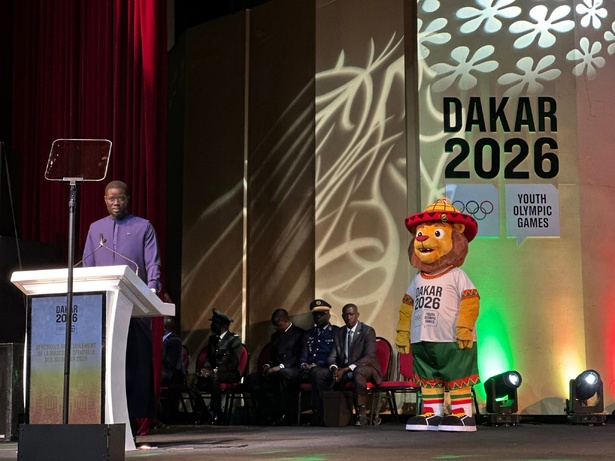
Senegal: AYUF Holding JOJ Dakar Contracts Spark Local Business Outcry
Summary
- Ivorian firm AYUF Holding secured contracts for temporary infrastructure and event equipment for JOJ Dakar 2026.
- Africa Global Logistics (AGL) was awarded the port handling contract, and Havas Africa won the digital marketing and e-ticketing brief.
- These awards have caused discontent among local Senegalese businesses, who had hoped for greater economic participation.
- The contract decisions contradict an earlier statement by COJOJ President Mamadou Diagna Ndiaye, who announced that over 70% of contracts would go to Senegalese companies.
- Uncertainty also surrounds the protocol aspect, with only one head of state confirmed for the opening ceremony despite expectations of seven to nine.
Contract Awards Spark Local Discontent
The awarding of significant contracts to foreign entities for the JOJ Dakar 2026, despite earlier assurances of prioritizing local businesses, has ignited considerable frustration among Senegalese operators.
The allocation of several key contracts for the upcoming JOJ Dakar 2026 has generated significant dissatisfaction among Senegalese businesses, who had anticipated substantial economic benefits from the event. Reports from the Senegalese daily Direct News and exclusif indicate that AYUF Holding, an Ivorian company, has been awarded contracts for both temporary infrastructure and essential event equipment. This decision has fueled frustration among local stakeholders who believed national enterprises would be prioritized for such opportunities.
Further compounding the concerns, the logistics sector has also become a point of contention. Africa Global Logistics (AGL), an official partner of the JOJ and part of the MSC Group, secured the crucial port handling contract associated with the Games. Additionally, Havas Africa was selected to manage the digital marketing and electronic ticketing, including the commercialization of tickets. These contract awards, as reported by Confidentiel Afrique, have intensified the debate surrounding the economic impact of the JOJ Dakar 2026 on the local economy.
Local Content Promise Under Scrutiny
The current wave of discontent directly challenges previous assurances regarding local participation in the JOJ Dakar 2026. In July, Mamadou Diagna Ndiaye, the President of the COJOJ, had publicly stated that more than 70% of the contracts for the Games had been awarded to Senegalese companies. This declaration had raised expectations among the local private sector, which had been actively seeking to capitalize on the major public project.
The awarding of significant contracts to foreign entities for the JOJ Dakar 2026, despite earlier assurances of prioritizing local businesses, has ignited considerable frustration among Senegalese operators. The perceived discrepancy between the stated commitment to local content and the actual distribution of major tenders has led to questions about the transparency and fairness of the procurement process, leaving many local businesses feeling overlooked.
Broader Organizational Concerns
Beyond the immediate economic implications for Senegalese businesses, other aspects of the JOJ Dakar 2026 organization have also drawn criticism. The communication strategy from the COJOJ has previously faced scrutiny, and the recent contract decisions have only added to these concerns. The overall management of information and public relations surrounding the event continues to be a sensitive issue.
Furthermore, uncertainty persists regarding the protocol arrangements for the opening ceremony. While the organizing committee had indicated an expected attendance of seven to nine heads of state, a protocol source cited by Confidentiel Afrique suggests that, as of now, only Mauritanian President Mohamed Cheikh El-Ghazouani has confirmed his presence. This raises additional questions about the international profile and diplomatic success of the event, adding to the various challenges facing the JOJ Dakar 2026 preparations.
Practical Implications
Lawyers advising Senegalese businesses should monitor the enforcement of local content policies for major public projects like JOJ Dakar 2026. The reported discrepancy between the 70% local content promise and the awarding of significant contracts to foreign entities may indicate potential grounds for challenging procurement decisions or advocating for greater transparency and adherence to national preference schemes in future tenders.
Source
How does this affect you?
Get an AI analysis of this article grounded in your jurisdictions, practice areas, and any policy documents you've uploaded to Wansom.
Finish Reading the Full Story and the Expert Analysis.
Wansom is AI and can make mistakes.