
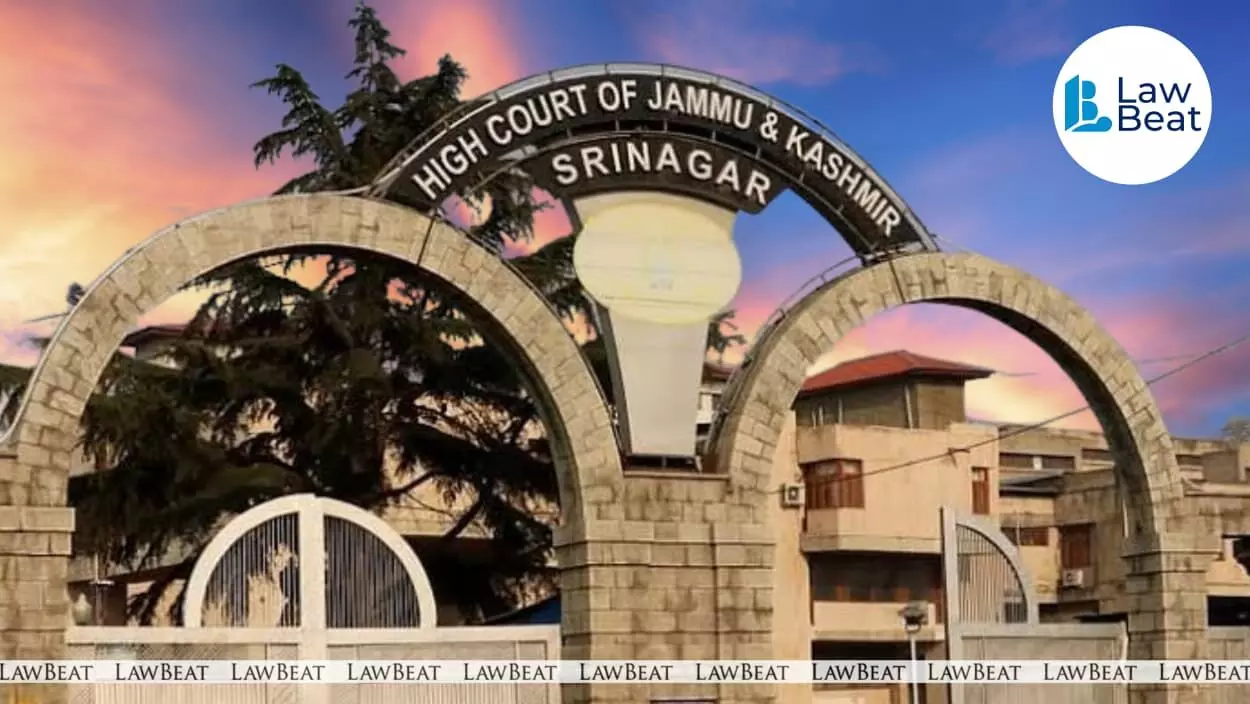
J&K Ladakh High Court: PIL on Disability Services for Children Across All Districts
Summary
- The J&K and Ladakh High Court has issued notice on a PIL seeking district-wise early intervention and therapy services for children with disabilities across all 20 districts.
- The petition, filed by activist Zaheer Abbas Jan, highlights the unavailability of crucial services like occupational and speech therapy, forcing families to travel extensively.
- Official records from 2023-2026, including reports from GMC Jammu and CRC Srinagar, document manpower shortages, lack of space, and unfilled posts.
- The PIL is anchored in Articles 14 and 21 of the Constitution and Sections 3, 25, and 27 of the Rights of Persons with Disabilities Act, 2016, citing Supreme Court precedents.
- It requests verified district-wise status reports and a time-bound plan to fill critical vacancies to ensure implementation of existing laws and schemes.
Court Takes Up Disability Services Plea
The outcome of this J&K Ladakh High Court PIL disability services case could significantly impact the lives of countless children, potentially leading to court-mandated improvements in the accessibility and quality of early intervention and rehabilitation services throughout the Union Territory.
The Jammu & Kashmir and Ladakh High Court has formally acknowledged a Public Interest Litigation (PIL) advocating for comprehensive early intervention and rehabilitation services for children with disabilities across all twenty districts of the Union Territory. A Division Bench, comprising Chief Justice Pushpendra Singh Bhati and Justice Rajnesh Oswal, issued notice to multiple government entities and departments upon the petition's listing. This legal action aims to ensure that essential support for disabled children is not only sanctioned but also functionally accessible throughout the region.
The PIL was initiated by Zaheer Abbas Jan, a social worker and activist based in Srinagar, known for his advocacy in child and disability rights. Represented by advocates Junaid Mohd Junaid and Fatesh Kumar Sahu, Jan's petition names a wide array of respondents. These include the Union Territory of J&K, its Health and Medical Education and Social Welfare departments, the Directors of Health Services for both Kashmir and Jammu, the National Health Mission, the State Commissioner for Persons with Disabilities, the Composite Regional Centres (CRC) located in Srinagar and Jammu, and the Union of India through its Department of Empowerment of Persons with Disabilities. The central question posed by the plea is whether a child with a disability should be deprived of developmental opportunities simply because necessary, publicly recognized therapies or professionals are unavailable in their home district.
Documented Service Gaps
The petition highlights significant practical challenges faced by families in Jammu and Kashmir, particularly those residing in rural, hilly, and remote areas. These families are frequently compelled to undertake repeated, costly journeys to Srinagar or Jammu, often leading to temporary relocation, loss of income, and missed school days for children, alongside substantial expenditure on private therapy. The plea specifically points to the irregular availability or complete absence of crucial services like occupational therapy and speech therapy, leaving parents uncertain about where to seek help after a child's disability is identified.
A critical aspect of the petition is its emphasis on the time-sensitive nature of early intervention for children with disabilities. It argues that childhood development progresses continuously, irrespective of administrative delays such as vacant sanctioned posts, unavailable therapy rooms, or extended waiting periods for appointments. The petitioner substantiates these claims not merely with anecdotal evidence but with official records spanning from August 2023 to September 2026. These documents include a 2023 response from GMC Jammu citing space limitations for occupational therapy, a May 5, 2026 communication from CRC Srinagar detailing a child's need for speech therapy that could not be met due to the absence of a Speech Therapist, and a report from the Child Guidance and Well-being Centre at IMHANS, forwarded via GMC Srinagar, which acknowledged persistent manpower shortages, unfilled positions, reduced funding, and a lack of dedicated facilities.
Legal and Policy Framework
The legal foundation of the PIL rests on fundamental rights enshrined in the Indian Constitution, specifically Articles 14 and 21, which guarantee equality before the law and protection of life and personal liberty, respectively. Furthermore, the petition invokes Sections 3, 25, and 27 of the Rights of Persons with Disabilities Act, 2016, a key piece of legislation aimed at ensuring the rights and entitlements of individuals with disabilities. To bolster its arguments, the plea references significant Supreme Court judgments, including Vikash Kumar v. UPSC, Jeeja Ghosh v. Union of India, and Rajive Raturi v. Union of India, which have established precedents regarding disability rights and access to services.
The petition also draws attention to existing governmental initiatives, such as the National Health Mission’s Rashtriya Bal Swasthya Karyakram, which explicitly envisions the establishment of District Early Intervention Centres. Crucially, the petitioner has deliberately framed the request to the High Court, not asking it to dictate specific therapeutic interventions or to substitute judicial judgment for clinical expertise. Instead, the core demand is for the court to ensure the effective implementation of existing laws and established schemes designed to support children with disabilities.
Ensuring Access and Accountability
As an immediate measure, the PIL requests the court to mandate the submission of verified district-wise status reports. These reports are intended to provide a clear picture of current facilities, sanctioned and vacant professional posts, available equipment, waiting periods for services, and existing referral pathways for children with disabilities. This detailed information is crucial for understanding the scope of the problem and identifying specific areas requiring urgent attention.
Beyond data collection, the petition seeks a time-bound plan for filling critical vacancies within the disability services sector. This proactive step aims to address the chronic manpower shortages and ensure that the necessary professionals are in place to deliver early intervention and rehabilitation services. The outcome of this J&K Ladakh High Court PIL disability services case could significantly impact the lives of countless children, potentially leading to court-mandated improvements in the accessibility and quality of early intervention and rehabilitation services throughout the Union Territory.
Practical Implications
Lawyers advising clients with disabilities in J&K should monitor this PIL as it could lead to court-mandated improvements in early intervention and rehabilitation services, potentially creating new avenues for access or legal recourse. Compliance officers in relevant government departments should prepare for potential directives or increased scrutiny regarding the implementation of disability rights legislation and schemes.
Source
Source: Original reporting via Live Law.
How does this affect you?
Get an AI analysis of this article grounded in your jurisdictions, practice areas, and any policy documents you've uploaded to Wansom.
Wansom is AI and can make mistakes.