
DRC Ministry Education: Ituri Ebola Distance Learning Delay Lacks Clear Modalities
Summary
- Practical details for distance learning, announced by the Ministry of National Education for Ebola-affected Ituri, are still awaited.
- School officials in Bunia reported on August 25, 2026, they lack clear directives and pedagogical tools for the upcoming September 1 school year.
- Minister Raïssa Malu had announced on August 18 that distance learning would begin for 18 high-risk health zones in the 2026-2027 academic year.
- Enrollment is slow in Bunia as parents fear Ebola and await clarity on distance learning modalities.
Unclear Directives Hamper School Preparations
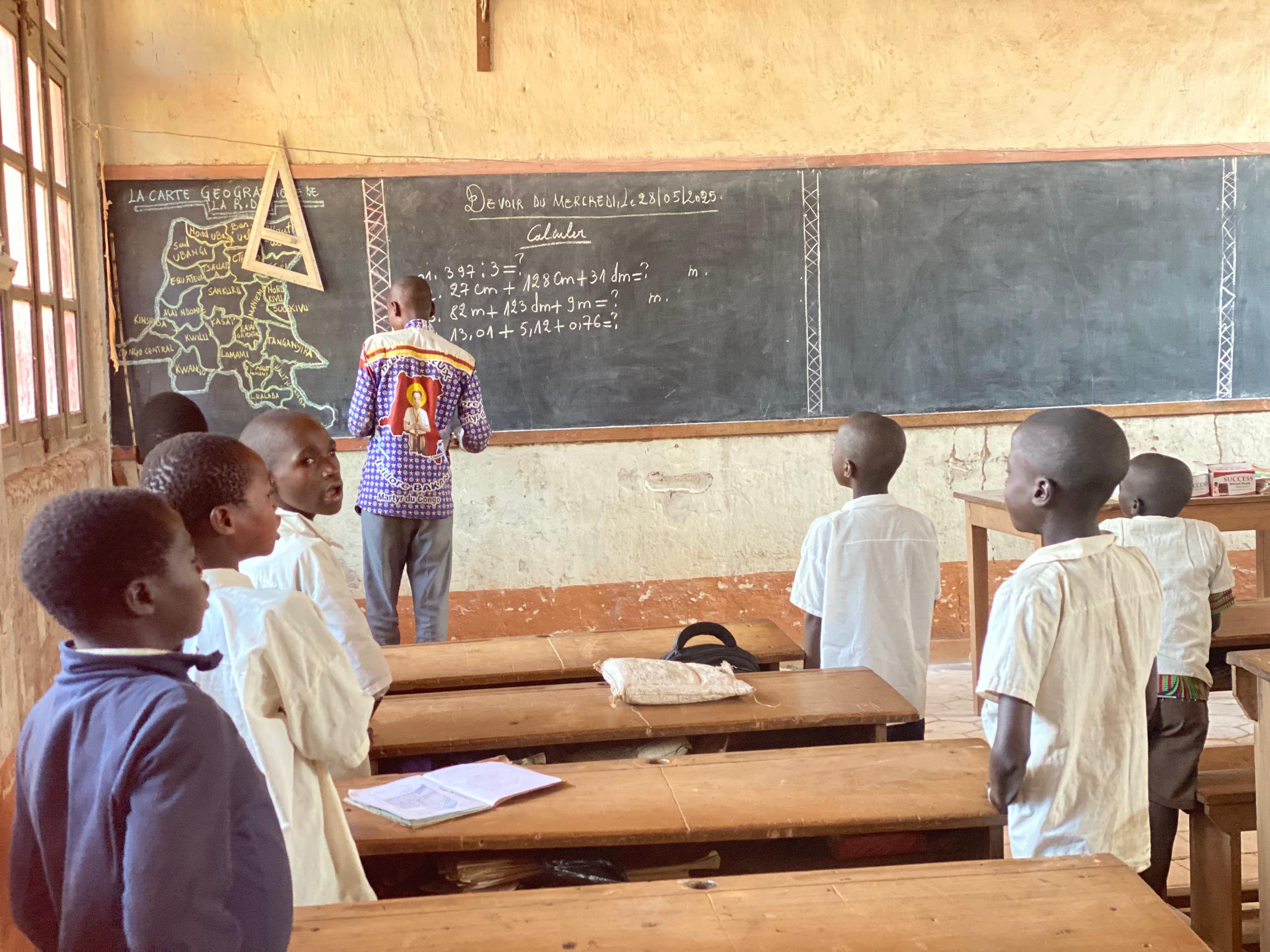
Despite the Ministry of National Education's earlier announcement of a shift to distance learning in areas severely impacted by the resurgence of Ebola cases, local school officials confirm they have not received any educational materials or precise guidelines on how to enact this decision.
The academic year is fast approaching, yet the practical arrangements for distance learning, a measure announced by the Ministry of National Education, are still pending in Ituri, the region most affected by the Ebola epidemic. School administrators in Bunia, for instance, reported on Tuesday, August 25, 2026, that they were still awaiting clear instructions regarding the implementation of this initiative. Specific concerns included identifying the exact zones where distance learning would apply and the pedagogical tools to be utilized.
With less than a week remaining until the scheduled September 1 school reopening across the Democratic Republic of Congo, preparations are significantly disrupted in numerous educational institutions within Bunia. Despite the Ministry of National Education's earlier announcement of a shift to distance learning in areas severely impacted by the resurgence of Ebola cases, local school officials confirm they have not received any educational materials or precise guidelines on how to enact this decision. This ongoing **Ituri Ebola distance learning delay** is causing considerable uncertainty.
Both public and private schools are grappling with numerous unanswered questions following the announcement. Besisa Mugisa, who manages the Shalom school complex, articulated these concerns, stating, "We still lack details on how distance learning will operate and under what conditions. All these aspects require advance preparation." A similar situation prevails at Kabengele primary school, where director Katsuva Kasereka Gaston is also awaiting explicit instructions. He noted that they are expecting guidance from the provincial educational director, currently in Kinshasa, indicating that their actions would be dictated by those directives. The absence of clear **Bunia écoles directives Ebola** is a critical impediment.
Government's Announced Plan vs. Ground Reality
The decision to implement distance learning stemmed from the Ministry of National Education's response to the escalating number of Ebola cases, particularly targeting the most affected regions. This measure was officially communicated by Raïssa Malu, the Minister of National Education, during a press conference held in Kinshasa on Tuesday, August 18. Minister Malu outlined the Congolese Government's intention to roll out distance education in 18 health zones identified as high-risk for Ebola, commencing with the 2026-2027 academic year. This initiative was a direct response to the public health crisis, aiming to ensure educational continuity while safeguarding students and staff.
However, the ambitious plan articulated by the **DRC Ministry Education Ebola** response faces significant practical hurdles on the ground. Despite the ministerial announcement by **Raïssa Malu éducation Ebola** regarding the upcoming **rentrée scolaire RDC 2026 Ebola** and the shift to remote instruction, the necessary infrastructure and clear operational frameworks have yet to materialize. The discrepancy between the high-level policy directive and the lack of actionable guidance at the local level highlights a critical gap in implementation, leaving schools in a state of limbo.
Widespread Uncertainty Affects Enrollment
The prevailing lack of clarity regarding the **enseignement à distance Ituri modalités** is having a tangible impact on the educational landscape. Preparations for the new school year in Bunia are not proceeding as they typically would, with the looming September 1 start date. This uncertainty extends to student enrollment, which is progressing at a notably slow pace across several schools in the city.
Many parents are understandably hesitant to register their children for the upcoming academic period. Their reluctance is primarily driven by fears surrounding the Ebola epidemic and a desire for definitive information on how distance learning will be structured and delivered. They are awaiting concrete details before committing to enrollment, underscoring the critical need for immediate and clear communication from educational authorities to alleviate these concerns and facilitate a smoother transition into the new school year.
Practical Implications
Lawyers advising educational institutions or parents in Ituri, DRC, should note the ongoing lack of clear directives and implementation details for the promised distance learning during the Ebola outbreak. This creates significant uncertainty regarding school operations, student enrollment, and potential compliance or liability issues related to educational provision and safety, requiring close monitoring of government announcements and local school board actions.
Source
How does this affect you?
Get an AI analysis of this article grounded in your jurisdictions, practice areas, and any policy documents you've uploaded to Wansom.
Wansom is AI and can make mistakes.