
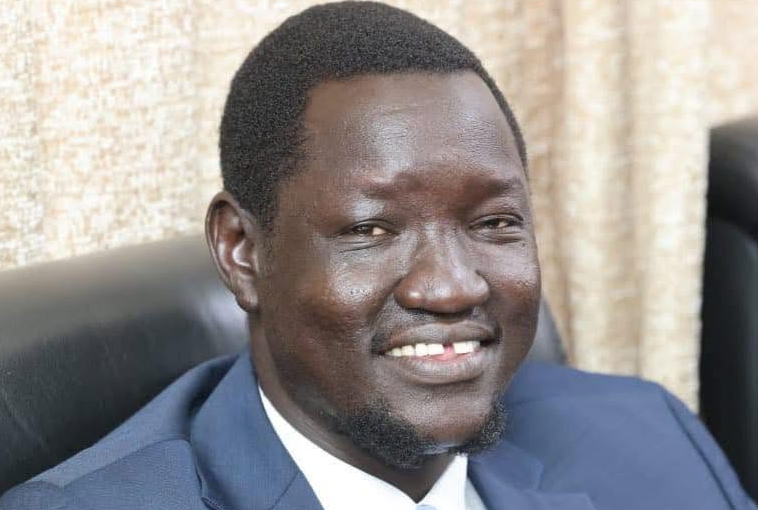
South Sudan: Isaiah Hakim Garang Rejects SPLM-FDs Expulsion
Summary
- Isaiah Hakim Garang has rejected his expulsion from the SPLM Former Detainees (SPLM-FDs), claiming the expelling individuals lack authority.
- Garang, the SPLM-FDs chief whip and peace agreement representative, argues the group ceased to be a separate entity after rejoining the ruling SPLM under the Arusha agreement.
- He asserts that General Gier Chuang Aluong and Dr. Majak D'Agoot, who announced his expulsion, did not support the 2018 peace agreement, which was signed by Deng Alor Kuol on behalf of the SPLM-FDs.
- Garang identifies Deng Alor as the current leader of the Former Political Detainees in Juba, with himself as next in seniority.
- The dispute raises questions about legitimate representation and could impact the 2018 peace agreement's implementation and the transitional government's stability.
What Happened
This internal leadership dispute within the SPLM Former Detainees creates significant uncertainty regarding the legitimate representation of this signatory party to the 2018 peace agreement.
Isaiah Hakim Garang, the chief whip for the SPLM Former Detainees (SPLM-FDs) in South Sudan's transitional parliament, has publicly rejected his recent expulsion from the group. The decision to revoke his membership, announced on Tuesday, was met with immediate defiance by Garang, who also serves as the SPLM-FDs representative on a crucial committee overseeing the implementation of the 2018 peace agreement. He asserts that the individuals who issued the expulsion order lack the legitimate authority to do so, casting doubt on the validity of the action.
The move to remove Garang was spearheaded by three prominent figures within the Former Detainees: General Gier Chuang Aluong, Madut Biar Yel, and Dr. Majak D'Agoot. They declared his membership revoked with immediate effect, citing his alleged unauthorized public statements on behalf of the group and purported violations of its internal code of conduct and rules. Garang, however, maintains that these accusations are baseless and that the very premise of his expulsion is flawed due to a fundamental dispute over leadership and the group's political status.
Contested Authority and the 2018 Peace Accord
Central to Isaiah Hakim Garang's rejection is his challenge to the authority of General Gier Chuang Aluong and Dr. Majak D'Agoot, whom he claims do not represent the legitimate leadership of the Former Detainees in Juba. Garang contends that these individuals did not support the SPLM-FDs' participation in the 2018 peace agreement, a landmark accord signed by Deng Alor Kuol on behalf of the group. He highlighted his own involvement, alongside Deng Alor, the late John Luk, and Madut Biar, in the initial signing of the agreement in Sudan.
Following the signing, Garang recounted, the group traveled to Addis Ababa and Nairobi to establish implementation committees and negotiate the distribution of government positions among its members. He further alleged that some members, including Dr. Majak and General Gier, who had initially opposed the 2018 agreement, later returned to Juba and forged a separate understanding with President Salva Kiir. Garang specifically noted that four individuals from the group met with President Kiir in Juba because they were not part of the 2018 peace agreement, questioning their right to expel someone who was a signatory. Despite this, Garang stated his faction had accommodated members who had initially opposed the agreement.
The Question of SPLM Reunification
Garang's arguments extend to the very existence of the SPLM-FDs as a distinct political entity. He posits that the group effectively ceased to operate independently after rejoining the ruling SPLM, following the implementation of the Arusha agreement for the reunification of the SPLM factions. According to Garang, the Former Detainees are now an integral part of the broader SPLM, led by President Salva Kiir, and any accountability measures should originate from the main SPLM party, not from individual members. He further asserted that, subsequent to the Arusha agreement, none of the individuals attempting to expel him had renewed their SPLM membership or attended party meetings.
He also provided context on the group's leadership evolution, noting that after the collapse of the 2015 peace agreement, Pagan Amum, the former leader, resigned, leading to Deng Alor's ascension to leadership based on seniority. Garang identifies Deng Alor as the current leader of the Former Political Detainees in Juba, positioning himself as next in seniority due to his parliamentary role as chief whip and his involvement in peace implementation mechanisms. Garang also accused Dr. Majak and General Gier of failing to condemn what he described as "inciting remarks" made by Vice-President Rebecca Nyandeng de Mabior regarding the country's political leadership, suggesting they supported her statements and were displeased with his own revelations to the ruling party and public.
Legal and Political Implications
This internal leadership dispute within the SPLM Former Detainees creates significant uncertainty regarding the legitimate representation of this signatory party to the 2018 peace agreement. While the group maintains its representation in the transitional government under the accord, several positions originally allocated to its members have since changed hands. The ongoing disagreement over who holds authority and who speaks for the SPLM-FDs could have far-reaching implications for the stability and implementation of the peace process.
Lawyers and compliance officers advising on South Sudan's transitional government or the broader peace process should closely monitor this situation. The validity of future decisions, appointments, or commitments made on behalf of the SPLM-FDs could be called into question depending on how this internal power struggle resolves. Garang's assertion that only President Kiir, as head of the reunified SPLM, holds the ultimate authority to hold them accountable underscores the complex legal and political landscape at play.
Practical Implications
This internal leadership dispute within the SPLM Former Detainees (SPLM-FDs) creates uncertainty regarding the legitimate representation of this signatory party to the 2018 peace agreement. Lawyers and compliance officers advising on South Sudan's transitional government or peace process should monitor this situation for potential impacts on the validity of decisions, appointments, or commitments made on behalf of the SPLM-FDs.
Source
How does this affect you?
Get an AI analysis of this article grounded in your jurisdictions, practice areas, and any policy documents you've uploaded to Wansom.
Finish Reading the Full Story and the Expert Analysis.
Get the latest legal & regulatory intelligence in South Sudan
Wansom is AI and can make mistakes.