
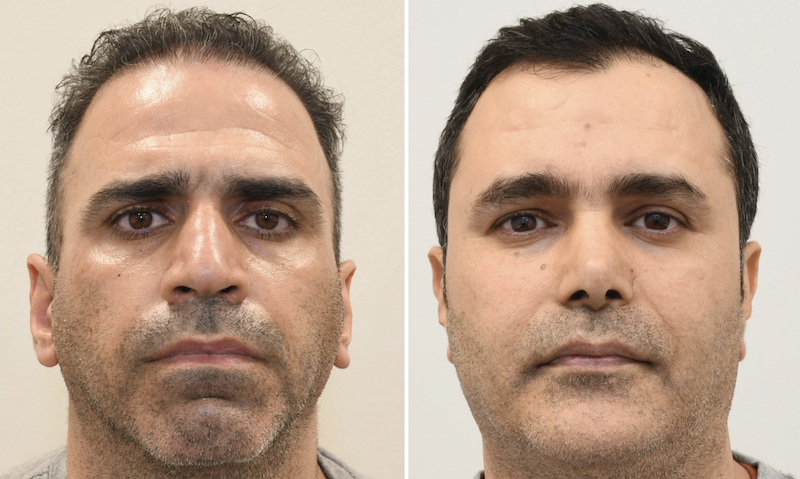
Iranian Men Convicted for Spying on UK Barrister
Summary
- Two Iranian men, Mostafa Sepahvand and Farhad Javadi Manesh, were convicted of assisting a foreign intelligence service in the UK.
- Their targets included UK barrister Jonathan Turner and Iranian journalists working for a regime-banned broadcaster.
- Evidence revealed extensive surveillance, with Sepahvand leading contact with Iranian handlers and Manesh providing information.
- Sepahvand admitted to spying and was promised tens of thousands of pounds for his activities.
- Prosecutors highlighted Sepahvand's willingness to escalate beyond surveillance, including a request for £150,000 to "finish off" a target.
Conviction for State-Sponsored Espionage
Prosecutors highlighted Sepahvand's willingness to escalate beyond mere surveillance, revealing a chilling request for £150,000 to "finish off" a target once located.
Two Iranian nationals have been found guilty of aiding a foreign intelligence service following a trial at Woolwich Crown Court, underscoring the persistent threat of state-sponsored espionage within the United Kingdom. Mostafa Sepahvand and Farhad Javadi Manesh were identified as operatives working on behalf of the Iranian state, targeting both a prominent UK barrister and Iranian journalists associated with a media outlet proscribed by the Iranian regime.
Among those subjected to this illicit surveillance was Jonathan Turner, a barrister specializing in intellectual property and competition law, who practices at Three Stone Building. Mr. Turner also holds the position of chief executive for UK Lawyers for Israel, making him a high-profile target. A third individual, Shapoor Qalehali Khani Noori, who was also implicated in the case, was ultimately acquitted of all charges brought against him.
Unveiling the Surveillance Network
The investigation uncovered a sophisticated operation where Sepahvand played a central role in coordinating with handlers based in Iran. Evidence, including videos, photographs, and text messages recovered from electronic devices, detailed Sepahvand's activities in conducting reconnaissance on the homes and workplaces of targets, specifically to identify other journalists linked to the television channel. Farhad Javadi Manesh, in turn, was responsible for relaying critical information, photographs, and videos back to Sepahvand, facilitating the intelligence gathering.
Financial incentives were a significant factor in the operation, with Sepahvand having been promised tens of thousands of pounds for his involvement. Further corroborating the surveillance efforts, cell-site location data placed Sepahvand in a specific area of London in late 2024 while he was monitoring a separate individual. His mobile phone also contained a trove of incriminating data, including photographs, Google search histories, and addresses pertaining to a target who had relocated to a west London hotel due to heightened security concerns.
Intent, Admission, and Future Sentencing
During the proceedings, Mostafa Sepahvand admitted to engaging in spying activities and acknowledged that his actions possessed the capacity to assist a foreign intelligence service. However, he contended that his participation stemmed from a fear of repercussions should he refuse to comply with his handlers' demands. Prosecutors were tasked with demonstrating that Sepahvand's actions were deliberate and that he either knew, or reasonably should have known, that his reconnaissance efforts would likely be valuable to foreign spies conducting hostile operations within the UK.
Prosecutors highlighted Sepahvand's willingness to escalate beyond mere surveillance, revealing a chilling request for £150,000 to "finish off" a target once located. The Crown Prosecution Service (CPS) stated that Sepahvand was prepared to commit serious acts of violence, though the defendants were apprehended before any such attack could materialize. Both convicted men are scheduled to receive their sentences at the Central Criminal Court on December 17, 2026.
Practical Implications
This conviction underscores the heightened risk of foreign state-sponsored espionage targeting legal professionals and journalists in the UK. Lawyers, particularly those with high-profile or politically sensitive practices, should review their personal security protocols and be vigilant against surveillance, as such activities are now clearly prosecutable under UK law.
Source
How does this affect you?
Get an AI analysis of this article grounded in your jurisdictions, practice areas, and any policy documents you've uploaded to Wansom.
Finish Reading the Full Story and the Expert Analysis.
Get the latest legal & regulatory intelligence in United Kingdom
Wansom is AI and can make mistakes.