
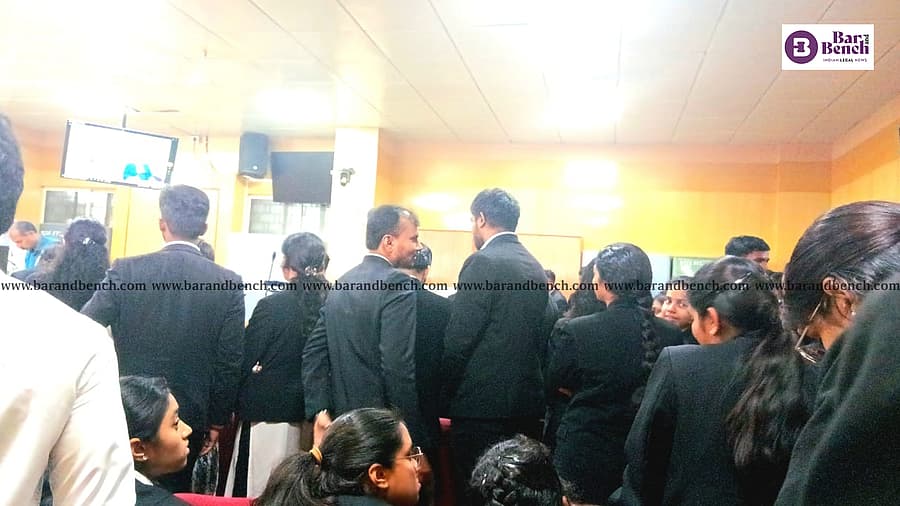
Interns can't occupy chairs: Karnataka High Court asks for solution to overcrowding concerns
Abstract
The Karnataka High Court recently addressed pressing concerns regarding severe overcrowding in its courtrooms, particularly highlighting the issue of law interns occupying seats designated for practising advocates. Justice M. Nagaprasanna invited the Bar to propose practical solutions to manage the burgeoning crowds, emphasizing the need to maintain decorum and ensure the efficient functioning of the judicial system. The discussion underscored the tension between the imperative for law students to gain practical exposure through internships and the practical limitations of physical courtroom space, prompting a call for administrative reforms to balance these competing demands.
Introduction
Courtroom 14 of the Karnataka High Court recently became the focal point of a critical discussion on the persistent issue of overcrowding, a challenge increasingly faced by judicial institutions across India. Justice M. Nagaprasanna, presiding over the bench, engaged with senior advocates to solicit viable solutions to the problem, which significantly impedes the movement and seating of legal professionals, particularly during peak hours. The dialogue brought to the fore not only the general space constraints but also a specific concern regarding law interns occupying chairs meant for practising lawyers, leading to inconvenience and a perceived breach of courtroom etiquette.
This incident at the Karnataka High Court highlights a broader administrative and systemic challenge within the Indian judiciary: how to manage physical infrastructure in the face of ever-increasing caseloads and a growing legal fraternity, including a mandatory influx of interns. The remarks by Justice Nagaprasanna, though not a formal directive, serve as a significant call to action for both the judiciary and the Bar to collaboratively devise strategies that uphold the dignity and functionality of court proceedings while accommodating all stakeholders. The core issue revolves around balancing the practical training needs of future legal professionals with the operational requirements of a busy High Court.
Background
The conduct of legal professionals within Indian courtrooms is primarily governed by the Advocates Act, 1961, and the rules framed thereunder by the Bar Council of India (BCI). These statutory instruments lay down comprehensive standards of professional conduct and etiquette, mandating advocates to maintain dignity, respect towards the court, and adhere to prescribed dress codes. While these rules extensively detail the duties of advocates towards the court, clients, and colleagues, they do not explicitly contain specific provisions regarding seating arrangements for different categories of individuals within a courtroom, nor do they specifically address the conduct of law interns in this regard.
However, established conventions and unwritten rules of courtroom decorum dictate a hierarchy of seating, prioritizing practising advocates, especially those with matters listed before the court. The Bar Council of India, under Rule 25 of its Legal Education Rules, mandates a minimum period of internship for all law students, requiring them to gain practical experience in various legal settings, including courts. This makes court visits and observation an integral part of legal education. The High Court of Karnataka Rules, 1959, primarily govern the practice and procedure within the High Court, dealing with aspects like filing, paper books, and administrative processes, but similarly lack specific rules on courtroom seating protocols for interns or the general public. Thus, the current situation often relies on customary practices and the inherent power of the court to maintain order and decorum.
Analysis
The remark by Justice M. Nagaprasanna that interns "can't occupy the chairs" directly addresses a long-standing, albeit uncodified, convention within Indian courtrooms. While no specific statutory rule from the Advocates Act, 1961, or the Bar Council of India Rules explicitly prohibits interns from occupying advocate chairs, the prevailing understanding is that these seats are reserved for enrolled advocates who are officers of the court and have a direct role in the day's proceedings. This convention is rooted in the need to ensure that advocates can easily access their designated areas, consult with clients or colleagues, and be readily available when their cases are called, thereby facilitating the smooth administration of justice.
The challenge highlighted by Senior Advocate K.N. Phanindra, where he had to request interns to vacate seats, underscores a gap in formal training regarding courtroom etiquette for law students. While BCI Rule 25 mandates internships for practical exposure, the curriculum often overlooks the nuances of courtroom conduct and the unwritten rules of professional courtesy. This creates a tension between the educational imperative for interns to observe proceedings and the practical necessity for advocates to have unhindered access to courtroom facilities, especially in overcrowded environments. The court's inherent power to control its proceedings and maintain decorum allows it to address such issues, even in the absence of specific written rules.
Overcrowding, as noted by Justice Nagaprasanna, affects not only seating but also the overall functionality of the courtroom, making it difficult for lawyers to move and engage effectively. This can compromise the dignity of the court and the efficiency of legal proceedings. The suggestion of a single causelist, where cases are called continuously and predictably, offers a potential administrative solution to streamline court functioning and potentially reduce the need for advocates to be present for extended, unpredictable periods, thereby alleviating some crowding. Other solutions could include designated standing areas or limited seating for interns, exploring virtual appearance options for non-essential matters, or implementing staggered entry systems to manage the flow of people. The emphasis remains on finding practical, administrative solutions that respect both the learning objectives of interns and the operational needs of the court.
Conclusion
The Karnataka High Court's proactive engagement with the Bar on courtroom overcrowding, particularly concerning the seating of interns, signals a crucial administrative challenge that requires immediate attention. For practising attorneys, this discussion reinforces the importance of upholding courtroom decorum and advocating for systemic improvements that ensure a conducive environment for legal practice. It also serves as a reminder to guide junior colleagues and interns on the unwritten rules of professional conduct and courtesy within judicial precincts.
For law interns and educational institutions, the remarks from the bench highlight the need for more explicit guidance on courtroom etiquette, emphasizing that practical exposure must be balanced with respect for the court's operational needs. Moving forward, it will be imperative for the Karnataka High Court, in consultation with the Bar Council and legal education bodies, to formulate clear guidelines or administrative directives. Solutions could range from designated observation areas for interns to technological interventions like enhanced virtual hearing facilities for certain proceedings, thereby ensuring that the pursuit of justice is not hampered by physical constraints. All stakeholders must collaborate to implement sustainable solutions that preserve the sanctity of the courtroom while adapting to the evolving demands of the legal profession.
Citations
- 1.Advocates Act, 1961
- 2.Bar Council of India Rules, Part VI, Chapter II
- 3.Bar Council of India Legal Education Rules, 2008, Rule 25
- 4.High Court of Karnataka Rules, 1959
- 5.LawChakra, 'Ask Interns Not To Come, They Can't Occupy Chairs: Karnataka HC Seeks Ideas To Solve Courtroom Crowding Crisis' (20 June 2026)
- 6.LegalBots.in, 'Courtroom Decorum Every Law Student/Professional Should Know' (12 August 2022)
- 7.The Times of India, 'Karnataka high court in RTI reply: No bar on sitting cross-legged in court' (20 June 2022)
How does this affect your business?
Get an AI analysis of this article grounded in your jurisdictions, practice areas, and any policy documents you've uploaded to Wansom.
Wansom is AI and can make mistakes.