
Personal Injury Firms: Adopt Integrated PI Case Management System to End Software Sprawl
Summary
- Personal injury firms often use many disconnected software tools, leading to operational inefficiencies and increased risk.
- This "software sprawl" forces paralegals to manually link information across systems, a costly habit not reflected in budgets.
- An integrated PI case management system streamlines workflows by keeping all case data in one place from intake to resolution.
- Artificial intelligence tools, like Lexee AI, are only reliable when built into a unified system with access to complete, current case files.
- Fragmentation in contingency practices can result in weaker demands, slower negotiations, and lower settlement values for cases.
The Hidden Costs of Disconnected Legal Tech
Prioritizing a single, integrated case management system can streamline workflows, enhance data integrity, and improve overall firm profitability.
Many personal injury (PI) firms grapple with a common operational challenge: a fragmented technology stack. It's a familiar scene where a paralegal juggles numerous open tabs—ranging from intake forms and document management systems to records portals, e-signature platforms, calendars, and settlement spreadsheets. This isn't typically attributed to software shortcomings, but rather to the overwhelming feeling of being "buried," with case progress often held together by mental to-do lists.
While case files might technically reside within a system, they are frequently spread across several, forcing paralegals to act as human connectors between disparate data points. This reliance on manual linking, though it gets the job done, represents a significant and often unbudgeted expense for the firm, manifesting as lost productivity and increased risk rather than a line item.
The root of this PI firm software sprawl often lies in a reactive purchasing pattern. A firm initially acquires a case management tool, only to discover it lacks specific features crucial for personal injury practice. To fill these gaps, additional tools are purchased, one after another, without ever retiring the older, less comprehensive solutions. This leads to a multitude of separate tools, each addressing a singular problem but none providing a holistic view of the entire case. Every handoff between these disconnected systems introduces an opportunity for critical details to be overlooked or lost.
Embracing an Integrated PI Case Management System
Instead of perpetually seeking the next new tool, PI firm leaders should ask a more fundamental question: can our entire team operate within a single, integrated PI case management system designed specifically for how a personal injury firm functions? This approach prioritizes a unified, connected ecosystem over a patchwork of disparate applications.
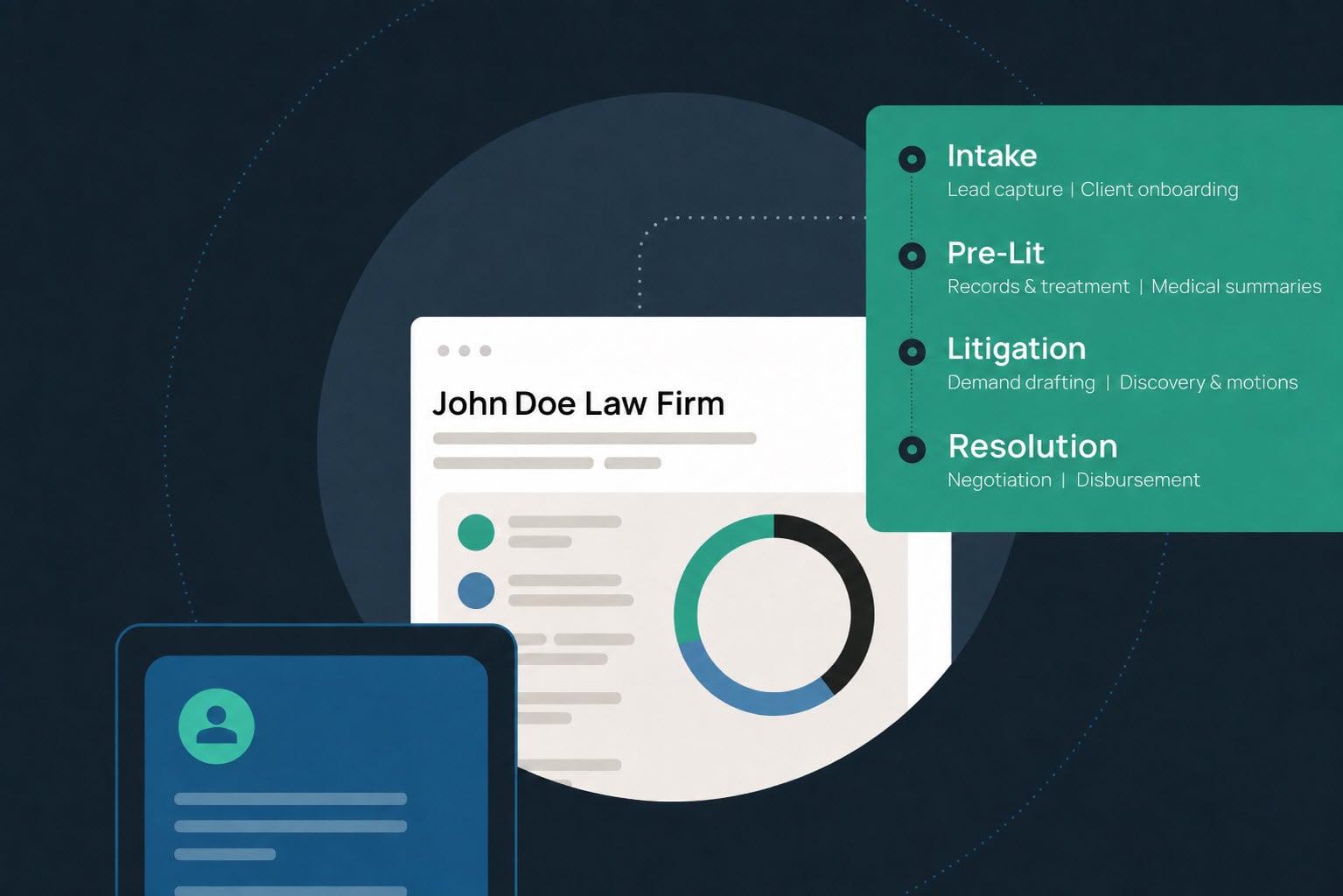
Such an integrated system fundamentally transforms workflow. When intake logs a new call, the case is immediately established within the system. As medical records arrive, they are directly uploaded, tracked, and managed within the specific matter. Demand packages can then be drafted efficiently, drawing directly from the comprehensive records gathered during intake months prior. Crucially, a partner seeking a case status update can find the answer instantly, as all relevant information resides in one central location.
While many individual tools can store documents or facilitate client communication, the true measure of effective personal injury software is whether a case ever needs to leave the system for any critical task. With multiple, separate tools, the answer is consistently "yes," placing the burden of integration back on human staff. In contrast, an integrated platform, such as CloudLex personal injury software, ensures the entire case lifecycle, from accident to resolution, is managed within a single environment. This single difference is key to legal tech consolidation in personal injury, moving beyond merely acquiring tools to running a truly connected firm. This dedicated focus is vital, as general platforms often include irrelevant features like hourly billing or retainer workflows that are inapplicable to contingency-based practices.
Enhancing Case Outcomes Through Unified Technology
The impact of disconnected tools extends significantly to the efficacy of advanced technologies like artificial intelligence. While AI is often seen as a potential remedy for software sprawl, its utility in a PI firm hinges entirely on access to a complete and current case file, encompassing all records and up-to-date data within the case context. Deploying AI on top of multiple, disconnected systems inevitably inherits their inherent disorganization and incomplete data.
A demand letter or chronology generated from an incomplete record, even by AI, becomes a new source of risk rather than a time-saving asset. The bottleneck in such scenarios is not the AI itself, but the fragmented tools feeding it. This underscores why integrated AI legal tech, like Lexee AI, which is built directly into a comprehensive platform, offers superior reliability. Lexee AI, for instance, is designed to be responsible, fast, and dependable because it operates within the unified CloudLex Platform.
This integrated approach allows Lexee AI to draft demand packages directly from the established case facts, generate medical summaries and treatment timelines with expert review, and answer case-specific questions in plain language. For contingency practices, the cost of fragmentation is particularly acute; it doesn't appear on a bill but manifests as weaker demands, slower negotiations, and ultimately, settlements that close for less than the case's true worth. Prioritizing a single, integrated case management system can streamline workflows, enhance data integrity, and improve overall firm profitability.
Practical Implications
PI firm leaders should critically evaluate their existing legal tech stack for fragmentation, as disconnected systems can lead to significant operational inefficiencies, increased risk from incomplete data, and potentially weaker case outcomes. Prioritizing a single, integrated case management system can streamline workflows, enhance data integrity, and improve overall firm profitability.
Source
How does this affect you?
Get an AI analysis of this article grounded in your jurisdictions, practice areas, and any policy documents you've uploaded to Wansom.
Finish Reading the Full Story and the Expert Analysis.
Wansom is AI and can make mistakes.