
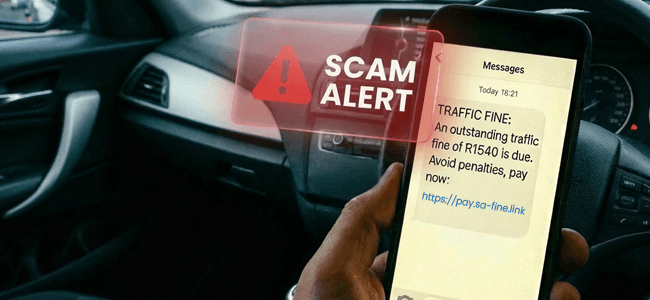
Inside the fake AARTO fine scam
Summary
- The Road Traffic Infringement Agency (RTIA) is investigating a potential eNatis system hack following a sharp increase in sophisticated fake AARTO fine scams.
- Scammers use cloned payment portals, SMS, WhatsApp, and email, often incorporating motorists' correct vehicle registration numbers under 'Fines SA' branding.
- While some data is accurate, scam infringement notice numbers do not match the official 16-digit format, which always starts with 01, 02, 03, 04, or 05.
- These scams exploit motorist confusion about the new AARTO system, offering fake discounts and threatening licence blocks, often timed with paydays.
- Both RTIA and Fines SA advise motorists to verify all notices through official channels to avoid fraudulent payments and protect personal information.
RTIA Investigates Surge in Fake AARTO Fine Scams
The Road Traffic Infringement Agency has observed a significant escalation in sophisticated scams, prompting a formal investigation into a potential breach of the eNatis system.
The Road Traffic Infringement Agency (RTIA) has launched an investigation into a potential breach of the electronic National Traffic Information System (eNatis), following a marked increase in sophisticated scams targeting motorists with fraudulent AARTO infringement notices. These elaborate schemes, which leverage tactics of both fear and reward, are being disseminated under the guise of 'Fines SA' branding and alarmingly include accurate vehicle registration numbers belonging to unsuspecting individuals. The agency has noted a “sharp increase in sophisticated scams” that aim to steal money and personal data through various digital channels.
Criminals are employing cloned payment portals, SMS, WhatsApp, and email to execute these scams. While the payment service 'Fines SA' maintains that its own systems have not been compromised, it confirms that cyber thieves are actively impersonating its brand. This surge in fraudulent activity coincides with the recent rollout of the second phase of the Administrative Adjudication of Road Traffic Offences Act (AARTO), which is now operational in 62 municipalities across South Africa, though the demerits system has begun implementation in phases starting July 2026, with a national rollout expected by September 2026 and further phases into 2027.
Unpacking the Scam's Deceptive Tactics
A key concern for the RTIA is the scammers' access to correct vehicle registration numbers, leading spokesperson Monde Mkalipi to confirm that the agency is consulting its legal team regarding an investigation into how this data might have been obtained, potentially through illicit access to eNatis. While the RTIA is actively gathering information and plans to involve other stakeholders, aiming for an announcement soon, the precise method of data acquisition remains unknown. Mkalipi emphasized the agency's commitment to uncovering the source of this information.
Despite the inclusion of accurate vehicle details, not all information presented in these fraudulent AARTO infringement notice scams is legitimate. Mkalipi highlighted that the purported infringement notice numbers used by scammers do not conform to the official 16-digit format, which always begins with 01, 02, 03, 04, or 05. Instead, scam notices display numbers like “2394 2450 1141 5674.” Screenshots provided to ITWeb by the RTIA illustrate these fake messages, which feature Fines SA branding, motorists’ actual registration numbers, fabricated infringement specifics, demerit points, and enticing discounts. One example shows a motorist allegedly speeding at 74km/h in a 60km/h zone, with an offer of a 50% “early settlement” discount, reducing a supposed R500 penalty to R250. Another identical speeding offense was reported with a different registration number, further indicating the widespread nature of this South Africa traffic fine fraud.
Regulatory Response and Public Advisory
The RTIA has observed that these fake messages are frequently timed to coincide with paydays, often including threats to block driving licence cards or vehicle licence discs to pressure recipients into quick payment. Under the legitimate AARTO Act, motorists are indeed granted a 32-day window to avail a 50% discount before the fine escalates. This legitimate incentive is being exploited by scammers to make their fraudulent offers appear more credible.
Barry Berman, CEO of Fines SA, noted that motorists are “really on edge” due to the ongoing changes in the traffic fine system, creating an environment where a seemingly legitimate 50% discount offer is highly effective. He explained that public confusion and a desire for quick resolution make the tempting discount offers difficult to resist. Both Fines SA and the RTIA are actively working to combat these Fines SA impersonation scams. Fines SA, which sends monthly statements to its more than two million users, regularly includes scam warnings across its communication channels and reports identified phishing links to Google. The RTIA, for its part, encourages the public to verify all notices by checking its official website.
Why Verification is Crucial for Motorists and Legal Counsel
The prevalence and sophistication of these scams underscore a critical need for vigilance among motorists and, by extension, legal professionals advising them. Given the RTIA's investigation into potential eNatis data breaches and the alarming accuracy of some information used by scammers, it is imperative for individuals to meticulously verify the authenticity of all AARTO infringement notices. This proactive approach is essential to prevent clients from making fraudulent payments, which not only results in financial loss but also fails to address any legitimate traffic violations.
Lawyers must guide their clients through the complexities of the new AARTO system, emphasizing that compliance with genuine regulations is paramount. The current climate of confusion, exacerbated by the ongoing AARTO rollout and the aggressive tactics of scammers, makes motorists particularly vulnerable. Ensuring that clients do not fall victim to these scams is crucial for protecting their financial well-being and avoiding unintended legal consequences that could arise from mismanaging legitimate or fraudulent traffic fines.
Practical Implications
Lawyers must advise clients to meticulously verify the authenticity of all AARTO infringement notices, especially given the RTIA's investigation into potential eNatis data breaches and the prevalence of sophisticated scams. This is critical to prevent clients from making fraudulent payments and to ensure they comply with legitimate traffic regulations under the new AARTO system, avoiding unintended legal consequences.
Source
Source: Original reporting via ITWeb
How does this affect you?
Get an AI analysis of this article grounded in your jurisdictions, practice areas, and any policy documents you've uploaded to Wansom.
Finish Reading the Full Story and the Expert Analysis.
Get the latest legal & regulatory intelligence in South Africa
Wansom is AI and can make mistakes.