
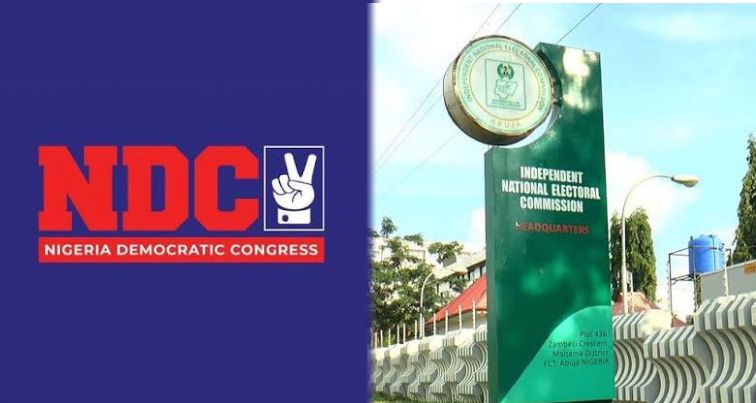
INEC: Uploads NDC Logo Following Federal High Court Order
Summary
- INEC initially refused to register the National Democratic Congress (NDC) due to its proposed logo.
- A Federal High Court subsequently ordered INEC to upload the party's approved logo in September.
- The Independent National Electoral Commission has now complied with the court order and uploaded the NDC logo.
- This case highlights the judiciary's role in compelling electoral bodies to adhere to legal directives.
Background to the Dispute
This development reinforces the judiciary's role in compelling compliance from electoral bodies like INEC, signaling that arbitrary decisions on party registration and logo approval can be effectively challenged through legal channels.
The Independent National Electoral Commission (INEC) has recently complied with a judicial directive, uploading the approved logo of the National Democratic Congress (NDC). This development follows a period of contention regarding the party's registration process and its proposed emblem. The electoral body's action marks the resolution of a dispute that necessitated intervention from the judiciary.
Initially, INEC had declined to register the NDC, citing issues with the party's proposed logo. This refusal presented a significant hurdle for the political organization, preventing its full participation in the electoral landscape. The commission's stance on the logo meant the NDC could not proceed with its registration, leading to an impasse between the aspiring party and the national electoral body.
The matter subsequently escalated to the Federal High Court, which reviewed the circumstances surrounding INEC's decision. After due consideration, the court issued a specific instruction to the electoral commission in September. This directive mandated INEC to proceed with the uploading of the NDC's logo, thereby clearing the path for the party's official recognition. The recent upload confirms INEC's adherence to this judicial pronouncement.
Judicial Oversight in Electoral Matters
This case underscores the critical role of the judiciary in overseeing the actions of electoral bodies and ensuring adherence to legal frameworks. The Federal High Court's intervention highlights its authority to adjudicate disputes arising from the registration of political parties and the approval of their symbols. Such judicial oversight is fundamental to maintaining fairness and transparency within the electoral system, particularly when an electoral commission's decisions are challenged.
The Independent National Electoral Commission, as the primary body responsible for organizing and conducting elections in Nigeria, possesses significant powers, including the registration of political parties and the approval of their identifying emblems. However, these powers are not absolute and are subject to judicial review. The court's order in September, compelling INEC to upload the NDC logo, serves as a clear demonstration that even statutory bodies must operate within the confines of the law and respond to judicial directives. This instance reinforces the principle that aggrieved parties can seek redress through the courts when they perceive an arbitrary exercise of power by regulatory agencies.
The directive issued by the Federal High Court specifically instructed the electoral commission to upload the approved logo, thereby resolving the Nigeria INEC party registration dispute concerning the NDC. This judicial pronouncement effectively overturned INEC's initial refusal, emphasizing the judiciary's capacity to compel compliance from the electoral body. The eventual INEC compliance court directive ensures that the rights of political entities are protected, even against the decisions of powerful state institutions.
Precedent and Future Implications
The resolution of the NDC party logo court case Nigeria sets a significant precedent for future interactions between political parties and the electoral commission. This development reinforces the judiciary's role in compelling compliance from electoral bodies like INEC, signaling that arbitrary decisions on party registration and logo approval can be effectively challenged through legal channels. This outcome provides a clear pathway for other political organizations facing similar hurdles, affirming that court orders against electoral commissions are enforceable and must be respected.
This development holds broader implications for the integrity of Nigeria's democratic process. By upholding the rule of law and ensuring that electoral institutions adhere to judicial directives, the courts contribute to building trust in the electoral system. The case demonstrates that the judicial arm of government acts as a vital check on the executive and independent agencies, safeguarding the rights of political actors and promoting a level playing field for all participants. Lawyers advising political parties or involved in electoral law should note this case as a reference for the enforceability of court orders against electoral commissions, highlighting the judiciary's commitment to upholding justice in electoral matters.
Practical Implications
This development reinforces the judiciary's role in compelling compliance from electoral bodies like INEC, setting a precedent for challenging arbitrary decisions on party registration and logo approval. Lawyers advising political parties or involved in electoral law should note this case as a reference for the enforceability of court orders against electoral commissions.
Source
How does this affect you?
Get an AI analysis of this article grounded in your jurisdictions, practice areas, and any policy documents you've uploaded to Wansom.
Finish Reading the Full Story and the Expert Analysis.
Get the latest legal & regulatory intelligence in Nigeria
Wansom is AI and can make mistakes.