
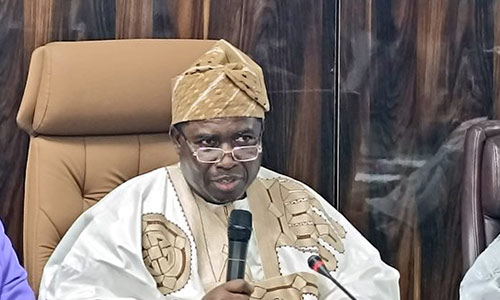
INEC Chairman: AI for 2027 Elections, Warns Against Misuse
Summary
- INEC Chairman Professor Joash Amupitan, SAN, has defended the use of artificial intelligence (AI) in election management.
- He believes AI can strengthen electoral administration and specifically improve voter registration processes.
- Professor Amupitan warned that the misuse of AI could undermine public confidence in Nigeria’s 2027 general elections.
- The Independent National Electoral Commission aims to leverage AI's benefits while mitigating risks like deepfakes and manipulation.
- The upcoming 2027 elections highlight the critical need for responsible AI integration to maintain electoral integrity.
The Role of AI in Electoral Processes
The integrity of the electoral process hinges on the public's trust, and any perception of AI being used for nefarious purposes could have far-reaching consequences, eroding faith in the outcomes of the polls.
The Independent National Electoral Commission (INEC) is actively considering the integration of artificial intelligence (AI) into its operational framework, with its Chairman, Professor Joash Amupitan, SAN, advocating for its strategic deployment. Professor Amupitan has articulated a vision where AI serves as a powerful tool to enhance the efficiency and integrity of electoral administration AI Nigeria. He firmly believes that this advanced technology is not inherently detrimental to democratic principles but rather possesses the capacity to significantly bolster the management of elections.
Central to this perspective is the potential for AI to streamline various aspects of the electoral cycle. Specifically, Professor Amupitan highlighted that AI could bring substantial improvements to voter registration processes, making them more accurate, accessible, and less prone to errors. This proactive stance by the INEC Chairman on AI for the 2027 elections underscores a commitment to leveraging technological advancements for better governance and a more robust democratic exercise.
Navigating Risks and Public Trust
Despite the optimistic outlook on AI's benefits, Professor Amupitan issued a stern warning regarding the potential for its misuse. He cautioned that if not managed responsibly, AI could severely compromise public confidence in the upcoming 2027 general elections in Nigeria. This concern extends to the emerging threats posed by sophisticated technologies such as Nigeria election deepfakes, which have the capacity to spread misinformation and manipulate public perception.
The Chairman's remarks emphasize the critical need for robust safeguards and ethical guidelines to prevent AI election manipulation Nigeria. The integrity of the electoral process hinges on the public's trust, and any perception of AI being used for nefarious purposes could have far-reaching consequences, eroding faith in the outcomes of the polls. Therefore, while embracing AI's potential, the Independent National Electoral Commission is acutely aware of the dual nature of the technology and the imperative to mitigate its risks.
The Path to 2027 Elections
As Nigeria approaches the 2027 general elections, the discourse surrounding AI's role becomes increasingly vital. The INEC Chairman AI 2027 elections strategy appears to be a delicate balance between innovation and caution, aiming to harness AI's power while simultaneously guarding against its vulnerabilities. The commission faces the challenge of implementing AI solutions that are transparent, secure, and resistant to manipulation, ensuring that the technology serves to strengthen, rather than weaken, the democratic fabric.
Professor Joash Amupitan SAN's statements serve as a crucial reminder to all stakeholders—political parties, civil society, and the electorate—that while AI offers unprecedented opportunities for electoral administration, vigilance against its misuse is paramount. The successful integration of AI into Nigeria's electoral system will depend on a comprehensive approach that addresses both its promise and its peril, ultimately striving to uphold the fairness and credibility of the nation's democratic processes.
Practical Implications
Lawyers should anticipate increased litigation concerning election integrity and the admissibility of AI-generated evidence in Nigerian courts, particularly as deepfake technology advances. Compliance officers advising political entities must monitor the evolving regulatory landscape for AI use in campaigns to mitigate risks of manipulation or misinformation.
Source
How does this affect you?
Get an AI analysis of this article grounded in your jurisdictions, practice areas, and any policy documents you've uploaded to Wansom.
Wansom is AI and can make mistakes.