
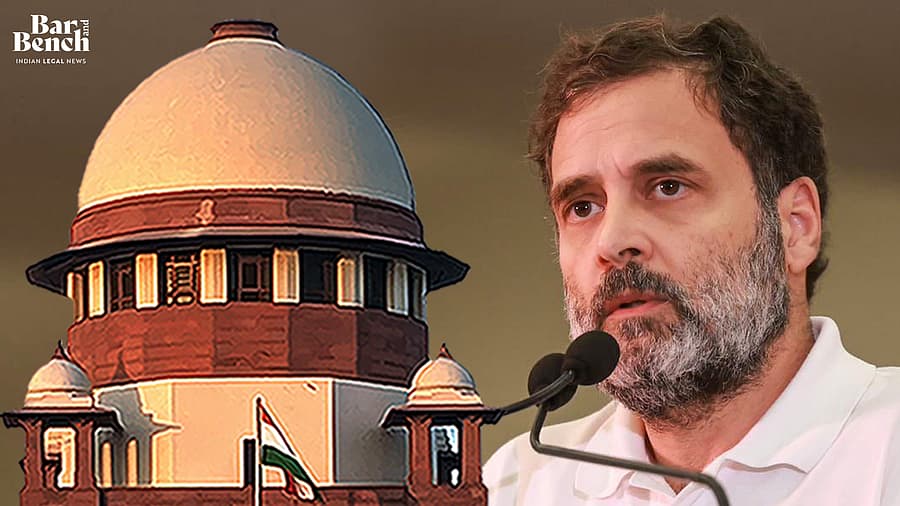
Rahul Gandhi Moves Supreme Court: Seeks to Serve 48 Interrogatories
Summary
- Rahul Gandhi and ten other opposition leaders have petitioned the Supreme Court to serve 48 interrogatories on the Election Commission of India.
- They seek sworn affidavits from CEC Gyanesh Kumar and Election Commissioners Dr. Sukhbir Singh Sandhu and Dr. Vivek Joshi regarding alleged unilateral decisions and mass voter deletions during the Special Intensive Revision.
- Petitioners claim ECI's counter-affidavits rely on bare assertions and withhold crucial official files and records.
- The core dispute questions whether the CEC exercised collective ECI powers without the knowledge or approval of the other two commissioners.
- The ECI stated SIR orders were unanimous, but petitioners argue the poll body failed to provide supporting file numbers, dates, or meeting minutes.
What Happened
The integrity of the Election Commission of India, as the constitutional body responsible for conducting free and fair elections, hinges on public trust in its decision-making.
Rahul Gandhi, along with ten other prominent opposition leaders, has initiated legal proceedings in the Supreme Court. Their application seeks judicial authorization to present 48 specific written questions, known as interrogatories, to the Election Commission of India (ECI). This move is part of a broader challenge concerning alleged irregularities within the nationwide Special Intensive Revision (SIR) of electoral rolls. The petitioners are specifically requesting sworn affidavits from Chief Election Commissioner Gyanesh Kumar, as well as Election Commissioners Dr. Sukhbir Singh Sandhu and Dr. Vivek Joshi, to address accusations of unilateral decision-making and widespread voter deletions during the SIR process.
The opposition leaders' petition to the apex court underscores their contention that the ECI's previous responses to their concerns have been insufficient. They argue that the counter-affidavits submitted by the ECI, which were filed in response to the original petition challenging the extensive voter deletions and alleged procedural flaws in the ongoing SIR, consist merely of unsubstantiated claims. Crucially, the petitioners assert that the ECI has deliberately withheld vital official files and records that could shed light on the decision-making processes. This procedural request for interrogatories aims to compel the ECI to provide concrete, verifiable information under oath.
The Core Dispute
At the heart of the legal challenge lies a fundamental question regarding the operational integrity and collective authority of the Election Commission. The petitioners contend that the central issue is whether the Chief Election Commissioner acted independently, exercising the powers typically vested in the ECI as a collective body, without the explicit awareness, endorsement, or consent of the other two Election Commissioners. This allegation suggests a potential deviation from the established collegiate decision-making framework expected of the ECI.
The opposition leaders' application implies that the ECI's internal governance structure may have been compromised, leading to decisions that lacked the full consensus of its leadership. Their pursuit of 48 interrogatories is designed to probe deeply into the specifics of how decisions related to the Special Intensive Revision were made, who was involved, and whether proper protocols for collective approval were followed. By demanding sworn affidavits, they aim to establish a clear record of accountability and transparency from the highest echelons of the electoral body.
ECI's Defense and Petitioners' Rebuttal
In its official responses to the initial petition, the Election Commission of India has consistently maintained that the directives pertaining to the Special Intensive Revision were the outcome of unanimous decisions by its three-member panel. This assertion was presented in a counter-affidavit dated October 26 and further elaborated in a supplementary affidavit filed on November 14, both of which were affirmed by Deputy Election Commissioner Bhanu Prakash Yeturu. The ECI's position is that all actions taken were the result of a collegiate and consensual process.
However, the petitioners have strongly contested this claim, pointing out that the electoral body has failed to provide any concrete evidence to substantiate its assertion of unanimity. Specifically, they highlight the absence of crucial supporting documents such as file numbers, specific dates of meetings, or minutes from those meetings that would verify the alleged unanimous decisions. Furthermore, the petitioners have referenced an August 2025 Right to Information (RTI) reply, issued by the ECI's own authorities, which they suggest further undermines the Commission's narrative of collective decision-making.
Why It Matters
The ongoing legal dispute carries significant implications for the transparency and perceived impartiality of India's electoral processes. The integrity of the Election Commission of India, as the constitutional body responsible for conducting free and fair elections, hinges on public trust in its decision-making. Allegations of unilateral action by its chief, coupled with claims of mass voter deletions, directly challenge this trust and raise concerns about the fairness of future electoral exercises.
The Supreme Court's handling of this application for interrogatories will set an important precedent regarding the level of scrutiny and accountability expected from constitutional bodies like the ECI. Should the court grant permission for the interrogatories, it would signal a judicial emphasis on transparency and the need for electoral authorities to provide detailed justifications for their actions, particularly when faced with serious allegations from political stakeholders. This case, therefore, extends beyond the immediate parties, touching upon the foundational principles of democratic governance and electoral integrity.
Source
How does this affect you?
Get an AI analysis of this article grounded in your jurisdictions, practice areas, and any policy documents you've uploaded to Wansom.
Finish Reading the Full Story and the Expert Analysis.
Get the latest legal & regulatory intelligence in India
Wansom is AI and can make mistakes.