
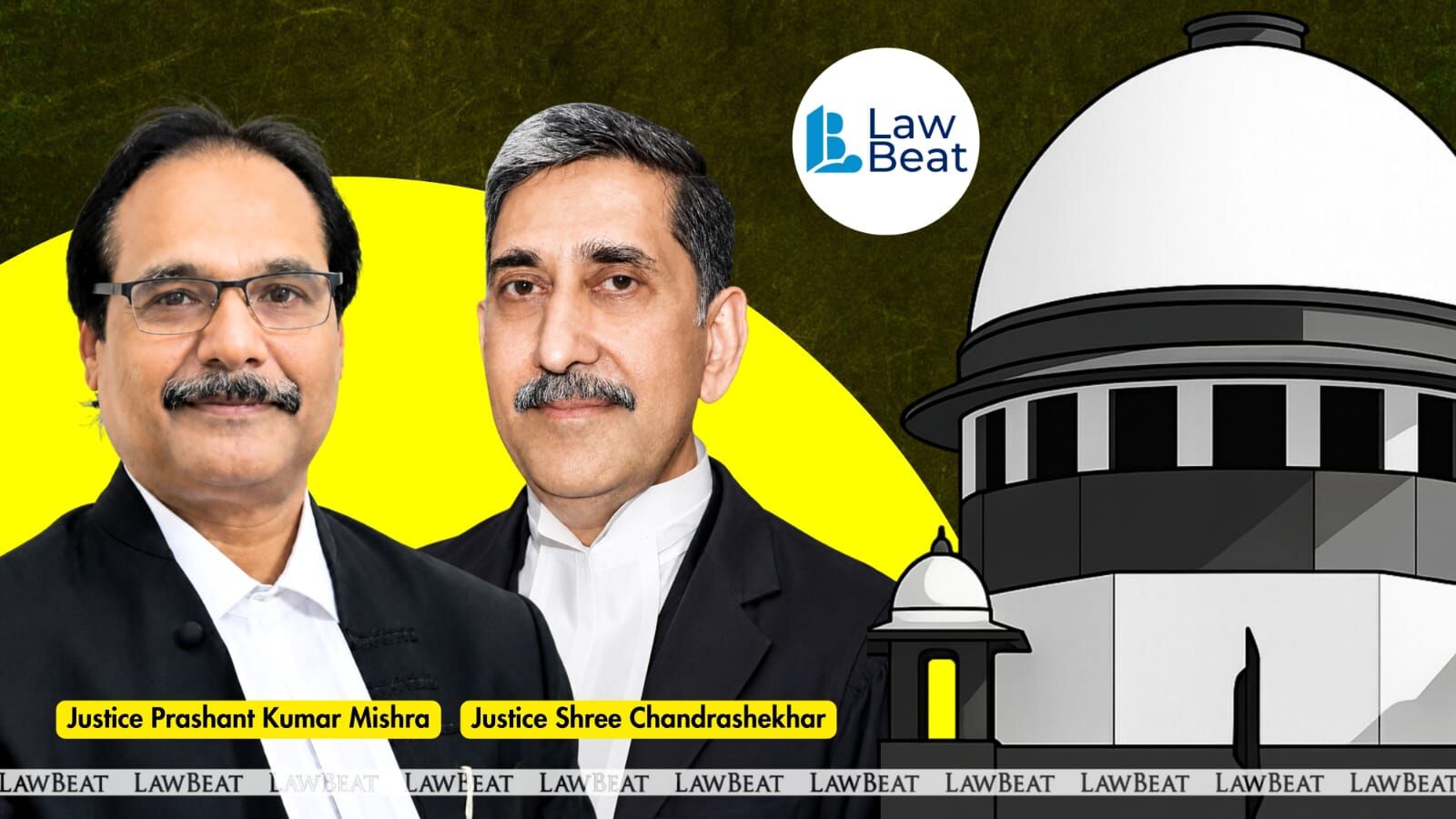
India Supreme Court: Quashes FIR in Civil Dispute
Summary
- The Supreme Court quashed an FIR against Shailendra Agrawal and another, stating criminal law cannot be used for purely civil disputes.
- The FIR, alleging offenses including Sections 406 and 420 IPC, was based on an Additional Collector's administrative order concerning a civil plot dispute.
- The Additional Collector had subsequently admitted lacking subject-matter jurisdiction over the plot allotment issue, which the State also confirmed was a civil matter.
- The high court had previously declined to quash the FIR, despite potential issues with the administrative order's authority.
- Justices Prashant Kumar Mishra and Shree Chandrashekhar presided over the bench that delivered this significant ruling.
The Dispute's Genesis
The Supreme Court's intervention highlights a critical safeguard against the potential for misuse of criminal process India.
The Supreme Court of India recently underscored a critical principle, ruling that criminal proceedings cannot be initiated for matters that are fundamentally civil in nature. This pronouncement came as the apex court moved to quash an First Information Report (FIR) that had been registered against Shailendra Agrawal and another individual. The FIR, which alleged offences under Sections 406, 420, 467, 468, 120-B, and 34 of the Indian Penal Code, stemmed from a civil plot dispute, highlighting a significant instance of the misuse of criminal process India.
The genesis of the legal challenge lay in an order issued by the Additional Collector, Kanadia, on February 22, 2022, which the appellants sought to have set aside, along with the subsequent FIR at Police Station-Kanadia. The high court, in its review, noted that the initial complaint accused Agrawal and his co-appellant of selling plots and accepting payments without completing the necessary colony development. The Additional Collector's order had asserted that, based on a Memorandum of Understanding dated September 10, 2007, the right to sell plots rested solely with the landowner, identified as the fourth respondent. Furthermore, the administrative authority had observed that a completion certificate was improperly obtained from the Sub-Divisional Officer (SDO) and that mortgaged plots had been fraudulently redeemed. These observations formed the basis for the Additional Collector's directive to register the FIR against the appellants. Despite potential issues with the administrative order's authority, the high court had previously declined to intervene, citing that an FIR had already been lodged.
Supreme Court's Jurisdictional Clarity
The Supreme Court, comprising a bench of Justices Prashant Kumar Mishra and Shree Chandrashekhar, meticulously examined the case, particularly the State of Madhya Pradesh's affidavit. This affidavit revealed a crucial detail: while the Additional Collector initially recorded a prima facie finding of fraud and misrepresentation concerning the release of mortgaged plots and directed police action, the same Additional Collector later disposed of the revenue case on November 7, 2024. In this subsequent order, the Additional Collector explicitly stated a lack of subject-matter jurisdiction over the inter se allotment of plots to colony members.
The State's submission to the Supreme Court further clarified that the core issue was a matter properly triable by a civil court, distinct from any cognizable offences that the investigating agency might have independently recognized. The apex court found it "abundantly clear" that the private respondents' application to the Additional Collector primarily revolved around the release of mortgaged plots and the appellants' failure to complete development work. The Bench emphasized that once the State itself acknowledged the dispute as one belonging to the civil court's purview, the Additional Collector's subsequent action of directing the lodging of an FIR against the appellants could not be legally sustained. This ruling directly addresses the issue of Supreme Court jurisdiction civil matters FIR, reinforcing the boundaries between civil and criminal redressal mechanisms.
Preventing Criminalization of Civil Matters
This landmark decision by the India Supreme Court quashes FIR civil dispute, setting a significant precedent against the criminalization of purely civil matters. The ruling unequivocally states that criminal law should not be invoked for disputes that are inherently civil. The case of Shailendra Agrawal serves as a potent reminder that administrative orders, especially those issued without proper jurisdiction, cannot form the sole basis for initiating criminal proceedings in civil disagreements.
The Supreme Court's intervention highlights a critical safeguard against the potential for misuse of criminal process India. By quashing the FIR, particularly one involving charges under Sections 406 and 420 IPC, the Court has reinforced the necessity for a clear distinction between civil wrongs and criminal offenses. It underscores that even if elements of fraud or misrepresentation are alleged in a civil context, the appropriate forum for resolution is often a civil court, unless a distinct, independent criminal offense is clearly established and falls within the jurisdiction of the authority initiating the criminal action. This judgment will be instrumental in preventing the unwarranted civil dispute criminalization India, ensuring that individuals are not subjected to the rigors of criminal law for issues that should be resolved through civil litigation.
Practical Implications
Lawyers can leverage this Supreme Court precedent to challenge FIRs filed against clients in purely civil disputes, particularly those arising from administrative orders without proper jurisdiction. It underscores the importance of scrutinizing the underlying nature of a complaint to prevent the criminalization of civil matters.
Source
How does this affect you?
Get an AI analysis of this article grounded in your jurisdictions, practice areas, and any policy documents you've uploaded to Wansom.
Wansom is AI and can make mistakes.