
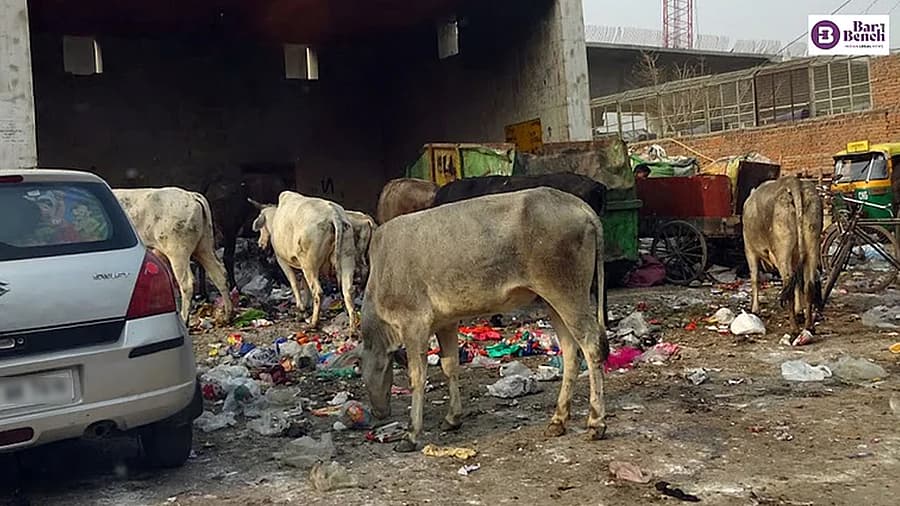
Bhopal Municipal Corporation v Dr Subhash C Pandey: Supreme Court Orders Water Power Disconnection for Solid W
Summary
- The Supreme Court ordered local bodies in India to inform bulk waste generators about their obligations to segregate, store, and properly hand over solid waste.
- Failure to comply with these regulations will result in temporary disconnection of water and electricity supply by the special cell of the jurisdictional district collector.
- The court directed departments of school and higher education to incorporate theoretical and practical lessons on solid waste management into the school curriculum.
What Happened
Every local body shall, through its Chairman/Commissioner/Secretary, as directed by the jurisdictional District Collector, communicate in writing to every BWG within its limits the obligations viz, (i) segregation, storage and handover of solid waste generated; and (ii) the consequence of non-compliance resulting in the temporary disconnection of water and electricity supply by order of the District Collector’s Special Cell, restorable upon submission of a compliance certificate by the BWG.
On August 18, the Supreme Court issued a directive to local bodies in India regarding solid waste management. The court ordered that bulk waste generators must be informed in writing about their obligations to segregate, store, and properly hand over solid waste generated within their premises. Failure to comply with these regulations will result in temporary disconnection of water and electricity supply by the special cell of the jurisdictional district collector.
Relevant Legal/Regulatory Context
The Supreme Court's directive is a significant development in the context of solid waste management in India. The court's order emphasizes the importance of proper segregation, storage, and handover of solid waste to prevent environmental pollution and public health hazards. The directive also highlights the need for local bodies to communicate these obligations to bulk waste generators in writing. Furthermore, the court has directed the departments of school and higher education to incorporate theoretical and practical lessons on solid waste management into the school curriculum. This order follows earlier directions from February and May 2026, which empowered District Collectors to enforce the Solid Waste Management Rules, 2026, which came into effect on April 1, 2026.
Why It Matters
The Supreme Court's order has far-reaching implications for solid waste management in India. The directive aims to ensure that bulk waste generators take responsibility for their waste, which will help prevent environmental pollution and public health hazards. Moreover, the court's emphasis on education and training of students and teachers is a significant step towards creating awareness about solid waste management among the general public. As a result, lawyers should advise clients to ensure proper segregation, storage, and handover of solid waste to avoid temporary water and electricity supply disconnection.
Practical Implications
Lawyers should advise clients to ensure proper segregation, storage, and handover of solid waste to avoid temporary water and electricity supply disconnection.
Source
How does this affect you?
Get an AI analysis of this article grounded in your jurisdictions, practice areas, and any policy documents you've uploaded to Wansom.
Wansom is AI and can make mistakes.