
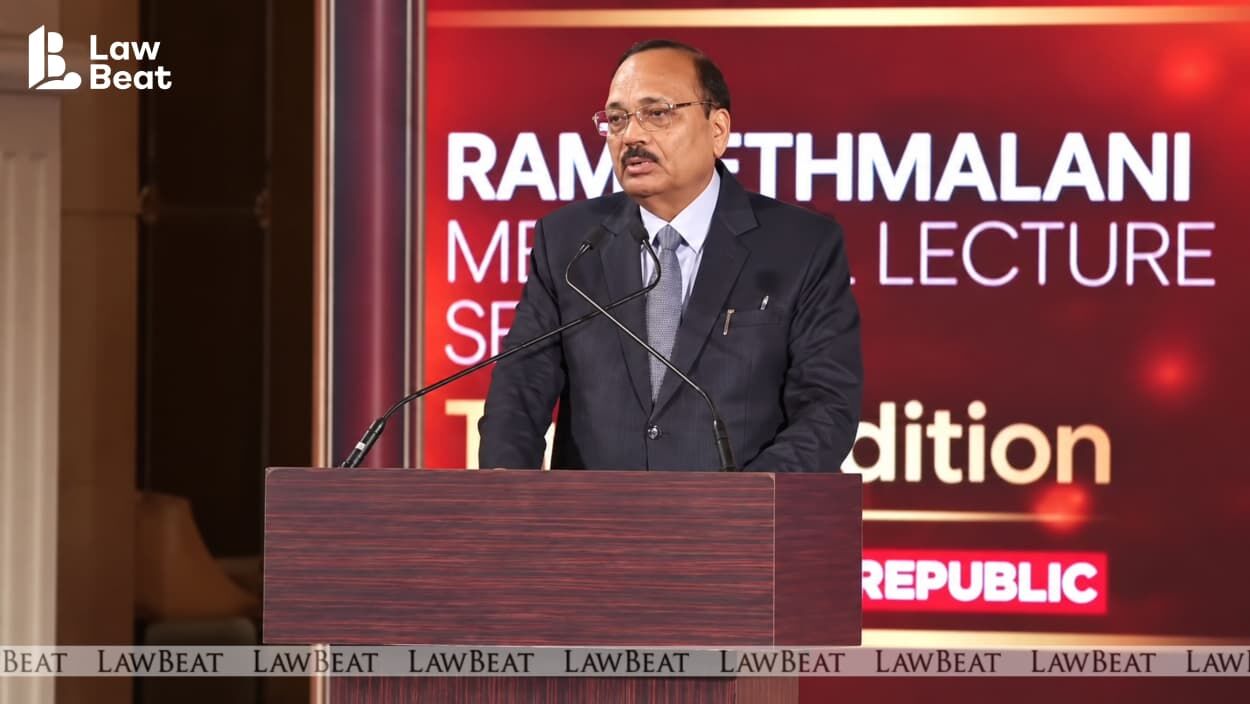
CJI Surya Kant: India Supreme Court Pila Pahan Reserved Judgments Must Be Transparent
Summary
- CJI Surya Kant emphasized that courts must be open to scrutiny and criticism to maintain public trust, speaking at the 6th Ram Jethmalani Memorial Lecture.
- He clarified that true judicial transparency involves making the reasoning behind decisions accessible, not just the outcomes.
- The Supreme Court, in Pila Pahan v. State of Jharkhand, mandated that reserved judgments should generally be pronounced within three months.
- High Courts are now required to publicly display the dates when judgments are reserved and delivered on their websites to combat judicial delay.
- Senior Advocate Mahesh Jethmalani called for greater institutional transparency across the legal system, citing concerns over undisclosed inquiry findings in a High Court judge controversy.
Upholding Judicial Scrutiny and Transparency
The Supreme Court, in a significant directive stemming from the case of Pila Pahan v. State of Jharkhand, mandated that judgments, once reserved, should ordinarily be pronounced within a three-month period.
Chief Justice of India (CJI) Surya Kant recently underscored the imperative for courts to embrace scrutiny and criticism as fundamental to a robust constitutional democracy. Speaking at the 6th Ram Jethmalani Memorial Lecture, titled “Justice Seen to Be Done: Transparency and Public Trust as Pillars of the Legal System,” CJI Surya Kant articulated that the judiciary cannot insulate itself from examination. He reiterated a recent Supreme Court order, emphasizing that fair, informed, and constructive critique is a legitimate and necessary feature, contributing to institutional accountability and self-correction, which lies at the core of transparency itself.
CJI Surya Kant highlighted that a court cannot earn public confidence by placing itself beyond questioning; instead, it must remain willing to be examined, challenged, and, when necessary, criticized. This stance on CJI Surya Kant judicial transparency was complemented by a mention of various technological and institutional advancements aimed at enhancing the justice delivery system, including the eCourts sign-on portal, electronic service of summons, and the integration of prison and court records.
Beyond Open Doors: The Essence of Judicial Transparency
The CJI further elaborated on the true meaning of judicial transparency, asserting that it extends far beyond merely open courtrooms or publicly announced orders. He stressed that genuine transparency requires the reasoning behind a judicial decision, not just its outcome, to be accessible for examination by anyone, including those adversely affected by the ruling. A court that delivers a verdict but withholds its underlying rationale, he argued, has not truly achieved transparency, regardless of other procedural steps taken.
CJI Surya Kant also drew a crucial distinction between public trust and public approval, noting that the judiciary's legitimacy does not stem from popularity or from delivering outcomes that align with public expectations. He explained that a court earns trust when even litigants who have lost their case and desired a different result still perceive the process that decided against them as fair. This, he contended, is a far more challenging and valuable achievement than simply gaining public approval.
Addressing Judicial Delay: The Pila Pahan Directive
A significant point of discussion by CJI Surya Kant involved the persistent issue of judgments remaining reserved for extended periods, particularly in cases concerning personal liberty. In this context, he referenced the **India Supreme Court Pila Pahan reserved judgments** directive, specifically the Supreme Court’s decision in *Pila Pahan v. State of Jharkhand*.
This landmark ruling established a clear expectation that reserved judgments should ordinarily be pronounced within a three-month timeframe. Furthermore, to enhance the Indian High Court judgment pronouncement timeline and combat judicial delay India Supreme Court, the directive mandated that High Court websites must publicly display the specific dates on which judgments were reserved and subsequently delivered. CJI Surya Kant observed that this institutional disclosure mechanism would play a vital role in ensuring that instances of judicial delay do not go unnoticed by the public, thereby fostering greater accountability.
Calls for Broader Institutional Accountability
Adding to the discourse on transparency, Senior Advocate Mahesh Jethmalani, also a speaker at the event, advocated for enhanced institutional transparency across the entire legal ecosystem, encompassing the judiciary, tribunals, and the Bar. He posited that such transparency is indispensable for both restoring and strengthening public confidence in the legal system.
Jethmalani cited a specific controversy involving cash allegedly discovered in the outhouse of a sitting High Court judge following a fire, describing the incident as having inflicted “staggering damage” on the legal system. He noted that while the judge in question had been relieved of judicial duties and a three-judge committee was constituted to investigate the matter, the findings of this committee were never made public. Jethmalani argued that making the inquiry committee's findings public would have significantly bolstered the judiciary's image and raised further concerns regarding the absence of such disclosures.
Practical Implications
The Supreme Court's directive in Pila Pahan v. State of Jharkhand establishes an expectation for reserved judgments to be pronounced within three months and mandates public disclosure of judgment reservation and delivery dates by High Courts. Lawyers should leverage this directive to monitor case progress, address undue delays in judgment pronouncements, particularly in personal liberty matters, and ensure procedural transparency.
Source
How does this affect you?
Get an AI analysis of this article grounded in your jurisdictions, practice areas, and any policy documents you've uploaded to Wansom.
Finish Reading the Full Story and the Expert Analysis.
Get the latest legal & regulatory intelligence in India
Wansom is AI and can make mistakes.