
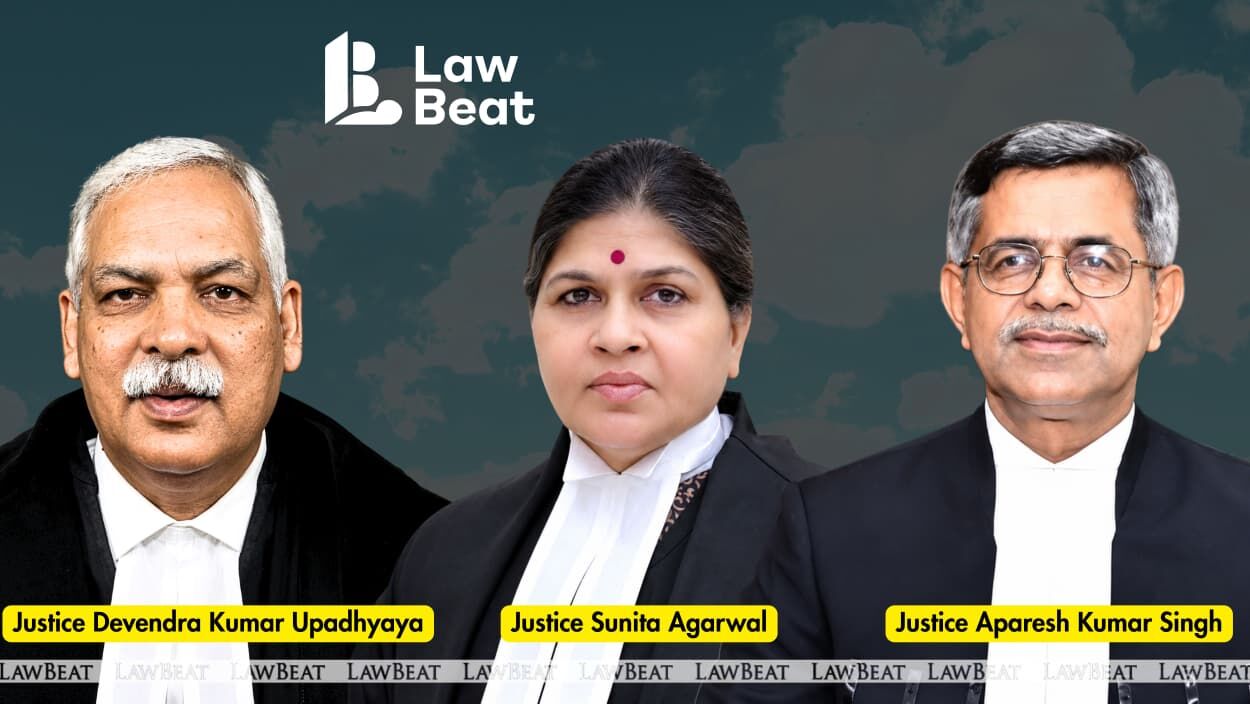
India Supreme Court: New Judges Sunita Agarwal, Upadhyaya, Singh Appointed
Summary
- The central government has approved the Supreme Court Collegium's recommendation for three new judges.
- Justice Sunita Agarwal, Justice Devendra Kumar Upadhyaya, and Justice Aparesh Kumar Singh are the three High Court Chief Justices appointed to the Supreme Court.
- These appointments will help fill existing vacancies, bringing the Supreme Court closer to its approved strength of 38 judges.
- The new judges were sworn in on October 6, 2026, at 3:30 PM.
- Their diverse experience from the Gujarat, Delhi, and Telangana High Courts is expected to influence the court's future jurisprudential direction.
Key Judicial Appointments Confirmed for India's Apex Court
These Indian judicial appointments Supreme Court not only help to fill critical vacancies but also contribute to shaping the court's overall composition and potentially its jurisprudential direction in future rulings.
The Indian Supreme Court is set to welcome three new judges following the central government's approval of recommendations put forth by the Supreme Court Collegium. This significant development sees the elevation of three current High Court Chief Justices to the nation's highest judicial body. The newly appointed judges, Justice Sunita Agarwal, Justice Devendra Kumar Upadhyaya, and Justice Aparesh Kumar Singh, were sworn into their new roles on October 6, 2026, at 3:30 PM.
These appointments address a portion of the existing vacancies within the Supreme Court. Prior to these elevations, the Supreme Court operated with 34 judges against its sanctioned strength of 38. The addition of these three experienced jurists will bring the court closer to its full operational capacity, ensuring a more robust judicial process for pending cases and future legal challenges. The recommendations for these appointments were initially made by the Supreme Court Collegium following its meeting on September 28, 2026.
Distinguished Careers of the New Justices
The three jurists bring extensive experience from their previous roles as Chief Justices of various High Courts. Justice Sunita Agarwal, who most recently served as the Chief Justice of the Gujarat High Court in Ahmedabad since July 23, 2023, has a distinguished career spanning over two decades. Before her appointment as Chief Justice, she served as a judge in the Allahabad High Court for twelve years. Her journey began with 21 years of dedicated legal practice, leading to her elevation as an Additional Judge of the Allahabad High Court on November 21, 2011, and subsequently as a Permanent Judge on August 6, 2013. Justice Agarwal has presided over a wide array of cases, encompassing civil and criminal appeals, service matters, land acquisition disputes, intra-court appeals, and constitutional issues, often sitting on both Single and Division Benches. Notably, she was also part of a seven-judge bench of the Allahabad High Court that addressed issues concerning subordinate courts and judicial infrastructure.
Justice Devendra Kumar Upadhyaya, identified as the Chief Justice of the Delhi High Court in the Collegium's recommendation, previously took oath as the Chief Justice of the High Court of Bombay on July 29, 2023. He took oath as the Chief Justice of the High Court of Delhi on January 21, 2025, following a transfer. His judicial career commenced with his appointment as a puisne Judge of the High Court of Judicature at Allahabad on November 21, 2011, becoming a permanent judge on August 6, 2013. He later assumed the position of Senior Judge of the Lucknow Bench on March 28, 2023.
Justice Aparesh Kumar Singh, who was serving as the Chief Justice of the High Court for the State of Telangana, also has a notable judicial background. He was initially appointed as an Additional Judge of the High Court of Jharkhand on January 24, 2012, and confirmed as a Permanent Judge on January 16, 2014. During his tenure, he also held the significant position of Executive Chairman of the Jharkhand State Legal Services Authority. Justice Singh served as the Acting Chief Justice of the High Court of Jharkhand from December 20, 2022, to February 19, 2023. He took oath as the Chief Justice of the High Court of Tripura on April 17, 2023, before his transfer and subsequent oath as Chief Justice of the High Court for the State of Telangana on July 19, 2025.
Implications for the Supreme Court of India
The appointment of Justice Sunita Agarwal, Justice Devendra Kumar Upadhyaya, and Justice Aparesh Kumar Singh to the Supreme Court of India carries substantial implications for the nation's highest judicial body. These Indian judicial appointments Supreme Court not only help to fill critical vacancies but also contribute to shaping the court's overall composition and potentially its jurisprudential direction in future rulings. The diverse experience of these judges, drawn from their leadership roles in the Gujarat, Delhi, and Telangana High Courts, is expected to enrich the court's deliberations across various legal domains.
The process, initiated by the Supreme Court Collegium India appointments, underscores the established mechanism for judicial elevations to the apex court. By bringing the court closer to its full strength, these appointments enhance its capacity to handle the extensive caseload and complex constitutional matters that regularly come before it. Lawyers and compliance officers should take note of these changes, as the new composition of the bench could influence the interpretation and application of law, impacting various sectors and legal precedents in the years to come.
Practical Implications
Lawyers and compliance officers should note the appointment of these three High Court Chief Justices to the Supreme Court, as it impacts the court's composition, helps fill existing vacancies, and may influence the court's capacity and jurisprudential direction in future rulings.
Source
How does this affect you?
Get an AI analysis of this article grounded in your jurisdictions, practice areas, and any policy documents you've uploaded to Wansom.
Finish Reading the Full Story and the Expert Analysis.
Get the latest legal & regulatory intelligence in India
Wansom is AI and can make mistakes.