
India Supreme Court: Final Chance for Menstrual Hygiene Fundamental Right Compliance
Summary
- The Supreme Court has issued a final warning to States and Union Territories regarding compliance with its menstrual hygiene judgment.
- Chief Secretaries of non-responsive States face potential contempt notices for failing to report on implementation.
- The Court reiterated that menstrual hygiene and health are fundamental rights under Article 21 of the Indian Constitution.
- Despite Union government efforts, States and UTs have largely failed to provide details on their implementation steps.
- The next hearing is scheduled for December 14, 2026, where further action on non-compliance is expected.
Supreme Court Issues Stern Warning on Menstrual Hygiene Compliance
The Court underscored that its actions were primarily driven by the welfare of young girls, particularly those in remote regions, whose education is often disrupted by challenges related to menstrual hygiene.
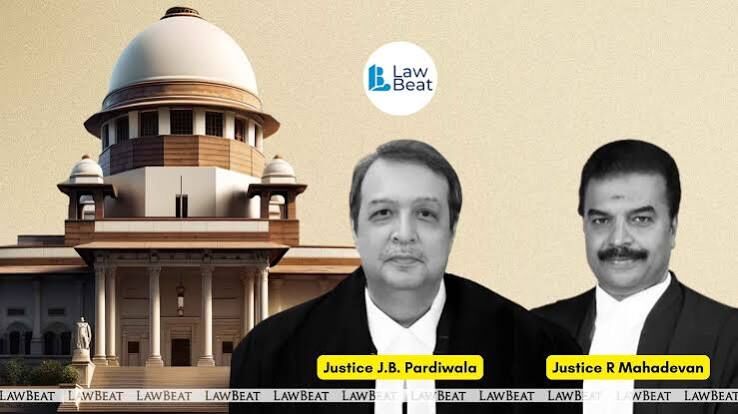
The Supreme Court of India has granted States and Union Territories a final opportunity to submit their responses regarding the implementation of its judgment recognizing menstrual health as a fundamental right. This directive, issued on October 13 by a bench comprising Justices JB Pardiwala and R. Mahadevan, comes with a clear warning: Chief Secretaries of any State failing to comply will face contempt notices. This emphasizes the Court's resolve to ensure active compliance with its earlier ruling.
This latest order follows a submission by Additional Solicitor General (ASG) Aishwarya Bhati, who informed the Court that despite the Union government's efforts to solicit compliance details from all States and Union Territories, no responses had been received. The Court had previously directed the Union to gather written replies detailing the measures taken to implement the judgment, which anchors menstrual health within the ambit of Article 21 of the Constitution. The matter is now slated for its next hearing on December 14, 2026, at 2:30 PM.
Menstrual Health as a Fundamental Right Under Article 21
The Court's stance is rooted in its earlier pronouncement, specifically an order dated September 1, 2026, which unequivocally declared menstrual hygiene and health as integral components of the right to life under Article 21 of the Indian Constitution. This constitutional recognition underscores the profound importance the judiciary places on ensuring access to adequate menstrual health facilities and education across the nation. The bench expressed its expectation that both the Union and State governments fully grasp the significance of this landmark judgment.
In its recent order, the Supreme Court reiterated the constitutional foundation of its ruling, stressing that menstrual hygiene is not merely a policy matter but a fundamental right. The Court voiced its concern that if its pronouncements remain merely theoretical, without practical implementation, the very essence of this fundamental right would be undermined. This highlights the judiciary's role in compelling executive action to translate constitutional principles into tangible benefits for citizens.
States' Non-Compliance Draws Judicial Ire
The Supreme Court conveyed its strong displeasure over the persistent lack of response from States and Union Territories. The bench noted its inability to comprehend why, despite the Union government's serious engagement and requests for information, States and UTs have failed to provide the necessary details. ASG Bhati had previously assured the Court that the Union was treating the issue with utmost seriousness and had actively pursued compliance from various state administrations.
Despite these assurances and the Union's efforts, the Court recorded that States and UTs had unfortunately not responded. This prompted the bench to question the executive's commitment, asking pointedly how the fundamental right declared by the Court could be given effect if the judgment were to remain merely on paper. This judicial scrutiny underscores the heightened enforcement risk for public sector entities that neglect to act on the Court's directives regarding menstrual hygiene policy.
Ensuring Implementation for Girls' Education and Well-being
The Court underscored that its actions were primarily driven by the welfare of young girls, particularly those in remote regions, whose education is often disrupted by challenges related to menstrual hygiene. This focus on the societal impact of inadequate menstrual health facilities provides the humanitarian impetus behind the Court's stringent directives, aiming to remove barriers to education and ensure dignity for all.
To facilitate effective implementation, the Supreme Court issued fresh, specific instructions to the Union government. It directed the Union to engage very seriously with each State and Union Territory, demanding written information on all steps taken to give effect to the judgment. Furthermore, the Union has been tasked with re-examining the Court's original order, paying special attention to paragraphs 11 and 13 to 23 of the September 1, 2026, order, before seeking information. The Court also permitted the Union to develop a structured questionnaire to ensure comprehensive data collection and compliance with the directions outlined in paragraph 23 of its earlier ruling.
Practical Implications
Lawyers advising state and union territory governments must ensure their clients are actively implementing and reporting on measures related to menstrual hygiene as a fundamental right under Article 21, as the Supreme Court has warned of contempt notices for Chief Secretaries of non-compliant states. This signals a heightened enforcement risk for public sector entities failing to act on the court's directives.
Source
How does this affect you?
Get an AI analysis of this article grounded in your jurisdictions, practice areas, and any policy documents you've uploaded to Wansom.
Finish Reading the Full Story and the Expert Analysis.
Get the latest legal & regulatory intelligence in India
Wansom is AI and can make mistakes.