
India Supreme Court: Illegal MoU Money Recovery Suits Void, Plaints Rejected
Summary
- The India Supreme Court ruled that a Memorandum of Understanding (MoU) involving unlawful consideration, fraud, or public policy violations is void under Section 23 of the Contract Act.
- Such an illegal MoU cannot form the basis of a money recovery suit, and the plaint can be rejected for lacking a valid legal foundation.
- The Court reiterated the `in pari delicto` principle, stating that parties equally at fault cannot seek judicial relief.
- The decision came in an appeal by Poosa Sri Krishna and nine others, overturning a Telangana High Court order that had upheld the rejection of an Order VII Rule 11 CPC application.
- The underlying dispute involved allegations that money paid for loan procurement was intended for "overhead expenses" and kickbacks to bank officials.
Supreme Court Rejects Money Recovery Suit Based on Unlawful MoU
Lawyers involved in drafting or litigating contracts in India must therefore ensure that MoUs are meticulously structured to comply with all applicable legal and public policy requirements.
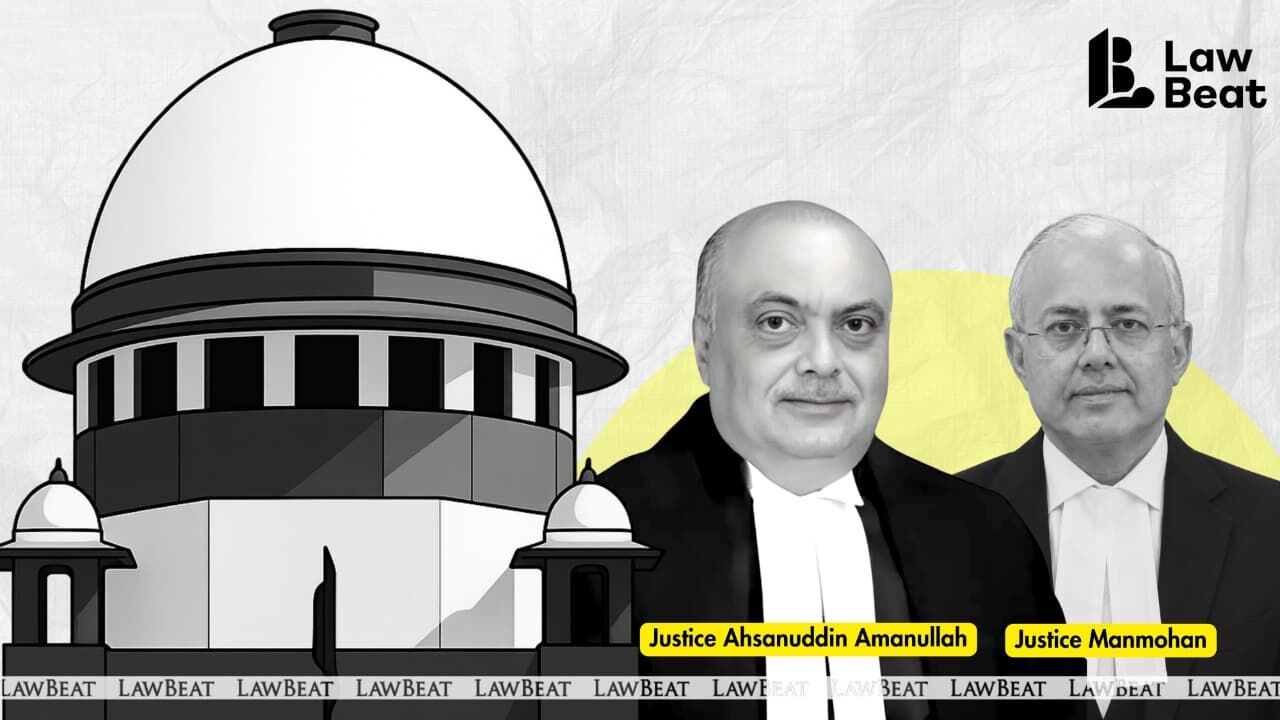
The India Supreme Court has definitively ruled that a Memorandum of Understanding (MoU) found to involve unlawful consideration, fraud, and violations of public policy cannot serve as the foundation for a money recovery suit. This significant decision, delivered by a bench comprising Justices Ahsanuddin Amanullah and Manmohan, underscores that such agreements are void under Section 23 of the Contract Act. Consequently, a plaint seeking recovery based on such an illegal MoU is liable for rejection due to its failure to disclose a valid legal basis for the claim.
This ruling came as the Supreme Court allowed an appeal filed by Poosa Sri Krishna and nine others. The appellants had challenged a Telangana High Court order, dated January 3, 2025, which had previously upheld a trial court's decision. Both lower courts had rejected the appellants' application, submitted under Order VII Rule 11 of the Code of Civil Procedure (CPC), 1908, which sought the rejection of the original plaintiff's plaint. The Supreme Court's intervention effectively overturned these prior rulings, affirming that judicial relief cannot be granted when the underlying agreement is tainted by illegality.
Allegations of Illicit Payments and Kickbacks
The core of the dispute centered on a money recovery suit initiated by the original plaintiff, who alleged having paid funds to the appellants for the purpose of procuring loans from various banks. Represented by Balaji Srinivasan, the appellants contended that the plaintiff's own plaint revealed the illicit nature of the transaction. Specifically, the plaint mentioned that a portion of the money was designated for "overhead expenses," which the appellants argued were unspecified and implicitly intended for illegal payments.
According to the appellants, this disclosure strongly suggested that at least some of the funds were earmarked for bank officials in their individual capacities. They asserted that this constituted an extraneous consideration aimed at securing the sanction of loans. Furthermore, the appellants highlighted repeated references within the plaint to the unlawful object of the transaction, including allegations that part of the money was intended as kickbacks to bank officials and that the entire arrangement sought to ensure the subsequent waiver of these illegally sanctioned loans. Based on these revelations, the appellants maintained that a claim rooted in such an illegal and fraudulent foundation could not be sustained in a court of law, thereby justifying the rejection of the plaint under Order VII Rule 11(d) of the CPC.
Upholding the 'In Pari Delicto' Principle
In its judgment, the Supreme Court reiterated the well-established legal principle of `in pari delicto`, which dictates that when parties to a legal dispute are equally at fault or guilty, neither party can seek relief from the court. This principle was central to the Court's decision to disallow the money recovery suit. The respondents, represented by Shravan Kumar Yammanur, had argued against the appeal, asserting that neither the trial court nor the High Court had erred. They contended that the plaint's language merely indicated funds were for "processing loan requirements and completing formalities," not for illegal demands by bank officials.
The respondents also accused the appellants of fraud, claiming they misrepresented substantial benefits to the original plaintiff. Citing the 1967 Supreme Court judgment in Sita Ram v Radha Bai and Others, the respondents argued for exceptions to the `in pari delicto` rule, suggesting that if an illegal transaction did not ultimately materialize, a money recovery suit might still be maintainable. They further warned that rejecting the plaint would lead to the unjust enrichment of the appellants and cause permanent legal injury to the original plaintiff. However, by allowing the appeal, the Supreme Court implicitly rejected these counter-arguments, emphasizing the paramount importance of the illegality of the underlying agreement.
Broader Implications for Contractual Validity in India
This ruling by the India Supreme Court carries significant implications for contractual agreements, particularly MoUs, within the country. It firmly establishes that any memorandum of understanding that is forbidden by law, deemed immoral, or found to be opposed to public policy, cannot serve as a legitimate basis for seeking money recovery through legal channels. The Court's stance reinforces the necessity for all contractual arrangements to strictly adhere to legal and ethical standards.
Lawyers involved in drafting or litigating contracts in India must therefore ensure that MoUs are meticulously structured to comply with all applicable legal and public policy requirements. The Supreme Court's affirmation that agreements based on unlawful consideration, fraud, or public policy violations are inherently void means that such contracts offer no recourse for money recovery, and any plaint attempting to enforce them is susceptible to rejection under Order VII Rule 11 CPC. This decision serves as a crucial reminder of the judiciary's commitment to upholding the integrity of contractual obligations and preventing the use of courts to enforce illicit arrangements.
Practical Implications
Lawyers drafting or litigating contracts in India must ensure MoUs strictly adhere to legal and public policy standards, as the Supreme Court has affirmed that agreements based on unlawful consideration, fraud, or public policy violations are void and cannot support money recovery suits, making such plaints liable for rejection.
Source
How does this affect you?
Get an AI analysis of this article grounded in your jurisdictions, practice areas, and any policy documents you've uploaded to Wansom.
Finish Reading the Full Story and the Expert Analysis.
Get the latest legal & regulatory intelligence in India
Wansom is AI and can make mistakes.