
Delhi HC Mohammad Saqib UAPA Bail: Granted After 8 Years Custody
Summary
- The Delhi High Court granted bail to Mohammad Saqib, an individual accused in a UAPA case, after nearly eight years in custody.
- The court cited the extremely slow pace of the trial, with only 40 out of 120 prosecution witnesses examined, as a key reason for its decision.
- Saqib was accused of links to the alleged pro-ISIS group Harkat-ul-Harb-E-Islam and propagating its ideology.
- The High Court emphasized that constitutional courts can protect Article 21 rights against prolonged detention, even under UAPA Section 43D(5).
- This ruling referenced the *Khuram Parvez v. National Investigation Agency* judgment, which established a contextual inquiry into trial delays.
A Significant Bail Grant
The court has reinforced the principle that the right to a speedy trial, enshrined under Article 21, cannot be indefinitely suspended, even in cases involving grave allegations of terrorism.
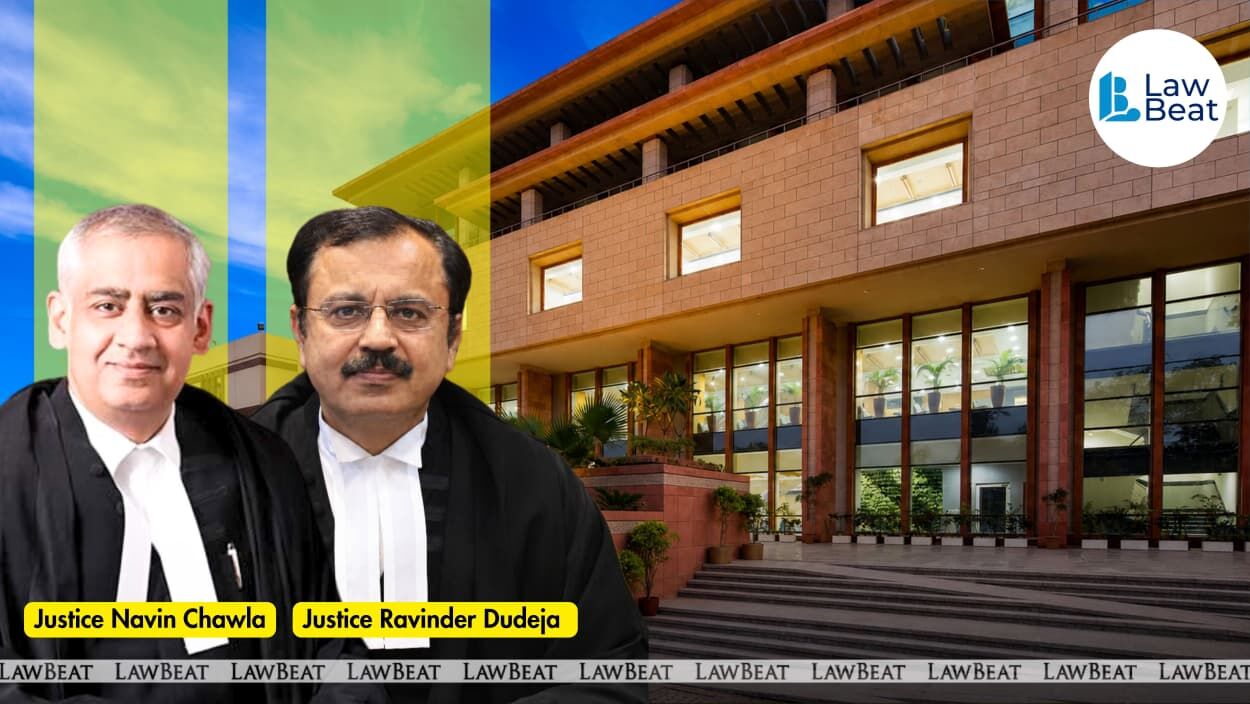
The Delhi High Court has granted bail to Mohammad Saqib, an individual accused in a UAPA case linked to the alleged pro-ISIS group Harkat-ul-Harb-E-Islam, after he endured nearly eight years in custody. This decision by a Division Bench comprising Justice Navin Chawla and Justice Ravinder Dudeja overturned a prior Patiala House Court bail rejection, marking a notable development in the ongoing legal battle. Saqib, also known as Saqib Iftekar, was initially taken into custody on December 26, 2018.
The primary impetus for the Delhi HC Mohammad Saqib UAPA bail was the court's observation that the trial was highly unlikely to conclude in the foreseeable future. Prosecutors had identified 120 witnesses, yet only 40 had been examined to date. Even with the National Investigation Agency's (NIA) proposal to withdraw 39 witnesses, the court maintained that the trial's conclusion remained distant. The case stems from a 2018 FIR, encompassing charges under various sections of the Indian Penal Code, the Unlawful Activities (Prevention) Act, and the Explosive Substances Act.
Allegations against Saqib included membership in the Harkat-ul-Harb-E-Islam, propagation of ISIS ideology, and support for Jaish-e-Muhammad. He was accused of establishing contacts in Jammu and Kashmir's Tral region to secure local terrorists and arranging weapons through connections in western Uttar Pradesh. Specifically, the NIA claimed Saqib traveled to Jammu and Kashmir with co-accused Muhammad Absar in July 2017 and July 2018 to meet militants for training and weapon procurement, relying on witness statements, call detail records, electronic evidence, and items recovered from his residence. However, Saqib's counsel argued he was merely a peripheral participant, not central to the alleged terror plot, asserting that a key witness's statement did not support the claim that Saqib sought to facilitate meetings with militants.
Navigating Stringent Anti-Terror Laws
The Delhi High Court's decision to grant Mohammad Saqib UAPA bail carefully balanced the stringent provisions of the Unlawful Activities (Prevention) Act with fundamental constitutional rights. The court specifically addressed the limitations imposed by UAPA Section 43D(5), which typically restricts bail for individuals where there are reasonable grounds to believe the accusations are true. Despite these statutory hurdles, the bench affirmed that constitutional courts retain inherent authority to safeguard an accused's Article 21 rights, particularly when prolonged detention and significant trial delays render continued incarceration constitutionally questionable.
In its reasoning, the High Court referenced its own June 2026 judgment in the case of *Khuram Parvez v. National Investigation Agency*. This precedent, central to the Delhi High Court prolonged UAPA trial discussion, had previously considered Supreme Court rulings on the interplay between Article 21 and Section 43D(5), including instances where the issue was referred to a larger bench. The *Khuram Parvez* ruling underscored that any constitutional inquiry into trial delay must be contextual, taking into account the specific nature of the allegations, the accused's precise role, the current stage of proceedings, and the realistic timeline for the trial's completion. While emphasizing the judiciary's role in protecting fundamental liberties, the court also clarified that trial delay, by itself, does not automatically constitute grounds for bail.
Precedent for Prolonged Detention
This ruling by the Delhi High Court provides a significant precedent for individuals facing protracted trials under the Unlawful Activities (Prevention) Act. By intervening in the Mohammad Saqib UAPA bail application, the court has reinforced the principle that the right to a speedy trial, enshrined under Article 21, cannot be indefinitely suspended, even in cases involving grave allegations of terrorism. The court's finding that the material on record did not justify Saqib's continued detention, given the glacial pace of the trial, sends a clear message about the judiciary's commitment to upholding constitutional safeguards against arbitrary and prolonged incarceration.
The decision underscores that while the severity of charges in a Harkat-ul-Harb-E-Islam UAPA case is undeniable, the state's responsibility to ensure a timely judicial process remains paramount. The explicit reference to *Khuram Parvez v NIA UAPA bail* further solidifies a legal pathway for accused individuals to seek relief when faced with inordinate delays, offering a crucial framework for future arguments against prolonged UAPA detention. This judgment serves as a vital reminder that even under stringent anti-terror laws, the fundamental right to liberty and a fair, timely trial must ultimately prevail.
Practical Implications
This ruling provides a crucial precedent for lawyers representing UAPA accused, particularly where trials are significantly delayed. It reinforces that constitutional courts will intervene to protect Article 21 rights against prolonged detention, offering a strong basis to argue for bail even under Section 43D(5) of UAPA, especially by citing the *Khuram Parvez* judgment.
Source
How does this affect you?
Get an AI analysis of this article grounded in your jurisdictions, practice areas, and any policy documents you've uploaded to Wansom.
Finish Reading the Full Story and the Expert Analysis.
Get the latest legal & regulatory intelligence in India
Wansom is AI and can make mistakes.