
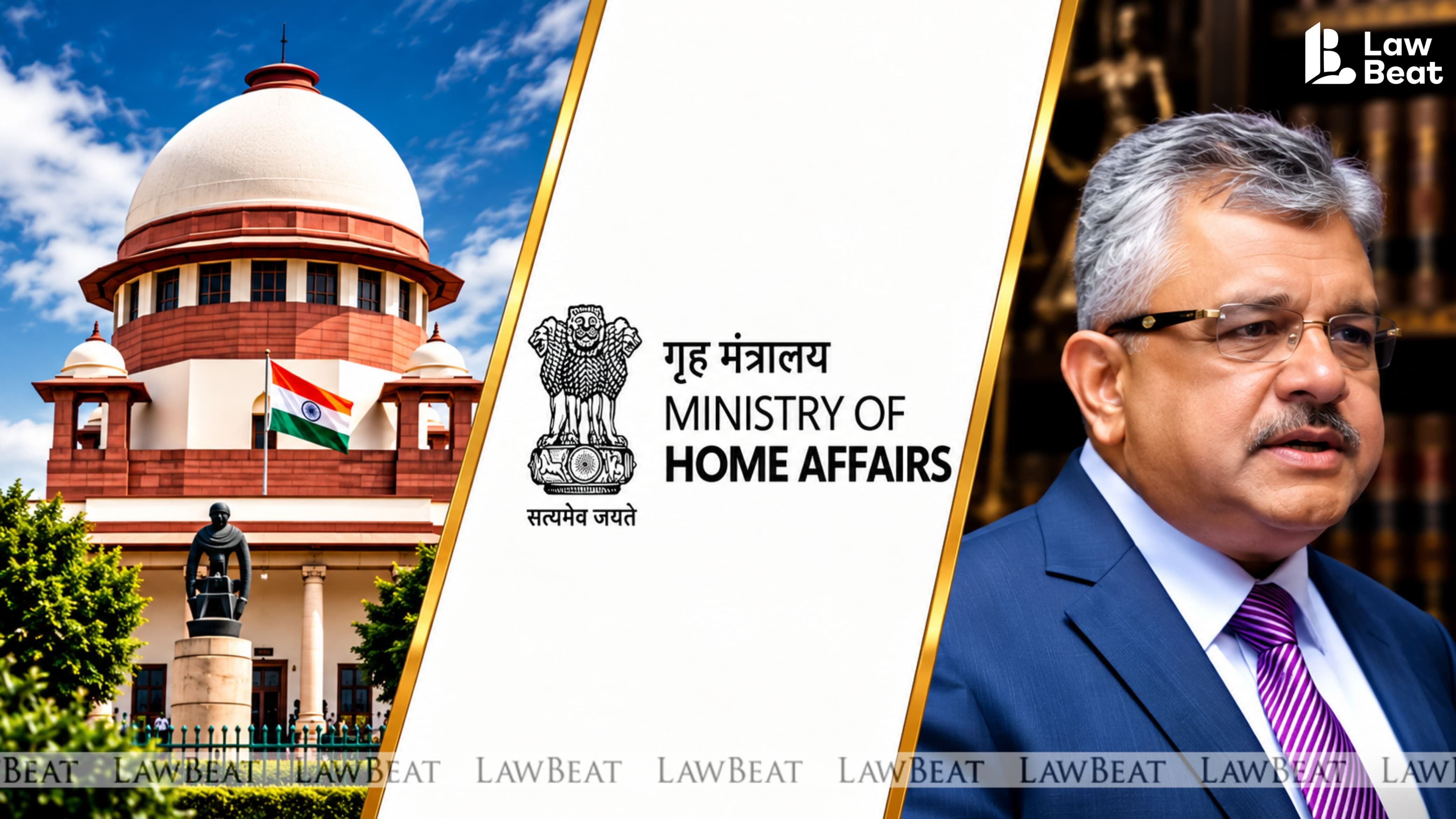
India Supreme Court: Contempt Apology Not Admission of Guilt
Summary
- Solicitor General Tushar Mehta informed the Supreme Court that unconditional apologies in contempt affidavits are a settled practice, not an admission of wilful disobedience.
- The apologies were tendered by the Union Home Secretary and Delhi Police Commissioner in response to contempt notices.
- The Ministry of Home Affairs separately clarified that the affidavits demonstrate lawful actions by the government and police, indicating no contempt was committed.
- The Supreme Court bench, including CJI Surya Kant and Justice Joymalya Bagchi, acknowledged the procedural nature of these apologies.
- Contempt proceedings stemmed from alleged non-compliance with court orders regarding restrictions during October 10 protests in Delhi.
What Happened
This clarification underscores that adhering to the established procedural norm of tendering an unconditional apology in contempt affidavits does not automatically equate to an admission of wilful disobedience of court directives.
Solicitor General Tushar Mehta recently informed the Supreme Court of India that the unconditional apologies presented by Union Home Secretary Govind Mohan and Delhi Police Commissioner Anurag Kumar within their respective contempt affidavits should not be interpreted as an admission of deliberately defying the Court's directives. This assertion was made during contempt proceedings concerning alleged non-compliance with court orders that imposed restrictions in Delhi during protests held on October 10.
The Solicitor General appeared before a bench comprising Chief Justice of India Surya Kant and Justice Joymalya Bagchi, clarifying at the outset that his submission was not addressing the merits of the contempt allegations. He emphasized that the apologies were a standard procedural element in such affidavits. Separately, the Ministry of Home Affairs (MHA) issued a press release, reiterating that the inclusion of an unconditional apology in the affidavits aligns with established practice in contempt cases and does not signify an admission of contempt. The MHA further stated that the affidavits themselves demonstrate that both the government and the police acted in accordance with legal provisions, thus negating any grounds for contempt.
Legal Context of Apologies
Mr. Mehta elaborated on the established legal practice, explaining that when responding to contempt notices, the initial statement in any affidavit typically involves tendering an unconditional apology. This is then followed by a detailed explanation demonstrating why contempt has not, in fact, been committed. He stressed that the apologies from the Union Home Secretary and the Delhi Police Commissioner were merely in compliance with this long-standing legal convention, rather than an acknowledgment of guilt.
The Supreme Court bench acknowledged the Solicitor General's explanation. Chief Justice Kant clarified that the Court was not taking cognizance of media reports referenced by the Solicitor General. Justice Bagchi further observed that the Court was not considering either the media reports or the unconditional apologies in isolation, noting that the Solicitor General's subsequent arguments provided the necessary context for the apologies offered. This clarification underscores that adhering to the established procedural norm of tendering an unconditional apology in contempt affidavits does not automatically equate to an admission of wilful disobedience of court directives.
Background to the Contempt Allegations
The contempt notices that prompted these proceedings arose from alleged breaches of court orders related to restrictions implemented ahead of a protest on October 10. This demonstration was organized by the Cockroach Janta Party, targeting Chief Election Commissioner Gyanesh Kumar. The specific court directives at the heart of the controversy were initially issued on October 9 and subsequently reiterated on October 11.
The October 11 order, which was passed by a bench consisting of Justice Joymalya Bagchi and Justice V. Mohana during a Sunday sitting, contained explicit instructions. Paragraph 16 of this order, as cited in the Delhi Police affidavit, mandated that metro trains and railway facilities should operate normally unless regulation became necessary under the reasonable restrictions permitted by Article 19(2) of the Constitution. Furthermore, it directed that the free movement of people within the city must be ensured, subject only to law-and-order situations and traffic regulations, and that any existing barricades on roads should be reviewed immediately to facilitate free movement while maintaining public order and managing traffic.
Why It Matters
This clarification from the Solicitor General, supported by the MHA and acknowledged by the Supreme Court, holds significant implications for contempt proceedings in India. It firmly establishes that the inclusion of an unconditional apology in an affidavit, while a settled practice, is a procedural formality and not an inherent admission of wilful disobedience of court orders. This distinction is crucial for legal strategy, allowing parties to adhere to established judicial norms without inadvertently conceding guilt on the substantive charge of contempt.
The Court's stance, particularly Justice Bagchi's observation that apologies are not considered in isolation and require contextual qualification, provides important guidance. It reinforces the principle that the merits of a contempt allegation must be assessed independently of the initial procedural apology. This understanding helps ensure that the act of offering an apology, intended to show respect for the court, does not prejudice the defense against the actual accusation of contempt.
Practical Implications
Lawyers advising clients facing contempt of court proceedings in India should note that tendering an unconditional apology in an affidavit, while a settled practice, is not automatically construed by the Supreme Court as an admission of wilful disobedience. This clarifies a crucial aspect of defense strategy, allowing legal teams to adhere to procedural norms without inadvertently conceding guilt on the merits of the contempt charge.
Source
How does this affect you?
Get an AI analysis of this article grounded in your jurisdictions, practice areas, and any policy documents you've uploaded to Wansom.
Finish Reading the Full Story and the Expert Analysis.
Get the latest legal & regulatory intelligence in India
Wansom is AI and can make mistakes.