
India Arbitration Seat Selection: Geopolitics Shifts Favor Local Hub
Summary
- Experts at India ADR Week 2026 discussed how geopolitical shifts and sanctions influence the selection of arbitral seats for cross-border disputes.
- In-house counsel strongly advocated for India-seated arbitration, citing the country's robust institutions, skilled arbitrators, and experienced legal counsel.
- Panelists highlighted the unique local expertise of Indian arbitrators, who possess extensive experience with diverse dispute types at a grassroots level.
- The discussion underscored the critical importance of arbitral award enforcement, positioning arbitration as a superior mechanism to litigation for international contracts.
- The event emphasized India's growing appeal as a preferred arbitral seat, offering advantages in a world grappling with evolving geopolitical realities.
Geopolitical Shifts Reshaping Arbitration Choices
The discussions underscored a growing recognition that geopolitical shifts and the imposition of sanctions are fundamentally reshaping the criteria for selecting neutral arbitral seats in an increasingly fragmented global landscape.
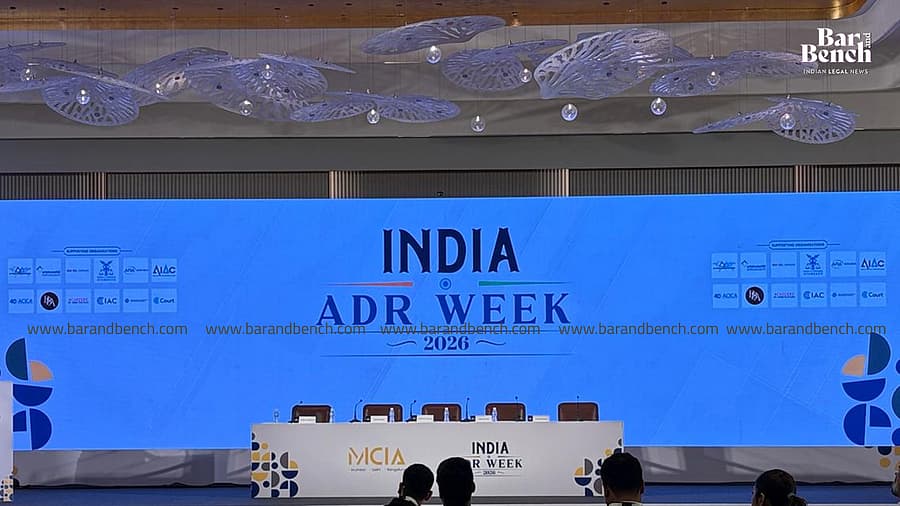
Legal experts convened in Mumbai for India ADR Week 2026 to deliberate on the evolving landscape of global arbitration, specifically focusing on how geopolitical dynamics, the pursuit of neutrality, and shifting commercial realities are influencing the selection of arbitral seats. The discussions underscored a growing recognition that geopolitical shifts and the imposition of sanctions are fundamentally reshaping the criteria for selecting neutral arbitral seats in an increasingly fragmented global landscape.
A key panel, moderated by Cyril Amarchand Mangaldas Partner Abhileen Chaturvedi, delved into the complexities of cross-border disputes in this new environment. The session brought together a diverse group of legal professionals, including Tata Projects General Counsel Rashna Mistry, M&CO Legal Managing Partner Dr. Salman Al Tuweel, Bombay High Court Advocate Sharad Bansal, and Worley Associate General Counsel Tarini Srivastava, to share their insights on these critical issues.
The experts explored how jurisdiction-specific ecosystems contribute to the global competition among various arbitral venues. The consensus highlighted a strategic re-evaluation of traditional arbitral hubs, with a strong emphasis on factors beyond mere convenience, now including geopolitical stability and the practical enforceability of awards.
The Strategic Advantage of India as an Arbitral Seat
A prominent theme emerging from the discussions was the robust endorsement of domestic arbitration, particularly favoring India-seated proceedings. Rashna Mistry, General Counsel for Tata Projects, articulated a strong preference for India as an arbitral seat, emphasizing the nation's excellent cadre of arbitrators, highly competent legal counsel, and well-established institutions. She notably dismissed external pressures like sanctions as irrelevant when infrastructure projects are based within India, advocating for a pragmatic approach to dispute resolution that leverages local strengths.
Tarini Srivastava, Associate General Counsel at Worley, further bolstered the argument for India by highlighting the unparalleled local expertise of Indian arbitrators. She observed that Indian arbitrators possess extensive experience across a wide spectrum of disputes, having encountered and resolved issues at various scales and at a fundamental, 'grass root level.' This deep understanding, Srivastava noted, significantly simplifies the process of presenting a case, as arbitrators are intimately familiar with the practicalities and nuances of local commercial and operational contexts, making them difficult to surprise with novel situations.
Enforcement and the Quest for Neutrality
The enforceability of arbitral awards emerged as a critical consideration in the selection of an arbitral seat, particularly for international contracts. Sharad Bansal, an advocate at the Bombay High Court, strongly advocated for the adoption of arbitral mechanisms over traditional litigation for cross-border agreements, primarily due to the more streamlined and effective enforcement avenues available through arbitration.
Dr. Salman Al Tuweel, Managing Partner at M&CO Legal, echoed this sentiment, underscoring the paramount importance of execution—the practical enforcement of an arbitral award—as a decisive factor in determining the suitability of an arbitral seat. In a world where geopolitical factors can complicate the recognition and enforcement of judgments, the ability to effectively execute an award becomes a cornerstone of a reliable dispute resolution strategy. This focus on enforcement, combined with India's established legal framework for recognizing and enforcing foreign awards, positions the country as an increasingly attractive and geopolitically neutral option for resolving complex international disputes.
Practical Implications
Lawyers advising on international contracts or dispute resolution should evaluate India as a preferred arbitral seat, considering its robust local expertise and enforcement mechanisms, particularly in light of geopolitical shifts and sanctions influencing global dispute resolution strategies.
Source
How does this affect you?
Get an AI analysis of this article grounded in your jurisdictions, practice areas, and any policy documents you've uploaded to Wansom.
Finish Reading the Full Story and the Expert Analysis.
Wansom is AI and can make mistakes.