
In Indian Country
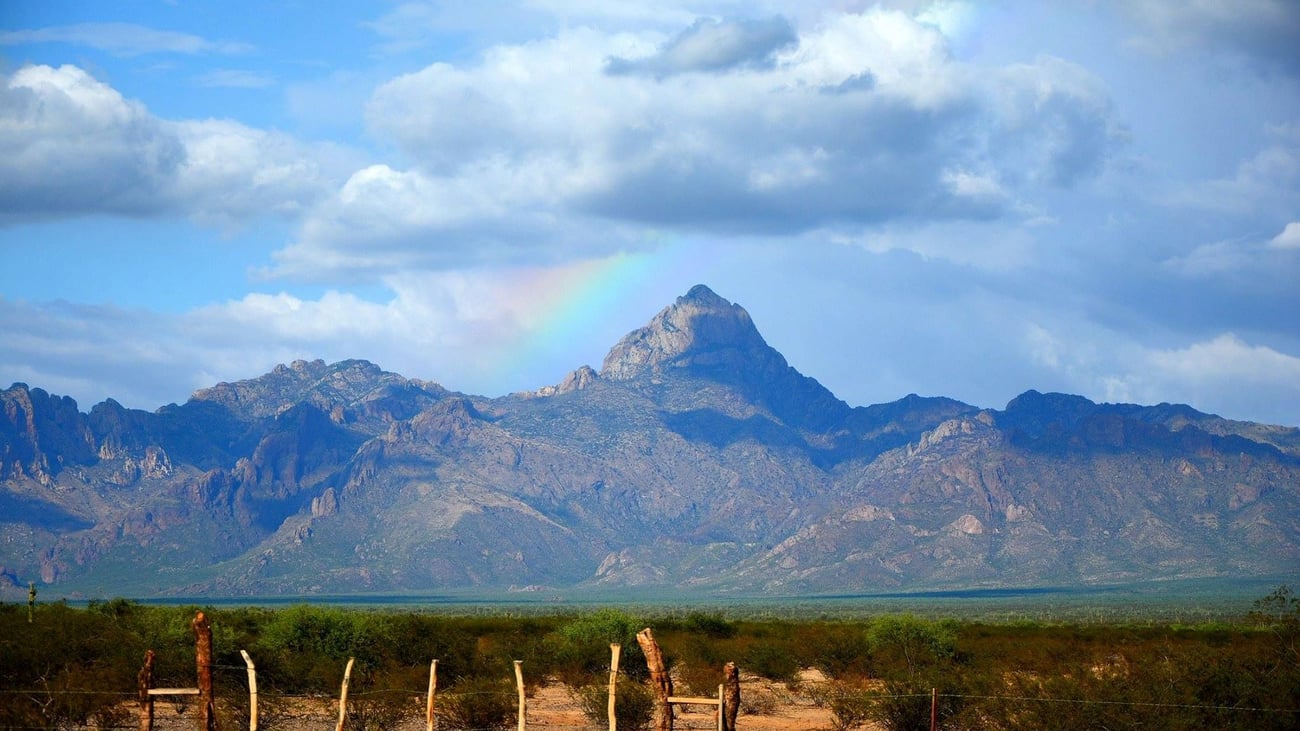
The year was 1991 and at least three film studios were making movies about Christopher Columbus’ voyage of 1492, to be released in 1992 — quincentennial, you know. I never saw any of them, but I did interrupt one. Baboquivari Peak, sacred to the Tohono O’odham, as seen from the village of South Komelic. (Albert Felix photo for Courthouse News) I was camping on the North Rim of the Grand Canyon. Some ill-informed people had told me that it was way cooler than the South Rim, which is bullshit. It’s harder to get to, yes, but views of the Grand Canyon are few, and far between, and not nearly as impressive as views from the South Rim. It is, however, less visited by tourists, which is surely why one movie company decided to film fake battles between iron-clad, spear-carrying Spaniards and half-naked Indians in a secluded vale on the North Rim. Enter me, running my then-customary 8 miles a day, clad in shorty-shorts, no top, ponytail flying, under a beaded hairband given to me by one of my Indian students. Well, the movie guys were filming in a vale, gentle swale on either side, so that approaching their mise en scène, you could not see that a movie was in progress. Running parallel to the North Rim, I topped the swale from the east side, and as I began the descent I saw — what’s this? — a troop of white men in armor and helmets, spears and bows and arrows in hand, a couple or four horses, armor-clad over colorful horse blankets, and a batch of nearly naked Indians, shaking their fists and hooting and hollering at the Spaniards. Well, I had to get my 8 miles in, so I strode on through the scene, cleaving the armies in twain, holding my 6:40 pace. I don’t know whether a director yelled, “Cut!” I heard no such thing. I ran up the other side, over the top and was gone. Diligent research in the year 1992 established that the movie I could have been in was the worst one. It got really bad reviews. I bet they cut the best scene. It was Thanksgiving Day on the rez and I ran across the village to visit my favorite family, most of whose kids I had taught or coached. I was dressed in my traditional running shorts, ponytail and headband, and — for it was a formal occasion — a T-shirt. As we sat under the huato , solving the problems of the universe, the middle boy, José, cantered up on a young, energetic horse, bareback. That horse was nervous and not quite broken in. I don’t know much about horses, but I knew that much. José slid off the horse and tried to hand me the reins. “Try it, Kahn,” José said. His brothers and sisters suppressed their grins. Their mother, a very nice and well-respected woman, one of my favorite people in the world, in fact, did not have to suppress anything, for she was not grinning at all. “No, man,” I told José. “Come on, you’ll like it,” José said, the horse fidgeting and pawing the ground behind him. “Come on, Kahn, it’s easy,” José said. Our weekly newsletter Closing Arguments offers the latest about ongoing trials, major litigation and rulings in courthouses around the U.S. and the world, while the monthly Under the Lights dishes the legal dirt from Hollywood, sports, Big Tech and the arts.
How does this affect you?
Get an AI analysis of this article grounded in your jurisdictions, practice areas, and any policy documents you've uploaded to Wansom.
Finish Reading the Full Story and the Expert Analysis.
Get the latest legal & regulatory intelligence in United States
Wansom is AI and can make mistakes.