
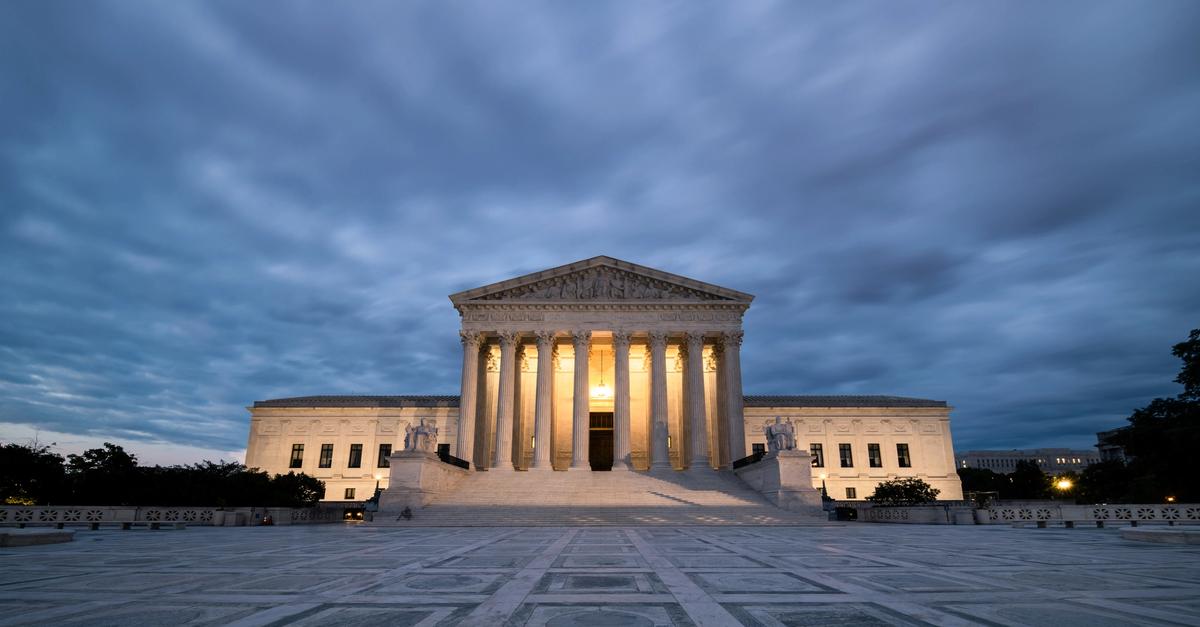
Supreme Court: Fundamental Confusions Federal Indian Law Persist
Summary
- Federal Indian law, despite its common perception as complex, is taught to have four relatively simple foundational principles.
- These principles include federal supremacy over state law in Indian affairs, tribal nations as sovereign governments, judicial interpretation favoring tribal interests, and constitutional congressional enactments.
- Supreme Court justices, including Clarence Thomas, have expressed significant concerns that federal Indian law precedents are confusing and potentially incompatible with the Constitution.
- Justice Thomas specifically noted "confusion" in 2004 regarding Congress's power to restore or reaffirm tribal authority to prosecute nonmember Indians.
- Justices Samuel Alito and Brett Kavanaugh have highlighted "difficult" equal protection challenges to the Indian Child Welfare Act (ICWA), a 1978 federal law aimed at keeping Native American children with their families.
Understanding Federal Indian Law's Core Principles
Justice Clarence Thomas, a consistent critic of established federal Indian law, notably declared in 2004 that the Court's precedents reflected "confusion" regarding congressional authority to affirm or restore tribal jurisdiction over nonmember Indians.
Federal Indian law is frequently characterized as an intricate and often perplexing legal domain. However, some legal educators contend that, despite this common perception, its fundamental principles are, in fact, quite straightforward. These foundational tenets establish a clear framework for the relationship between tribal nations and the federal and state governments.
Central among these principles is the supremacy of federal law in matters concerning Indian affairs, which effectively preempts state law, as affirmed in cases like *Washington v. Cougar Den*. Furthermore, tribal nations are recognized as sovereign governments, a status underscored by rulings such as *United States v. Lara*. The judiciary is also tasked with interpreting any ambiguous provisions within treaties or statutes in a manner that benefits tribal interests, a directive supported by precedent like *Herrera v. Wyoming*.
Completing this foundational quartet, congressional actions that are rationally connected to fulfilling the federal government's responsibilities toward tribal nations are considered constitutional, a principle established in *Morton v. Mancari*. These four pillars are presented as the bedrock of federal Indian law, offering a seemingly clear and consistent structure.
Supreme Court Scrutiny and Foundational Challenges
Despite these seemingly straightforward tenets, Supreme Court justices frequently voice concerns that existing federal Indian law precedents are inherently problematic and potentially incompatible with the nation's foundational legal document. This judicial skepticism highlights a significant tension between the perceived simplicity of the law's underpinnings and its practical application at the highest judicial level.
Justice Clarence Thomas, a consistent critic of established federal Indian law, notably declared in 2004 that the Court's precedents reflected "confusion" regarding congressional authority to affirm or restore tribal jurisdiction over nonmember Indians. This specific critique points to a fundamental confusion federal Indian law faces concerning the scope of federal power and tribal sovereignty. Such pronouncements from the bench signal an ongoing re-evaluation of long-standing principles within this specialized legal field.
Challenges to the Indian Child Welfare Act
The scrutiny extends to specific legislative acts, such as the Indian Child Welfare Act (ICWA). This 1978 federal statute was enacted with the explicit purpose of ensuring that Native American children remain within Native American families and communities whenever possible. However, the Act has become a focal point for judicial concern.
During an oral argument, Justices Samuel Alito and Brett Kavanaugh repeatedly characterized an equal protection challenge to the Indian Child Welfare Act as raising "difficult" questions. Justice Kavanaugh further underscored these complexities by writing separately on the matter, indicating a deep-seated judicial struggle with the Act's constitutional implications. These challenges to ICWA, a cornerstone of tribal sovereignty US law in child welfare, exemplify the ongoing judicial debate and potential for evolving interpretations within federal Indian law.
Practical Implications
Lawyers advising on matters involving tribal nations or federal Indian law must be aware of the inherent complexities and the Supreme Court's ongoing scrutiny of foundational precedents. This signals potential for evolving interpretations and challenges to established principles, requiring careful analysis of current rulings and future litigation risks.
Source
How does this affect you?
Get an AI analysis of this article grounded in your jurisdictions, practice areas, and any policy documents you've uploaded to Wansom.
Finish Reading the Full Story and the Expert Analysis.
Get the latest legal & regulatory intelligence in United States
Wansom is AI and can make mistakes.