
IMF: Sénégal Dette Cachée FMI Accord Finalized, $2.2 Billion Deal
Summary
- IMF Managing Director Kristalina Georgieva praised Senegal's transparency regarding previously undeclared debts.
- The revelation of these hidden debts by President Bassirou Diomaye Faye's administration expedited the response process.
- Senegal and IMF staff reached an agreement on September 1st for a $2.2 billion program, pending Executive Board approval.
- Senegal has launched a "Plan de traitement de la dette" to restore viability, explicitly rejecting the term "restructuring."
- The Senegalese case is considered a test for the international sovereign debt consultation strategy and the effectiveness of the Common Framework.
Senegal's Transparency on Hidden Debt
The transparency demonstrated by the Diomaye Faye administration regarding Senegal's previously undisclosed debt is a pivotal development, setting a precedent for how nations can address inherited financial burdens.
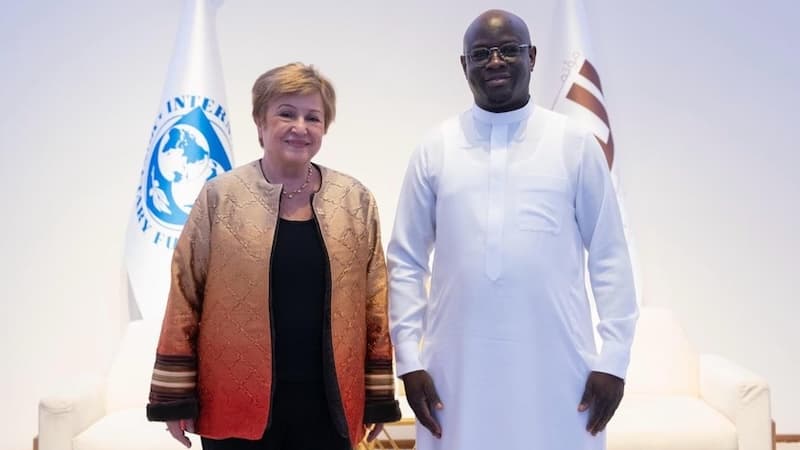
Kristalina Georgieva, the Managing Director of the International Monetary Fund (IMF), has publicly commended the Senegalese authorities for their candid approach regarding previously undeclared debts. She highlighted that the revelation of the full extent of these financial obligations, which occurred shortly after the election of President Bassirou Diomaye Faye, significantly accelerated the process of finding solutions to the nation's fiscal challenges. This acknowledgment came during a press briefing led by Julie Kozack, the IMF's Director of Communications.
Following several months of intricate negotiations, an agreement was reached on September 1st between Dakar and IMF staff for a program valued at approximately $2.2 billion. This significant financial package, however, still awaits formal approval from the IMF's Executive Board. Georgieva characterized this program as a crucial mechanism designed to guide Senegal out of the budgetary difficulties that arose from these hidden financial commitments, underscoring the importance of the Sénégal dette cachée FMI accord.
Addressing Fiscal Viability and International Frameworks
In parallel with the new IMF agreement, Senegal has initiated its own comprehensive process aimed at restoring the viability of its national debt. This domestic initiative has been officially termed the "Plan de traitement de la dette" by the executive branch, which has explicitly stated its preference to avoid the label of "restructuring" for this effort.
The IMF's role in this context is distinct; while it analyzes the debt situation and employs its good offices to foster rapprochement between both public and private creditors in an environment of trust, the institution does not directly participate in the bilateral discussions conducted between Senegal and its creditors, as reported by Ndarinfo. Kristalina Georgieva views the Senegalese situation as a critical test case for the international strategy concerning sovereign debts, specifically designed to assess the efficacy of the Common Framework for debt treatment.
Why This Matters for Global Debt Management
The transparency demonstrated by the Diomaye Faye administration regarding Senegal's previously undisclosed debt is a pivotal development, setting a precedent for how nations can address inherited financial burdens. This openness has not only facilitated a swifter engagement with international financial institutions like the IMF but also signals a commitment to fiscal responsibility that could enhance investor confidence in the long term. The $2.2 billion programme FMI Sénégal is a testament to this collaborative approach.
Furthermore, the Senegalese case, particularly its engagement with the IMF and its own Plan de traitement de la dette, serves as a vital real-world application for the Common Framework for sovereign debt. Georgieva's emphasis on this aspect highlights that the successful navigation of Senegal's debt challenges could provide valuable insights and strengthen the international community's tools for managing complex sovereign debt situations globally. This ongoing process will be closely watched as a benchmark for future international debt resolution efforts.
Practical Implications
Lawyers and compliance officers advising on investments or financial transactions in Senegal should note the government's commitment to transparency regarding previously undeclared debt and its engagement with the IMF. This signals a potentially more stable financial environment, but also necessitates close monitoring of the ongoing 'Plan de traitement de la dette' and the IMF agreement's approval to assess sovereign risk and potential impacts on future contracts or financial instruments.
Source
Source: Original reporting via Ndarinfo
How does this affect you?
Get an AI analysis of this article grounded in your jurisdictions, practice areas, and any policy documents you've uploaded to Wansom.
Finish Reading the Full Story and the Expert Analysis.
Get the latest legal & regulatory intelligence in Senegal
Wansom is AI and can make mistakes.