
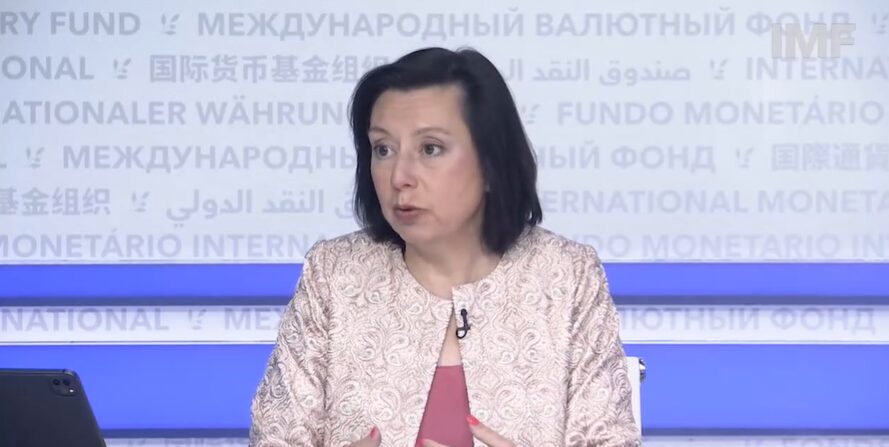
FMI: Closely Following Senegal's 2026 Budget Debates
Summary
- The International Monetary Fund is closely observing Senegal's budgetary discussions.
- These discussions pertain to the Rectified Finance Law for 2026, which has been referred back to committee, and the 2027 national budget, currently under parliamentary examination.
- IMF spokesperson Julie Kozack highlighted the significance of the ongoing parliamentary debates from Washington.
What Happened
The FMI's public statement, delivered by Julie Kozack from Washington, carries substantial weight for Senegal's economic outlook and its standing in the international financial community.
The International Monetary Fund (IMF) has signaled its close attention to the ongoing fiscal discussions within Senegal, specifically focusing on the Rectified Finance Law (LFR) for 2026, which has been submitted to the National Assembly but recently referred back to committee, and the comprehensive national budget for 2027, which has also been submitted and is under parliamentary examination. This scrutiny was formally announced by Julie Kozack, the institution's spokesperson, during a recent press briefing held in Washington. Her remarks underscore the global financial body's interest in the West African nation's economic governance and future financial trajectory.
Kozack explicitly highlighted the critical nature of the parliamentary proceedings in Senegal's National Assembly, where these pivotal financial documents are currently being debated amidst significant parliamentary challenges. She conveyed that the IMF is "closely following the debates," a statement that emphasizes the institution's commitment to observing the legislative process. This public declaration from the IMF's headquarters indicates a proactive stance in monitoring the development of Senegal's key fiscal frameworks.
The Legislative Framework
The Rectified Finance Law (LFR) 2026 represents a crucial legislative instrument designed to adjust the existing financial framework for the upcoming year, often in response to evolving economic conditions or new government priorities. It was submitted to the National Assembly on September 18, 2026, but was subsequently referred back to committee on October 27, 2026, following its rejection by the parliamentary majority, indicating ongoing efforts to find a compromise. Concurrently, the 2027 budget outlines the Senegalese government's projected revenues and expenditures for the subsequent fiscal year, serving as a blueprint for public spending across various sectors and defining the nation's economic priorities. The draft budget for 2027 was adopted by the Council of Ministers on October 1, 2026, and is currently before lawmakers for examination, also facing parliamentary opposition. Both documents are subject to rigorous debate and approval by the National Assembly, reflecting the democratic process of fiscal policy formulation.
The involvement of the Fonds Monétaire International (FMI) in closely observing these debates adds a significant layer of international oversight to Senegal's internal fiscal planning. The institution's interest typically stems from its mandate to promote global monetary cooperation, secure financial stability, facilitate international trade, promote high employment and sustainable economic growth, and reduce poverty around the world. Therefore, the FMI's engagement with Senegal's budgetary discussions, particularly regarding the LFR 2026 Sénégal FMI and the broader débats budgétaires Sénégal 2027, suggests a focus on the soundness and sustainability of the country's financial policies.
Why This Matters
The FMI's public statement, delivered by Julie Kozack from Washington, carries substantial weight for Senegal's economic outlook and its standing in the international financial community. The close monitoring of the LFR 2026 and the 2027 budget by such a prominent global institution can influence investor confidence and shape perceptions of the country's fiscal discipline. It signals that the decisions made during these parliamentary debates will not only impact domestic policy but also resonate on a global scale.
For stakeholders both within and outside Senegal, the FMI's attention to these budgetary processes underscores the importance of transparency and robust economic governance. The outcomes of the debates surrounding the Rectified Finance Law 2026 and the 2027 budget will ultimately determine the allocation of national resources and the direction of economic development, making the institution's watchful eye a key factor in how these plans are perceived and implemented.
Practical Implications
Lawyers and compliance officers should closely monitor the ongoing budget debates in Senegal, particularly the Rectified Finance Law (LFR) 2026 and the 2027 budget, as the IMF's engagement signals potential shifts in fiscal policy and economic priorities that could impact client operations, investment strategies, and regulatory compliance in the coming years.
Source
How does this affect you?
Get an AI analysis of this article grounded in your jurisdictions, practice areas, and any policy documents you've uploaded to Wansom.
Finish Reading the Full Story and the Expert Analysis.
Wansom is AI and can make mistakes.