
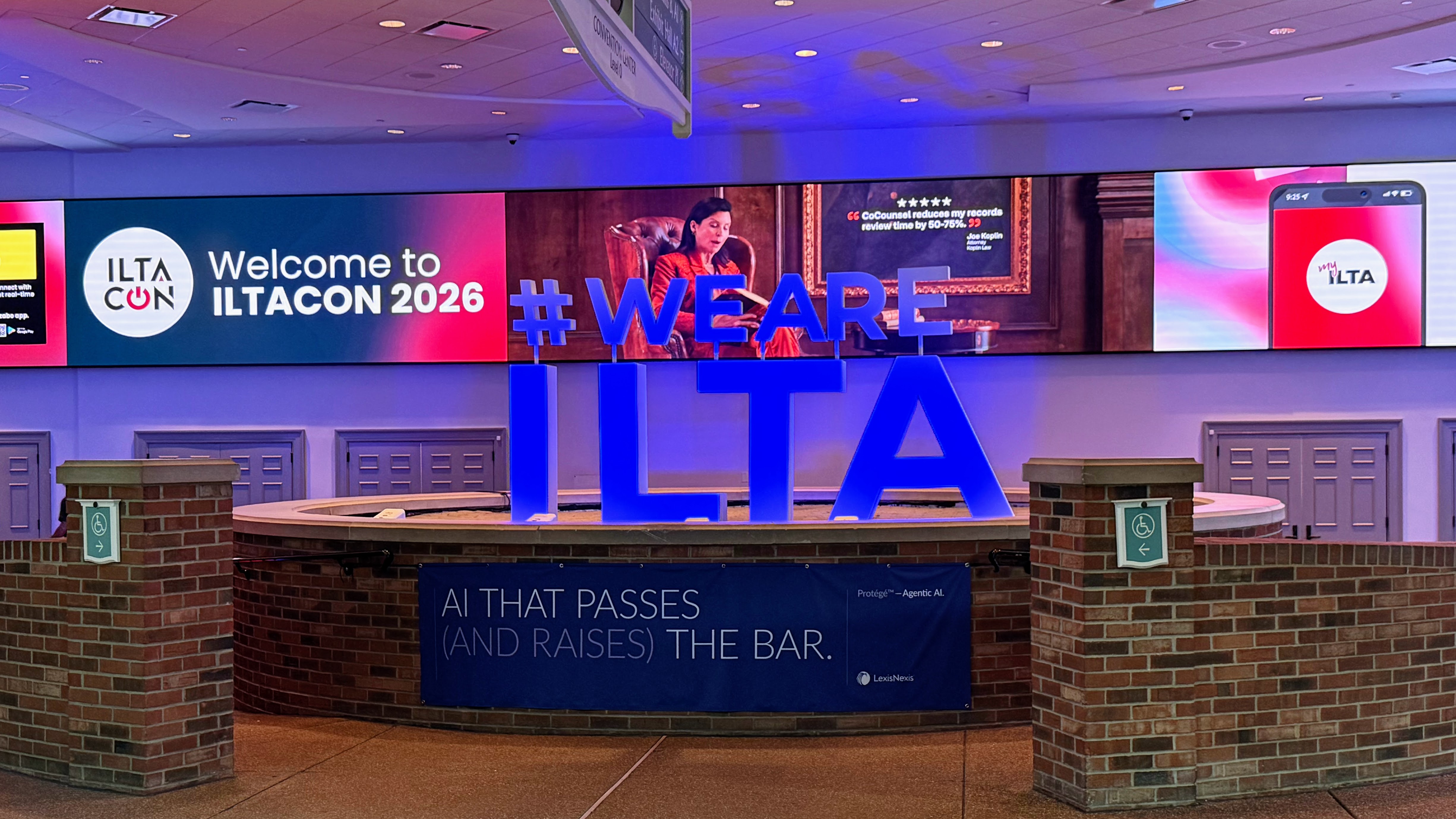
ILTACON 2026 Harvey Legora Spending: AI Firms' Marketing Extravagance
Summary
- The recent ILTACON conference showcased unprecedented marketing extravagance, leading a veteran CEO to declare the industry had reached 'peak legal tech.'
- Legal AI companies Harvey and Legora featured the largest and most ostentatious booths, with Harvey occupying 24 10x10 spaces and Legora 22, each costing $10,000.
- Both Harvey and Legora hosted lavish parties with celebrity performers, including Lady A and Sheryl Crow, with Crow's fee speculated to be between $150,000 and $1 million.
- This significant spending highlights a 'legal tech justice gap,' where vast investment in enterprise AI contrasts sharply with the struggle for funding in access-to-justice technologies.
- The industry is seen as 'horribly out of kilter' when some companies spend excessively while others lack capital to help individuals access legal aid.
Unprecedented Extravagance at ILTACON
When certain legal tech companies possess such vast financial resources that they engage in extravagant marketing, while others struggle to secure capital for initiatives aimed at providing legal assistance to underserved individuals, the industry is fundamentally 'out of kilter.'
The recent annual conference of the International Legal Technology Association, ILTACON, held in Nashville, was characterized by an unprecedented level of marketing extravagance, leading one veteran legal tech CEO to declare that the industry had reached 'peak legal tech.' Attendees noted that everything about the event felt significantly larger than in previous years, particularly the presence of prominent legal AI companies.
Among the most ostentatious displays were the booths of legal AI companies Harvey and Legora. While initial reports suggested Harvey's booth occupied 16 single-booth spaces and Legora's 14, floor maps later indicated even larger footprints: Harvey and Fulcrum each had 24 10x10 spaces, Legora had 22, and Clio had 18. Each 10x10 space commands a price of $10,000, although volume and ILTA partnership tiers offer various discounts. The design of both Harvey's and Legora's booths was notably stark; Harvey's featured an open side with a solid wall spanning multiple spaces, while Legora's was taller and more cube-like, with similar stark exterior walls, evoking comparisons to the 1960s Berlin Wall.
Beyond the exhibition floor, the lavish parties hosted by these companies further underscored their significant financial backing. Both Harvey and Legora, having reportedly raised substantial capital and achieved valuations in the billions of dollars, featured big-name celebrity performers. Lady A entertained guests at Harvey's party, while Sheryl Crow performed at Legora's. Legora's event was particularly elaborate, transforming an entire building into a temporary pop-up bar called 'The Outlawyer,' a tribute to Nashville's 1970s 'outlaw' musicians, complete with its own branded beer and bourbon. Thomson Reuters, whose CoCounsel platform competes with Harvey and Legora, also hosted a major event featuring the country group Little Big Town. The considerable ILTACON Harvey Legora spending, especially for celebrity talent, became a frequent topic of conversation, with estimates for Sheryl Crow's appearance ranging from $50,000 to $1 million. Industry estimates suggest a budget of $300,000-$500,000 for Crow at a private corporate event, potentially as low as $150,000.
Market Dynamics and Investment Trends
The conspicuous legal AI company marketing extravagance observed at ILTACON reflects a broader trend of significant investment flowing into enterprise-focused artificial intelligence solutions within the legal sector. Companies like Harvey AI and Legora AI, with their substantial valuations, are clearly demonstrating a willingness to deploy considerable resources to establish market presence and brand recognition. This aggressive marketing strategy, characterized by large exhibition spaces and high-profile entertainment, signals a competitive landscape where market leaders are consolidating their positions.
Amidst this high-spending environment, a prevailing theme among vendors and products at the conference was the emphasis on partnerships and integrations. This suggests a strategic shift towards interoperability and collaborative ecosystems, where companies are increasingly seeking to connect their offerings rather than operate in isolation. This trend indicates a maturing market where comprehensive solutions and seamless workflows are becoming paramount for legal professionals.
The Widening Legal Tech Justice Gap
The lavish spending and marketing displays at the International Legal Technology Association conference prompted some attendees to express concern over the perceived obscenity of such over-the-top expenditures. This sentiment highlights a critical imbalance within the legal technology industry, often referred to as the legal tech justice gap. This gap represents a profound disparity in funding between companies developing technology to address the legal needs of low-income Americans and those creating solutions primarily for large law firms and corporate legal departments.
When certain legal tech companies possess such vast financial resources that they engage in extravagant marketing, while others struggle to secure capital for initiatives aimed at providing legal assistance to underserved individuals, the industry is fundamentally 'out of kilter.' This observation echoes a sentiment previously articulated in 2024, which contrasted the opulence of events like Legalweek with the more austere focus of the Legal Services Corporation’s Innovations in Technology Conference. The substantial ILTACON Harvey Legora spending witnessed at this year's International Legal Technology Association conference highlights a growing concern within the industry, setting a precedent that will likely shape conversations leading up to future events, including ILTACON 2026, regarding responsible investment and market balance. If the resources and innovation prevalent in the enterprise legal tech sector were to contribute more significantly to the access-to-justice sector, this imbalance could be mitigated, and the justice gap narrowed, even if only incrementally.
Practical Implications
This article provides critical market intelligence on the current state of legal tech investment, highlighting the vast disparity in funding between enterprise-focused AI solutions and access-to-justice technologies. Lawyers and compliance officers should consider these market dynamics when evaluating legal tech partnerships, advising on tech investments, or assessing their firm's strategic role in addressing the justice gap.
Source
How does this affect you?
Get an AI analysis of this article grounded in your jurisdictions, practice areas, and any policy documents you've uploaded to Wansom.
Finish Reading the Full Story and the Expert Analysis.
Wansom is AI and can make mistakes.