
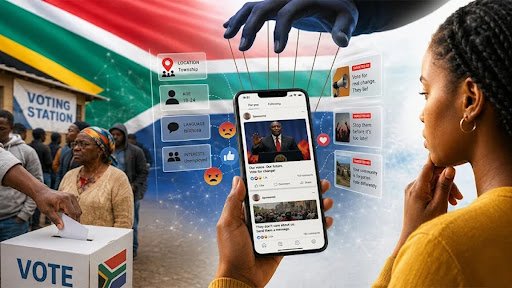
IEC South Africa: New Election Disinformation Code Published
Summary
- The Electoral Commission (IEC) has gazetted a new Disinformation Code to combat false information ahead of South Africa's 2021 local government elections, which were held on November 1, 2021.
- The code applies to political parties, candidates, and their agents, covering all election-related communication, both online and offline.
- Key obligations include verifying information accuracy, publicly retracting false content within 36 hours, clearly labeling AI-generated content, and reporting online disinformation to Real411.
- Contraventions of the code are subject to sanctions outlined in the Municipal Electoral Act 27 of 2000, mirroring penalties for breaches of the general Electoral Code of Conduct.
- Real411 has been designated as the official platform for reporting suspected election-related disinformation, accessible to the public, parties, and candidates.
What Happened
Any contravention of the Disinformation Code will incur the same sanctions as breaches of the broader Electoral Code of Conduct, stipulated under the Municipal Electoral Act 27 of 2000.
The Electoral Commission (IEC) in South Africa has officially published a new code of conduct specifically designed to combat disinformation ahead of the nation's 2021 local government elections. This significant regulatory step came as the spread of false information, misinformation, and fake news, particularly through online channels and social media platforms, is recognized as a major threat. Such disinformation often intensifies during electoral periods, posing substantial risks to the integrity of the democratic process and the perceived legitimacy of elected administrations.
This newly introduced Disinformation Code establishes clear guidelines for the conduct of various political actors. It applies comprehensively to political parties, individual candidates, and any entity or person acting under their instruction, authority, or for financial compensation. The scope of the code is broad, covering all forms of election-related communication, irrespective of whether it occurs online or offline, or if it is paid or unpaid content.
Key Obligations for Political Actors
Under the provisions of the IEC election disinformation code South Africa, political parties and candidates are now bound by several critical obligations aimed at fostering a more truthful electoral discourse. A primary requirement is the diligent verification of information for accuracy before it is disseminated. Furthermore, these entities must assume full responsibility for all content published by them, on their behalf, or for their benefit. Should any false or misleading information be identified, there is a mandatory duty to publicly retract and correct it within 36 hours of becoming aware of its inaccuracy, alongside censuring those responsible where appropriate.
The code also addresses the evolving landscape of digital content, mandating that any AI-generated content used in political campaigns ZA must be clearly labeled before distribution. Similarly, all political advertising must be distinctly identified as such. To actively counter the spread of online falsehoods, parties and candidates are required to report instances of suspected disinformation to the designated platform, Real411, within a 36-hour timeframe. Beyond these proactive measures, the code explicitly prohibits deceptive practices such as the use of fake accounts, bot networks, coordinated inauthentic behavior, doxing, and cyberbullying by candidates. It also specifically forbids disinformation targeting the IEC or its personnel, requiring public correction if such instances occur. These ZA political party disinformation rules are crucial for maintaining a fair electoral environment.
Enforcement and Reporting Mechanisms
Compliance with the IEC's Disinformation Code is not optional; political parties and candidates are expected to formally commit to its provisions during the electoral code of conduct signing ceremony scheduled for September 23, 2021. The Electoral Commission has underscored the seriousness of these new regulations by clarifying that any contravention of the Disinformation Code will incur the same sanctions as breaches of the broader Electoral Code of Conduct. These penalties are stipulated under the Municipal Electoral Act 27 of 2000, highlighting the legal weight behind these new rules.
To facilitate effective Real411 election disinformation reporting, the IEC has officially designated Real411 as the primary platform for submitting reports of suspected disinformation. This platform is readily accessible to a wide range of stakeholders, including individual members of the public, political parties, candidates, and various organizations. Reports filed through Real411 can pertain to disinformation that targets the electoral process itself, specific contestants, or the Electoral Commission and its staff, providing a comprehensive mechanism for addressing threats to electoral integrity.
Why It Matters
The introduction of the IEC election disinformation code South Africa represents a critical effort to safeguard the democratic process, particularly in the context of the local government elections held on November 1, 2021. By establishing clear ZA political party disinformation rules and outlining severe Municipal Electoral Act 27 of 2000 sanctions for non-compliance, the IEC aims to mitigate the pervasive threat of false narratives that can undermine public trust and influence voter behavior. The emphasis on AI content labeling political campaigns ZA and timely retraction of misinformation underscores a proactive approach to modern communication challenges.
For legal professionals advising political parties and candidates, understanding and ensuring adherence to this new code is paramount. The comprehensive nature of the obligations, from accuracy checks and content responsibility to Real411 election disinformation reporting and the prohibition of deceptive online tactics, necessitates thorough legal guidance. The public commitment to IEC code of conduct compliance on September 23, 2021 will further cement these requirements, making legal counsel indispensable for navigating the new regulatory landscape and avoiding potential penalties.
Practical Implications
Lawyers advising political parties and candidates in South Africa must familiarize themselves with the new IEC Disinformation Code to ensure compliance with obligations regarding accuracy, retraction of false information, labeling of AI-generated content, and reporting to Real411, as contraventions carry sanctions under the Municipal Electoral Act.
Source
How does this affect you?
Get an AI analysis of this article grounded in your jurisdictions, practice areas, and any policy documents you've uploaded to Wansom.
Finish Reading the Full Story and the Expert Analysis.
Wansom is AI and can make mistakes.