
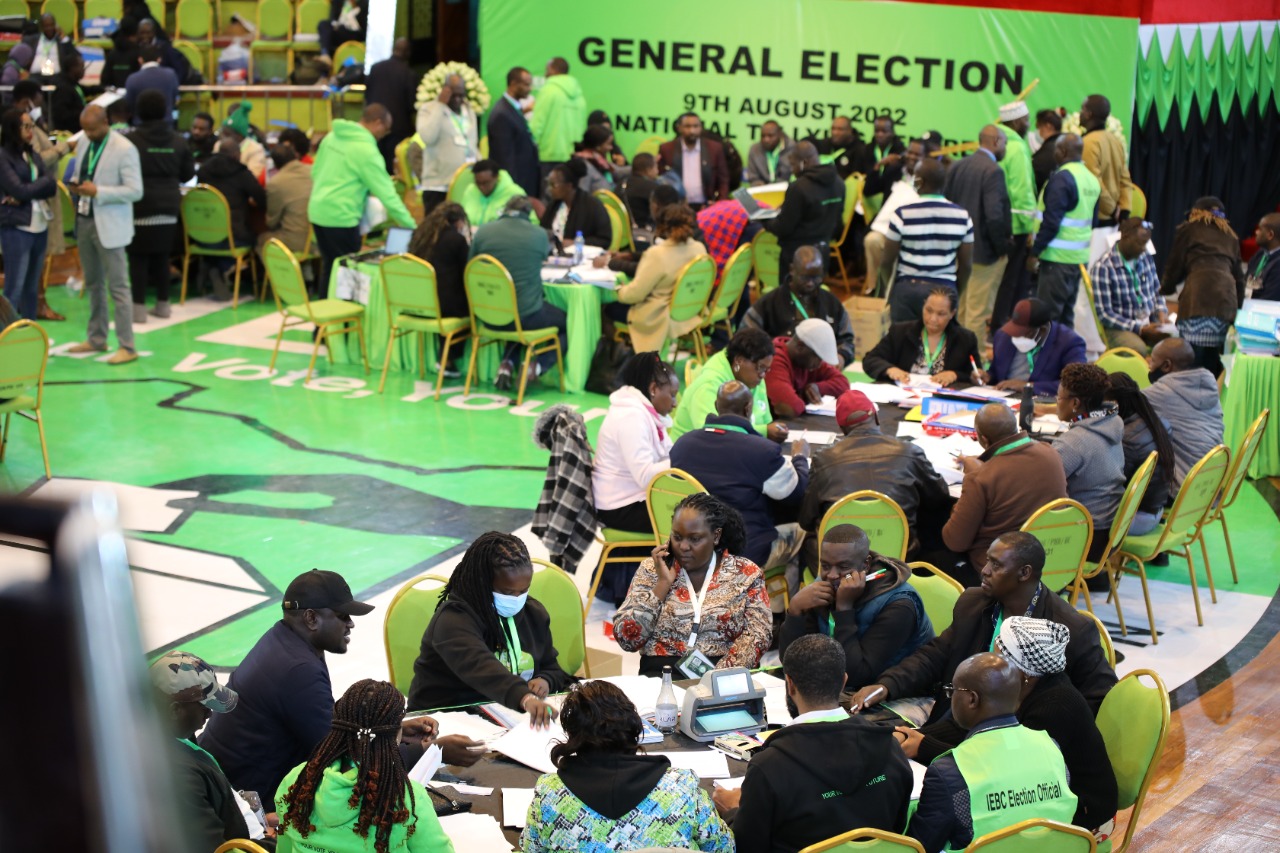
Kenya: IEBC 2027 Election Protocols Court Disclosure Sought
Summary
- Francis Awino has filed a lawsuit against the Independent Electoral and Boundaries Commission (IEBC) seeking full disclosure of its 2027 General Election protocols.
- The petition demands details on polling station locations, national tallying centre operations, and voter verification procedures, especially concerning technical failures.
- Awino seeks interim orders to prevent the IEBC from implementing undisclosed or altered protocols and to restrict changes to electoral venues without proper justification.
- The lawsuit requires the IEBC to file an affidavit confirming its plans for the national tallying centre and written voter identification procedures.
- This case could set important precedents for electoral transparency and accountability in Kenya's future elections.
The Call for Electoral Transparency
The court's decision on compelling IEBC disclosure could establish new precedents for electoral body accountability and public access to critical election information, directly impacting future election petitions and compliance strategies for electoral stakeholders.
A legal challenge has been initiated in Kenya, aiming to compel the Independent Electoral and Boundaries Commission (IEBC) to reveal comprehensive details regarding its preparations for the upcoming 2027 General Election. On September 23, a petitioner, Francis Awino, filed a Notice of Motion seeking court orders to ensure greater transparency in the electoral process. The lawsuit specifically targets the disclosure of critical information related to polling stations, tallying centres, and the procedures governing voter identification and verification.
Awino's IEBC 2027 election petition requests that the court certify the matter as urgent. Furthermore, he seeks interim orders that would prevent the electoral body and its officials from implementing any undisclosed or substantially altered protocols concerning the national tallying centre and the crucial voter verification process. This move underscores a broader concern for public access to information that directly impacts the integrity and fairness of future elections.
Demands for Detailed Disclosure
The petitioner's demands extend to specific aspects of electoral administration. Awino is pressing the IEBC to provide information on the designation, precise location, official gazettement, and accessibility of all polling stations and tallying centres. Crucially, he also seeks clarity on the methods and timelines for making this vital information publicly available. A significant focus of the petition is on the proposed national tallying centre, where Awino requests disclosure of its legal foundation, exact location, relevant Gazette Notice, records pertaining to the venue, management protocols, audit trails, and arrangements for public access to information.
Should a national tallying centre already be selected or designated, Awino insists the IEBC must provide its official name, physical address, the date and rationale behind the decision, the corresponding Gazette Notice, and evidence of how the public was informed. Beyond physical locations, the lawsuit also seeks comprehensive disclosure of the Commission’s voter registration, identification, and verification records. This includes detailed procedures to be followed in scenarios such as biometric verification failures, unreadable biometric data, malfunctions of election devices, or unavailability of connectivity, addressing key 2027 election voter verification protocols.
To ensure full transparency, Awino is also requesting the IEBC to disclose a wide array of internal documents. These include policies, operational manuals, standard operating procedures, circulars, official directions, training materials, internal memoranda, correspondence, and all decision-making records pertinent to the electoral arrangements for 2027. This broad request aims to shed light on the internal workings and preparations of the electoral body.
Legal Framework and Proposed Safeguards
Awino's legal arguments are rooted in existing electoral regulations. He specifically references Regulation 7 of the Elections (General) Regulations, which governs the designation and gazettement of polling stations, and Regulation 83, which stipulates that final tallying must occur at a venue officially gazetted by the Commission. The petitioner contends that publishing the precise geographical coordinates of polling and tallying venues would enable independent verification of these locations, empowering voters and election stakeholders to identify, inspect, and report any discrepancies or errors affecting voting and tallying sites.
The petition further seeks court orders to restrict the IEBC from designating, relocating, altering, or de-gazetting polling stations or tallying centres in ways that fall outside the requirements of the Constitution and established electoral laws. However, this proposed restriction includes specific exceptions: changes necessitated by law, emergency situations, or court orders would be permissible. In such cases, the Commission would be required to document the reasons for the decision, cite the statutory authority relied upon, maintain a clear decision-making record, and provide evidence of public notification.
As part of the proposed orders, the court would require the IEBC to file an affidavit within seven days, or another period determined by the court. This affidavit would need to confirm whether a national tallying centre has been designated, selected, proposed, reserved, or otherwise identified for the 2027 election. It would also need to state whether the Commission possesses written protocols governing operations at the national tallying centre and whether it has a written voter identification and verification procedure specifically addressing biometric failures and other technical challenges. Awino also demands an account of actions taken by the IEBC following a written request he submitted on September 16, 2026, along with copies of any responses or related correspondence.
Implications for Electoral Accountability
The core of Awino's argument is that any new or substantially revised protocol concerning the national tallying centre or voter verification that could impact voters’ political rights must be thoroughly documented, legally authorized, and preserved for public disclosure. This Kenya election transparency court case highlights the critical need for electoral bodies to operate with utmost openness, particularly in the lead-up to a general election.
This Independent Electoral and Boundaries Commission lawsuit carries significant weight for future electoral processes in Kenya. Lawyers advising political parties, candidates, or election observers should monitor this case closely. The court's decision on compelling IEBC disclosure could establish new precedents for electoral body accountability and public access to critical election information, directly impacting future election petitions and compliance strategies for electoral stakeholders. The outcome will likely shape expectations for how the IEBC communicates its operational plans and safeguards the integrity of the 2027 election protocols.
Practical Implications
Lawyers advising political parties, candidates, or election observers should monitor this case closely. The court's decision on compelling IEBC disclosure could establish new precedents for electoral body accountability and public access to critical election information, directly impacting future election petitions and compliance strategies for electoral stakeholders.
Source
How does this affect you?
Get an AI analysis of this article grounded in your jurisdictions, practice areas, and any policy documents you've uploaded to Wansom.
Finish Reading the Full Story and the Expert Analysis.
Get the latest legal & regulatory intelligence in Kenya
Wansom is AI and can make mistakes.