
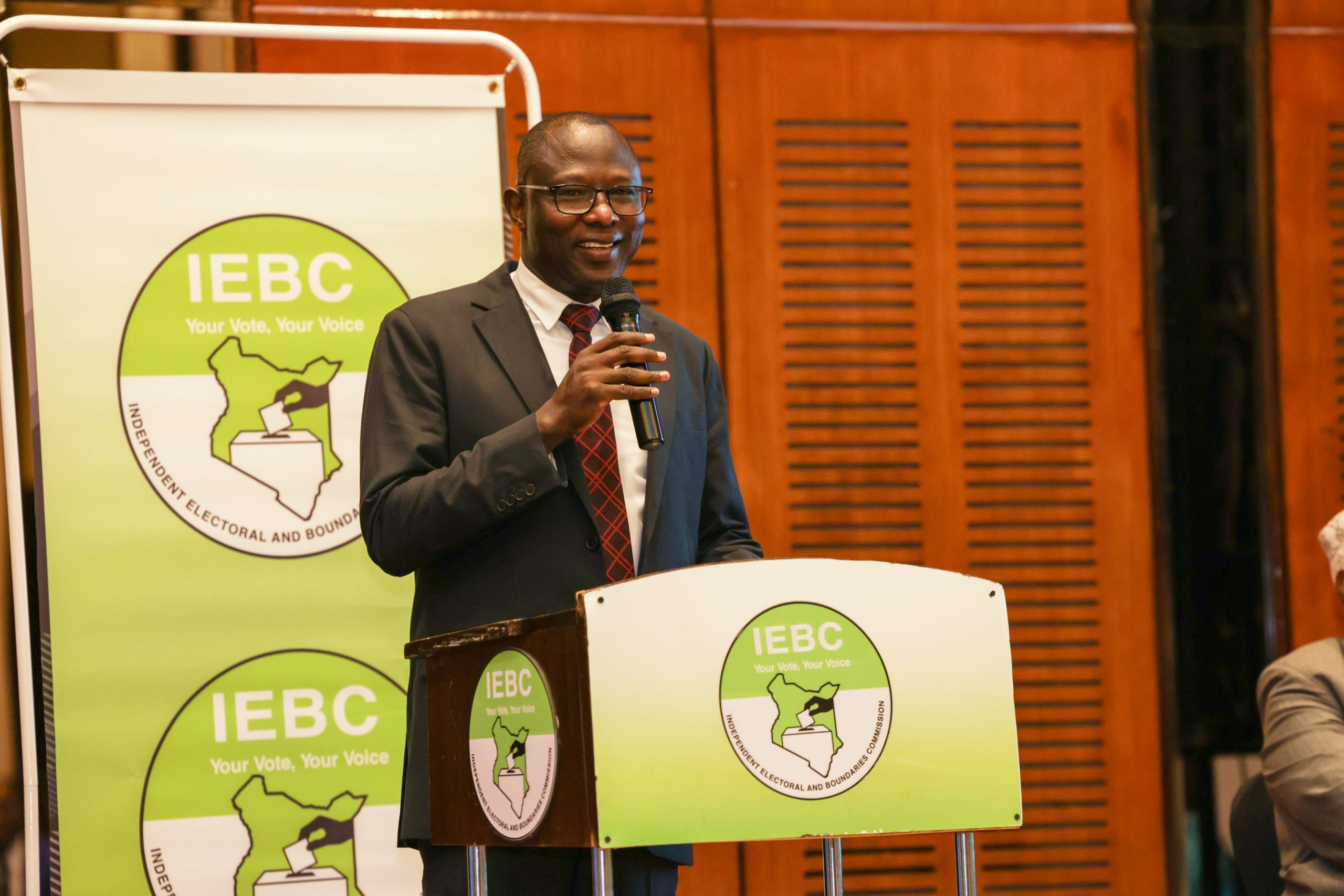
IEBC: Refutes Rigathi Gachagua 2027 Eligibility Clearance for Presidential Bid
Summary
- The IEBC has denied reports that it cleared Rigathi Gachagua to run for president in the 2027 General Election.
- IEBC Chairperson Erastus Ethekon confirmed no determination has been made regarding Gachagua's eligibility.
- The clarification followed misinterpretations of a legal director's explanation of constitutional eligibility rules, specifically Articles 99 and 193.
- The IEBC emphasized that candidate registration for 2027 has not begun, and eligibility decisions will be made later, as per Article 137.
- Disqualification is not final until all avenues of appeal or review have been exhausted, as per Articles 99(3) and 193(3).
IEBC Dispels 2027 Eligibility Claims
The Commission has not yet made any determination regarding Rigathi Gachagua's presidential bid 2027 eligibility.
The Independent Electoral and Boundaries Commission (IEBC) has categorically refuted recent assertions that it has formally cleared former Deputy President Rigathi Gachagua to participate in the 2027 General Election as a presidential candidate. In an official statement released on Wednesday, IEBC Chairperson Erastus Ethekon clarified that the Commission has not yet made any determination regarding Rigathi Gachagua's presidential bid 2027 eligibility. This direct denial aims to correct widespread misinformation.
Chairperson Ethekon explicitly stated, "For the avoidance of doubt, the Commission has neither cleared nor made any determination regarding Hon. Rigathi Gachagua’s eligibility to contest the 2027 Presidential Election." This statement directly addresses reports circulating in media and on social media platforms suggesting an early clearance for the upcoming polls. The IEBC's position underscores that such critical decisions are part of a structured process, not subject to premature announcements.
Constitutional Provisions and Misinterpretation
The need for this clarification arose from a misinterpretation of remarks made by Chrispine Owiye, the IEBC's Director of Legal Services. Owiye's comments, delivered during an engagement with political reporters in Nairobi on Tuesday, November 24, were strictly limited to an explanation of the constitutional provisions governing qualifications and disqualifications for election, specifically referencing Articles 99 and 193 of the Kenya Constitution. His presentation aimed to elucidate the general Kenya election eligibility rules.
Ethekon further elaborated that Owiye's discussion highlighted provisions within Articles 99(3) and 193(3), which stipulate that an individual is not considered disqualified until all available avenues for appeal or review have been fully exhausted. Owiye also touched upon the applicable appeal processes relevant to electoral eligibility. However, the Chairperson emphasized that the legal director's presentation did not delve into matters concerning impeachment, removal from office under Article 75, or the specific eligibility of an individual who has been impeached to contest an election.
The Formal IEBC Candidate Clearance Process
The IEBC Chairperson underscored that the formal registration of candidates for the 2027 General Election has not yet commenced. Consequently, any definitive decisions regarding candidate eligibility, including for Rigathi Gachagua, cannot be made at this preliminary stage. Such determinations are an integral part of the IEBC candidate clearance process and will be conducted at the appropriate juncture of the electoral cycle, strictly in accordance with established legal frameworks.
The constitutional requirements for a presidential candidate are primarily outlined in Article 137 Kenya Constitution, which must be read in conjunction with other relevant provisions governing eligibility to stand for election. The Commission reiterated that any assessment of a prospective candidate’s eligibility will be undertaken only when legally mandated and at the correct phase of the electoral timeline, ensuring adherence to due process and the rule of law.
Practical Implications
This IEBC clarification is critical for lawyers advising political aspirants, as it outlines that formal eligibility determinations are made at a later stage of the electoral process and are strictly governed by specific constitutional provisions, particularly Articles 99, 137, and 193. It emphasizes that disqualification is not final until all avenues of appeal are exhausted, providing a key strategic point for legal counsel preparing for future elections.
Source
How does this affect you?
Get an AI analysis of this article grounded in your jurisdictions, practice areas, and any policy documents you've uploaded to Wansom.
Finish Reading the Full Story and the Expert Analysis.
Get the latest legal & regulatory intelligence in Kenya
Wansom is AI and can make mistakes.